
Paul Bley
Above the tree line...

I didn’t have a clue until Ornette Coleman sat in with Don Cherry and explained in real-time that the procedure was playing A to Z instead of AABA.
-Paul Bley
Last fall, my wife and I, along with three friends, hiked for three days and then climbed Mount Whitney. At 14,505 feet, it’s the highest peak in the lower 48 states. It was tough, but we made it down the Whitney Portal with our heavy packs without breaking our ankles.
We stayed overnight in Lone Pine, California, before and after the hike. It’s a small town located in the Owens Valley, near the Alabama Hills and Mount Whitney, between the eastern peaks of the Sierra Nevada to the west and the Inyo Mountains to the east. The Museum of Western Film History is located there:
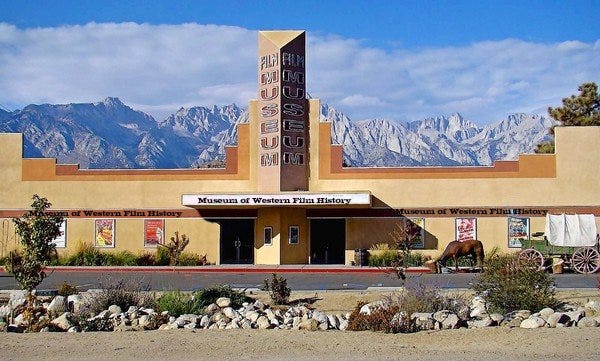
Many Westerns were filmed in this area. The most famous is probably the 1941 American film noir High Sierra, directed by Raoul Walsh and adapted by William R. Burnett and John Huston from Burnett’s 1940 novel. It starred Ida Lupino and Humphrey Bogart:
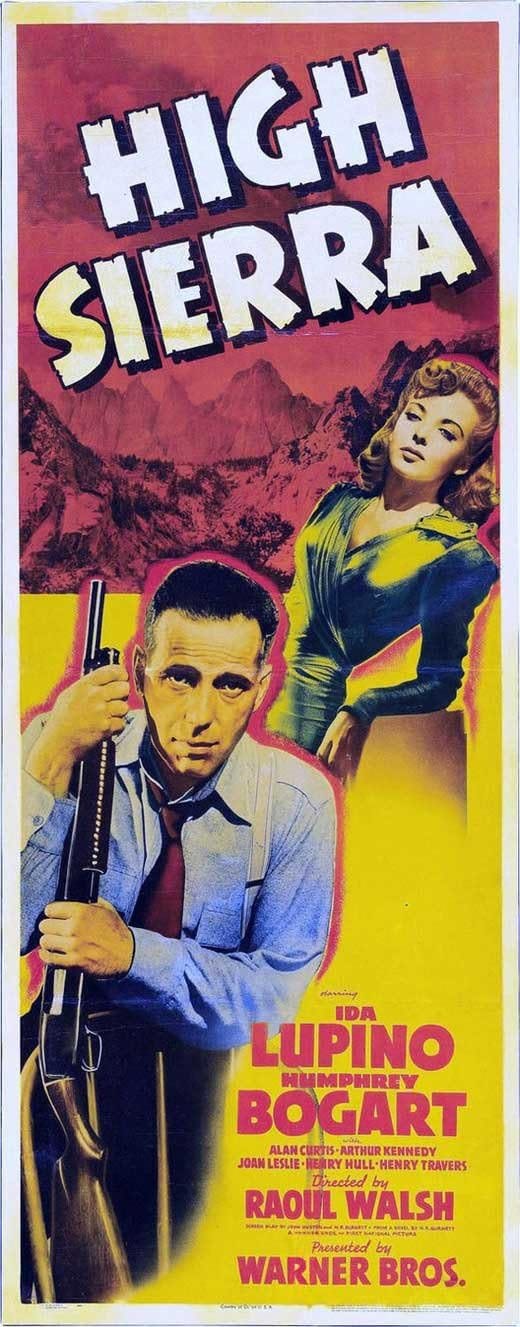
Its success provided John Huston the leverage he needed to transition from screenwriter to director, which he did later that year with his adaptation of Dashiell Hammett’s 1930 novel The Maltese Falcon. Over 40 years later, Huston directed and produced Fat City, a 1972 adaptation of Leonard Gardner's 1969 novel. I wrote about Huston’s Fat City here:

Parts of High Sierra were shot on location at Whitney Portal, halfway up Mount Whitney. Here’s the trailer from the film:
When I saw the movie as a kid, I had a crush on Ida Lupino. As it turns out, I think Paul Bley did too. He played a song named after her and recorded it many times. Probably my favorite version is from Bley’s Ramblin’ album, recorded on July 1, 1966, at Studio RCA in Rome, and was released in 1969 on the BYG Actuel:
That sure sounds like a love song to me…
As it turns out, I discovered Paul Bley while collecting Sun Ra albums.
Sun Ra was notorious for discouraging his musicians from recording outside the Arkestra. However, from time to time, they got away. For example, John Gilmore toured with Art Blakey’s Jazz Messengers for a short time and recorded many great albums, and Marshall Allen recorded just two. Interestingly, both were recorded with Bley.
On March 9, 1964, John Gilmore recorded with Bley at Mirasound Studio in New York City, and on May 10, 1968, at the University of Washington in Seattle. These sessions were released in 1975 on Bley’s Improvising Artists label as Turning Point.
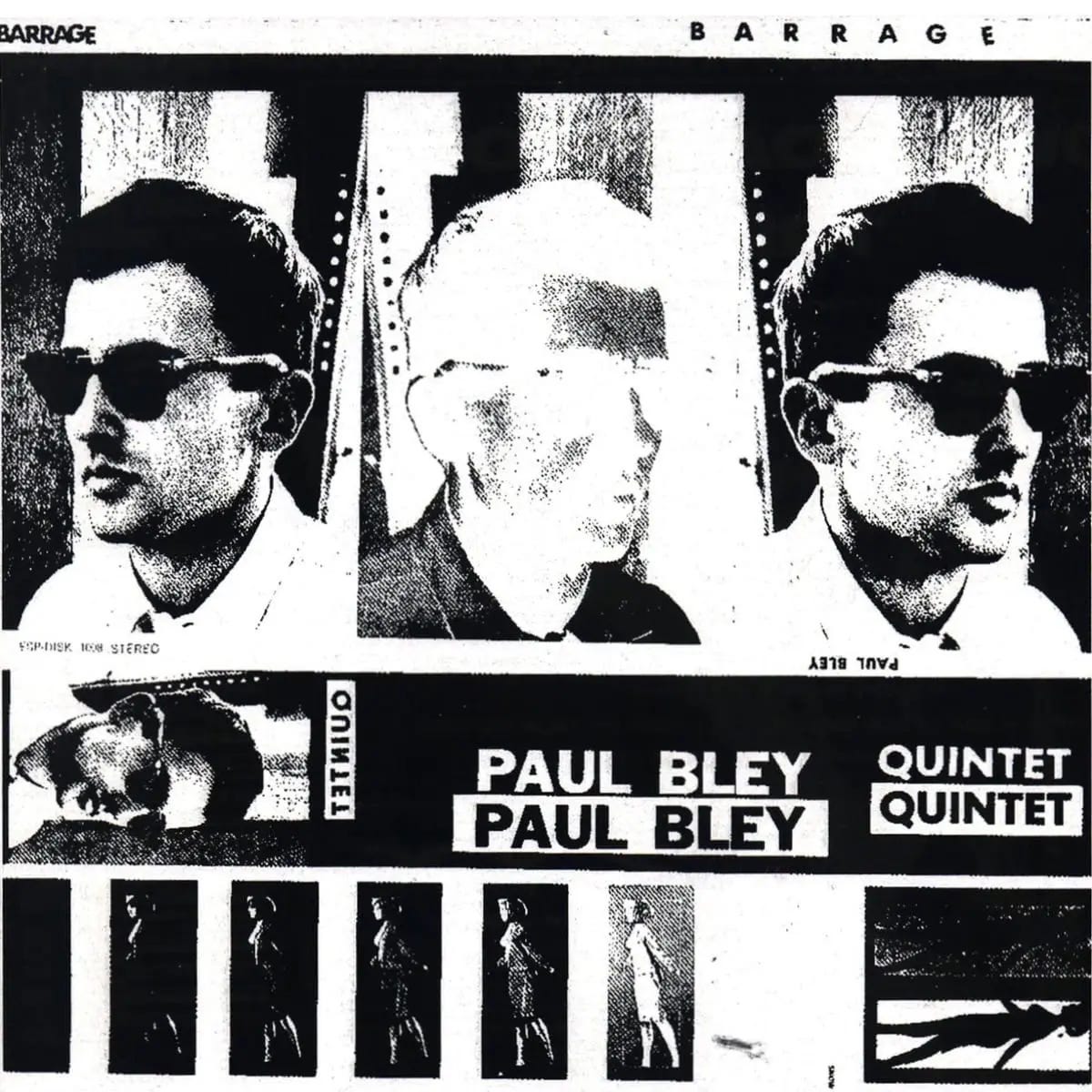
On October 15, 1964, also at Mirasound Studio in New York City, Marshall Allen recorded on Bley’s Barrage, released in 1965 on ESP-Disk. At about the time the Jazz Composer’s Guild was formed, Bley formed this incredible quintet with Dewey Johnson on trumpet, Eddie Gomez on bass, and Milford Graves on drums. This was Graves’ second session, the first another ESP-Disk session with pianist Lowell Davidson.
Paul Bley is often referred to as a musician’s musician. Well, I’m not sure what that means. Is that just some nice way to say his music is too odd or sophisticated for general listening, and that only musicians can appreciate it? I don’t know about that, but I just listen to his music, and it finds a way into your heart.
This week on that Big River called Jazz, we’ll dig in our paddles and discover the world of Paul Bley.
Paul Bley was born on November 10, 1932, in Montreal, Quebec, Canada. At five, he began studying the violin, but at seven, after his mother divorced his father, he decided to switch to the piano. By eleven, he had received a junior diploma from the McGill Conservatory in Montreal. At thirteen, he formed a band that played at summer resorts in Sainte-Agathe-des-Monts, Quebec, and toured with American bands, including Al Cowan's Tramp Band. As a teenager, Oscar Peterson asked him to replace him at Montreal’s Alberta Lounge, and by 1950, he was a student at the Juilliard School of Music in New York.
By the time he was 19, in New York City, he had already collaborated with bassist Oscar Pettiford, and at 20, he was playing with Charlie Parker and leading his own trio. Charles Mingus championed him and recorded Bley’s debut album, Introducing Paul Bley with Mingus on bass and Art Blakey on drums. It was released in 1953 on Mingus’ Debut label. Things were moving quickly for him, but a move to Los Angeles in 1957 saw him get involved in something new, which would become known as free jazz.
Before we went west, he had met Karen Borg while she was working as a cigarette girl at Birdland in New York City, and married her after she came out to meet him in Los Angeles. You can read more about Carla Bley here:

In 1957, Paul Bley formed a trio with Charlie Haden on bass and Billy Higgins on drums that performed at the Hillcrest Club in LA for two years, playing six nights a week. One night, Higgins brought in two of his friends, Ornette Coleman and Don Cherry. According to Bley in the 1981 film Imagine the Sound:
There was a tremendous barrage on the bandstand, followed by a hasty conference between my wife and I in the parking lot, in which we realized two things immediately: one is that we had to have the band; two that we were gonna get fired imminently. Of course, we took a look at each other and said, “Let’s do it.” We had the band, and we did get fired.
The group did record a live session at the Hilcrest Club in 1958, released in France in 1971 on America Records as The Fabulous Paul Bley Quintet. It was then released in America in 1976 on the Inner City label as Live at the Hilcrest Club 1958. The album was Ornette Coleman’s first live recording, made shortly after he recorded his debut album, the seminal Something Else!!!!, released in 1959 by Contemporary Records.
However, in LA, the band's music failed to find an audience ready for what they were putting out. In 1959, he disbanded his trio, which included Bobby Hutcherson and Scott La Faro, and moved back to New York City to see if his music would have better luck there. Unfortunately, it did not, at least not for Bleys. However, luckily, George Russell and Jimmy Giuffre came to their aid and gave them some live performances and recording opportunities.
In January 1960, Bley and Bill Evans were the two soloists and duettists featured in the fifteen-piece orchestra that recorded George Russell’s massive composition Jazz In The Space Age. Also in 1960, with Steve Swallow on bass, he was a member of Jimmy Giuffre’s ground-breaking trio the Giuffre 3. This innovative drumless trio had been around in various forms since 1957. In Imagine the Sound, Bley described how, in the 1960s, the idea of a drummerless trio first arose.
Having a drummer that was required to play time meant that there was a rhythm section of which the keyboards were a member of the rhythm section… Once the drummers joined the other players in terms of their mobility, it was possible to use a drummer or not use a drummer.
In 1961, the trio released two excellent albums, Fusion and Thesis, both on the Verve label. In the words of Giuffre, the trio was “searching for a free sense of tonality and form.” On both albums, Giuffre featured some of Carla Bley’s compositions, like the wonderful Jesus Maria from Fusion:
Here’s another great song from this wonderful trio, Brief Hesitation:
During three sessions in July, October, and November 1962, at Columbia’s 30th Street Studio in New York City, the trio recorded the revolutionary album, Free Fall, released under Jimmy Giuffre’s name in 1963 on the Columbia label. Bley only played on 4 of the 10 album’s tracks; however, on those tracks, he is in his element. In the book he wrote with Byron Coley and Thurston Moore, Now Jazz Now, Mats Gustafsson describes Free Fall as, “The Beauty. Without the beast… This is high aural cuisine, truly unique and unprecedented.” I think that’s the perfect way to describe this music.
The amazing thing about this music is that it was ahead of its time and a total commercial failure. After the release of Free Fall, Giuffre was unable to record again for nearly ten years. The music business gave him the cold shoulder - the leader of the West Coast cool school was run out of town by the jazz police. Yet, today, these Giuffre 3 performances are works of art, right up there with some of the most essential free jazz ever released.
In the same year, the Giuffre 3 travelled to Europe and shocked a public expecting Bebop. Some of the live performances were released in 1993 by the hatArt label: Emphasis, Stuttgart 1961, recorded on November 7, 1961, at the Liederhalle in Stuttgart, Germany, and Flight, Bremen 1961, recorded on November 23, 1961, at Sendesaal Radio Bremen, Germany. Both of these recordings are solid improvisations of the highest order.
Here’s Whirrrr from the Bremen recording:
During the same period, Bley was touring and recording with tenor saxophonist Sonny Rollins, which culminated in the 1963 RCA Victor album Sonny Meets Hawk! with tenor saxophonist Coleman Hawkins. Bley’s solo on All the Things You Are from this album has been famously called by Pat Metheny, “the shot heard around the world.”
That is an epic piano solo by Bley, a tough act to follow, but Rollins does a fine job.
After his stint with the Giuffre 3, Bley formed a new trio with Swallow on bass and Pete La Roca on drums. They recorded the classic Footloose album, released in 1963 by the Savoy label. From that album, here is Carla Bley’s song Vashkar:
Keith Jarrett said Footloose was “a record I’ve listened to thousands of times.”
In 1964, Bley was an important member of the Jazz Composer Guild, an organization founded by Bill Dixon. It was a co-operative organization which brought together many free jazz musicians in New York: Roswell Rudd, Cecil Taylor, Archie Shepp, Carla Bley, Michael Mantler, Sun Ra, and others. Out of the guild grew the series of 1964 concerts in New York known as the October Revolution in Jazz. It was during this time that Paul and Carla Bley separated.
In 1973, to release his own records and those of many other artists, Bley and his wife, Carol Goss, formed their own production company, Improvising Artists, Inc.
Bley was a big Sun Ra fan and, on the Improvising Artists label, released two of his important solo piano albums. The first is Sun Ra’s Solo Piano Vol. 1, recorded on May 20, 1977, at Generation Sound Studios in New York City. From the album, here is Sun Ra playing a favorite of mine, Jerome Kern’s Yesterdays:
Stunning.
The Second was St. Louis Blues - Solo Piano, recorded on July 3, 1977, at Axis in Soho in New York City. Some of my favorite Sun Ra recordings are his solo piano work, which we’ll get to a little further down the river…
In 1974, Bley recorded on Sweet Earth Flying, I think one of Marion Brown’s finer albums. He split the piano duties with Muhal Richard Abrams on Brown’s first composition, Sweet Earth Flying. This phase in Bley’s work was more geared toward electronics rather than acoustics, which you can hear on Sweet Earth Flying Part 1:
This has always sounded to me like it came from Ridley Scott’s 1982 film Blade Runner.
Bley plays on all four parts of Brown’s Eleven Light City. Here is Part 1:
I love the opening of this song. It’s so soulful and reminds me of the Art Ensemble of Chicago’s song Prayer for Jimbo Kwesi.
Into the 1980s, Bley returned to acoustic piano.
Paul Bley’s body of work is so extensive that there’s no way to cover all his fine recordings, both as a leader and as a sideman. I’ve tried to touch on a few that I like. Now, it’s up to you to explore his body of work on your own.
Here’s one more for the road. In January 1994 at Rainbow Studio in Oslo, Bley recorded Time Will Tell, another drummerless trio with Barre Phillips on bass and Evan Parker on reeds. It was released in 1995 on the ECM label. This is an abstract album filled with many surprises and worthy of greater exposure. From the album, here is Above The Tree Line:
I find Barre Phillips’ work on this album particularly heavy. I wrote about him here:

As is often the case, in my quest to collect all of a certain artist or label, my emphasis was on finding the albums and not listening to them. That was a mistake. Now, as I am older, I spend more time listening and less time collecting. This is a good thing. One of the artists I listen to a lot more now is Paul Bley.
Paul Bley passed away from natural causes on January 3, 2016, at home in Stuart, Florida. He was 83 years old. He was always ahead of his time. In many ways, a lone adventurer, out beyond the front lines, relentlessly pursuing the possibilities of avant-garde and improvised music. It was a courageous and noble cause.
Next week on that Big River called Jazz, we’ll dig our paddles into the waters of harmonica great Micky Raphael.
Please hit this link to buy me a cup of coffee if you’d like to show your guide some appreciation for this and past journeys. I thank you in advance for your kindness and support.
If you like what you’ve been reading and hearing so far on our journey and would like to share this with someone you think might be interested in learning more about our great American art form, Jazz, just hit the “Share” button.
From Astaire to Sun Ra: A Jazz Journey is a reader-supported publication. If you feel so inclined, subscribe to my journey by hitting the “Subscribe now” button.
Feel free to contact me anytime to talk shop. I welcome and encourage that.
Until then, keep on walking….
A fine overview! Paul’s ECM catalog alone merits a deep dive, but I would raise my hand for the solo Open, To Love, which is exquisitely recorded, and which I return to frequently in these days when, like you, I listen more than I collect. Cheers!
Thank you so much! There is so much important information in your article that is new to me. I love Paul Bley and feel very much honoured to have once recorded with him in 1982. Our album is called This Earth! (ECM 1264) and was meant to be a contribution for more conscious ecology, also with the help of words, sang by Maggie Nichols.