
Robert Ashley
I’m not the same person that I used to be...

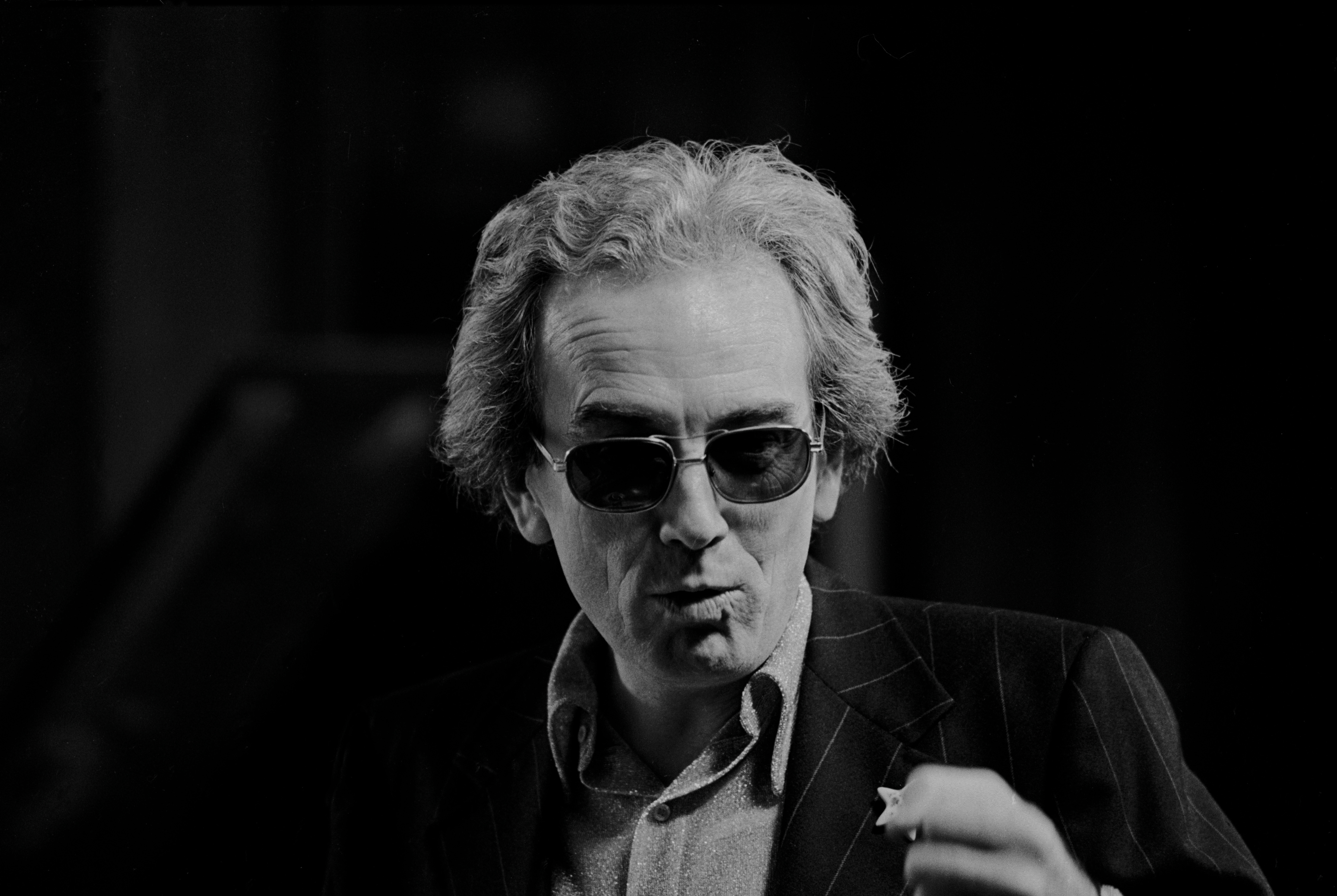
No piece of music can be a truly great piece of music unless it gets under your skin, in a good way, and stays there.
-Kyle Gann on Perfect Lives
Earlier this year, the day I went to Stamford Bridge to see the Chelsea Football Club in London, the wind in the stadium sang a sad and beautiful song just for me, and for those glorious 90 minutes, the Angels brought my son Maclane back to me. His spirit was with me. Together, we watched Chelsea win that game, and I felt him say to me, “It’s ok, Papa. I am free.”
I wrote about that magical day here:

The line of events that led to my getting a ticket to that game was divine, and Daniel, the gentleman who made the final connection, is a wonderful man whom I shall never forget.
Daniel owns London’s New Cross record store, Perfect Lives:
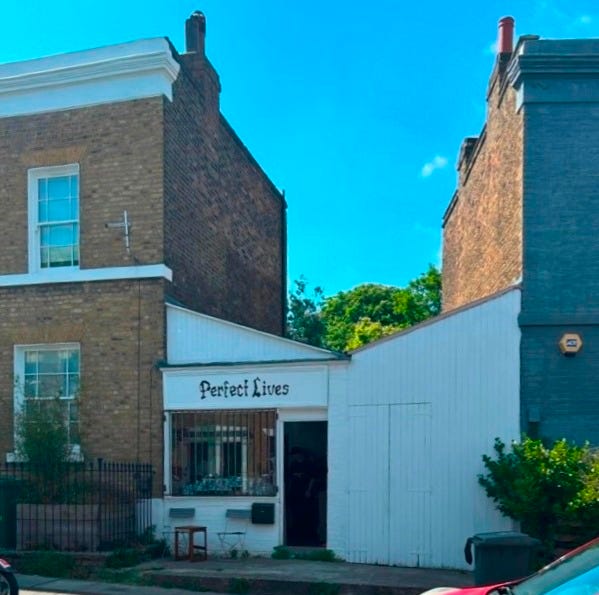
His store is named after Robert Ashley’s opera for TV, Perfect Lives:
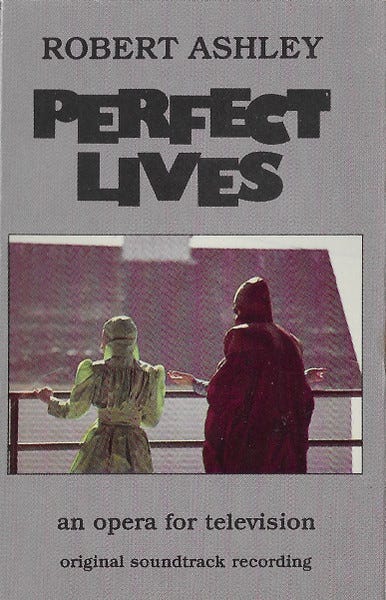
Perfect Lives was first released in 1983 by Lovely Music on cassette tape:
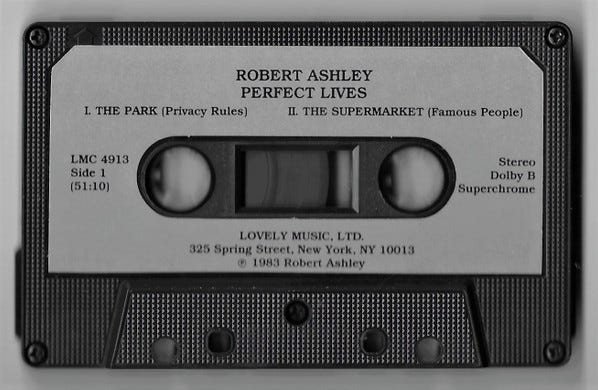
Lovely Music is the same label that, in 1984, released Pauline Oliveros’s epic, The Wanderer. I wrote about Oliveros here:

In 1969, Ashley was appointed Director of the Center for Contemporary Music (CCM) at Mills College in Oakland, California, where he organized the first public-access music and media facility. The CCM was originally named the San Francisco Tape Music Center, co-founded in 1961 by former Mills music students Morton Subotnick and Ramon Sender with help from Oliveros. In 1966, the center moved to Mills College, where it was later renamed the Center for Contemporary Music.
Perfect Lives and two other operas, Atalanta (Acts of God) and Now Eleanor’s Idea, complete the monumental trilogy of which Private Lives is central.
American composer Charles Shere wrote: “A work of its own time - which Perfect Lives definitely is - is always ahead of its time to its first audiences...” He compares Ashley’s opera to Marcel Duchamp’s Large Glass for being solidly within its tradition but misunderstood for the way it will “expand continually the more it is experienced, and the more it is commented on.”
This week on that Big River called Jazz, we’ll dip our paddles into the world of Robert Ashley.
Born in Ann Arbor, Michigan, on March 28, 1930, Robert Ashley was educated at the University of Michigan and the Manhattan School of Music. From 1957 to 1960, he continued to study Composition and Acoustics at the University of Michigan's Speech Research Laboratories (psycho-acoustics and cultural speech patterns) before joining CCM in California in 1969.
I came to Robert Ashley, as many things do on that Big River called Jazz, in a roundabout way, through the Dutch Instant Composers Pool (ICP), who were the “guests” on The Ex’s 1995 release -instant-:
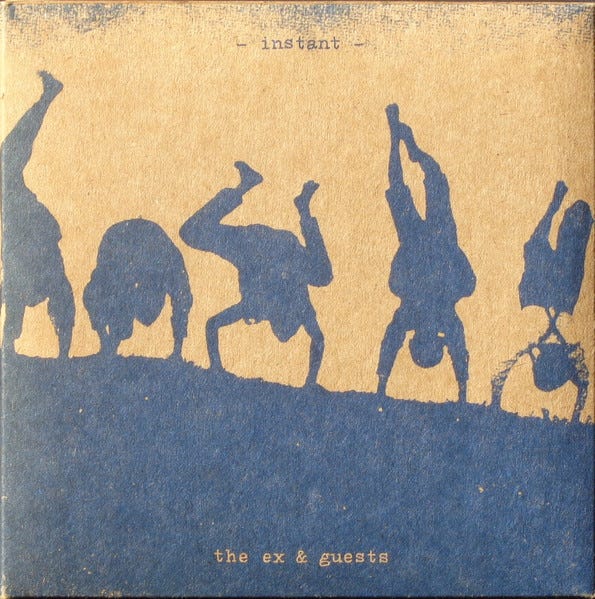
This session included ICP members Han Bennink, Ab Baars, Wolter Wierbos, and the wonderful cellist Tristan Honsinger.
I can’t remember how I first heard about this CD, but I suspect I read about it in a review in The Wire magazine. This session is a gas, a classic meeting of The Ex’s Dutch anarcho-punk and the ICP’s instant composition - a nod to the album’s title. The best tracks are those that employ unusual instruments, such as spring steel, pushed chairs, and a sawing machine. On Baars Vs Karekiet, they use birdsong - samples of reed warblers:
…but the best is the pile-driver loop on Buildance:
Brilliant. Love this one.
In a similar format, I then ran across this 2002 Sonic Youth EP, released on the Dutch In The Fishtank label, which includes many of the same characters. From that EP, here is X:
The label is a project of the Dutch Konkurrent Onafhankelijk Muziekbedrijf (Independent Music Company). In this series, Konkurrent invites bands with whom they can strongly relate to record while they’re touring in the Netherlands. The bands are given two days to record two dozen, twenty to thirty-minute-long tracks of whatever they like: regular songs, funny versions, improvised pieces, etc.
While browsing other In The Fishtank albums, I came across In The Fishtank 13, released in 2005. I noticed it was by the now-defunct Dutch contemporary classical Ensemble MAE, formerly the Maarten Altena Ensemble, named after its founder and ICP member contrabassist Maarten van Regteren Altena. From that EP, here is 5 Superstar:
In 1967, while Altena was a student at the Conservatorium van Amsterdam, he recorded on Marion Brown’s Porto Novo, released that same year on the Freedom label. The album also featured Han Bennink on drums. After graduation, Altena played in a number of ensembles and with Willem Breuker. Altena’s first two releases were on the ICP label.
In the early 1980s, Altena founded his own ensemble, the Maarten Altena Kwartet, which expanded into the MAE. It was through my knowledge of MAE that I noticed Robert Ashley’s 2007 album Tap Dancing in the Sand, a one-off collaboration between Ashley and the MAE, released on the Dutch Unsounds album:
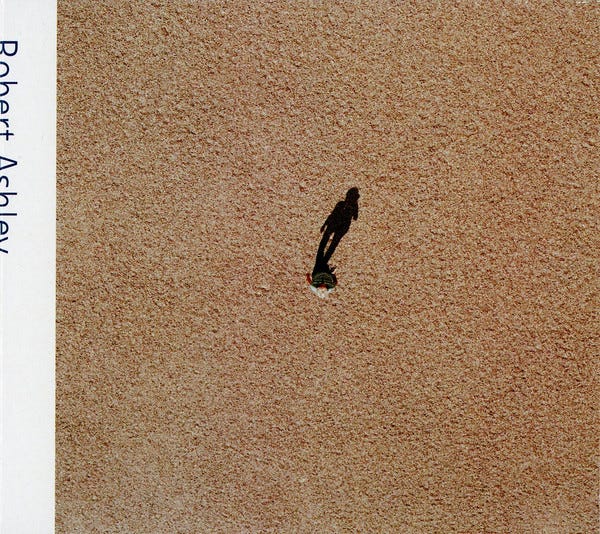
And so it goes, my roundabout journey to Robert Ashley was completed.
I was hooked from the very first note of the title track. Like an electric shock, it just immediately found its way into my soul. Oddly, as the song went on, it gave me the feeling I used to get when I tap danced - no idea why. It just did.
Here is that song:
This is a nearly 16-minute song, and at the 8:39-minute mark, Ashley turns over the remainder of the song to MAE for some terrific ensemble work that is lovely and ethereal.
Another classic, Hidden Similarities, employs snippets of different spoken word contributions into a scenic story; however, the story only manifests itself to those familiar with Dutch; therefore, the language is reduced to a sound dimension:
I was captivated by this album - so much depth and diversity. It inspired me to seek out more of Ashley's work, and I discovered Perfect Lives, his opera for television, in seven half-hour episodes.
Incredibly, the perfecting of these seven songs for a 1984 televised broadcast took Ashley, along with his music collaborators and television production team, more than five years of fairly intense work. The songs themselves evolved out of material he had been gathering in his mind and on paper before 1978, when he was commissioned to create “an opera for television” by New York City’s The Kitchen, founded in 1971 as an artist-driven collective by Woody and Staina Vasulka on Mercer Street in Greenwich Village. At the time, it was one of the most notable production and performance organizations in the world for new music, dance, art, and video.
According to Ashley:
Between 1978 and 1983, we performed Perfect Lives twenty-seven times live in the United States and in Europe. In 1982, the band and I were invited to perform in London for a week’s run at the Almeida Theatre. It was then co-produced with Great Britain's arts network in August 1983 and premiered in April 1984 on British TV, London’s Channel Four. It was broadcast on what in Britain is called “late night television,” which was at 10 or 10:30 at night, the last thing shown every night for a week.
It was later broadcast on television in Austria, Germany, Spain, and the United States, and shown at film and video festivals worldwide. It is widely considered the precursor to "music television."
About Perfect Lives, Ashley said:
The idea of Perfect Lives, what I think is original about it, is that it goes back to an earlier form of opera: the idea of storytelling in music. European opera has tended more toward a musical version of theater. I guess I owe more to the idea of, say, the Duke Ellington orchestra. Perfect Lives is a kind of jazz narrative. In big-band jazz, there were characters in the band, and people would go to see the bands in order to follow those characters. I’ve always regarded those bands as proto-operas, and very American in form. Perfect Lives comes out of that tradition.
It’s like when Duke Ellington sets up his band. It’s a collection of characters, and Ellington understands it that way. Ellington’s music is not written in the way a symphony, which can be played by anybody, is written. If you pull out a player in Ellington's band, you have to rewrite the part. Perfect Lives is based on that model.
Although Ashley was not a jazz musician, as an American, he naturally grew up listening to jazz. He was much more comfortable thinking of singing in a jazz or rock-and-roll sense, rather than in a bel canto style, which is Italian for “beautiful singing,” where he would have been imitating a different culture. I can understand that, as much of American opera, including the great jazz operas like Terrance Blanchard’s Fire Shut Up in My Bones and Morton Feldman’s Neither, can sound a little too imitative or derivative to me. Ashley believed that there was no reason that American opera had to sound like Verdi. I admire him for that.
Here’s one more for the road. In 1985, Ashley recorded Flying Saucer Dialogue, which appeared on Music From Mills, released in 1986 by Mills Music. The song comes from his opera Atalanta (Acts of God), which he finished in 1985. I am amazed at how much this track reminds me of Sun Ra:
Even Ashley’s voice at times sounds like Sun Ra, not to mention the keyboards and space reference. This could easily have been heard on one of Sun Ra’s Saturn albums from that time.
Like Sun Ra, Robert Ashley was a true pioneer of the American compositional avant-garde. When he passed away he was at work on two new operas: Crash, which premiered at the 2014 Whitney Biennial and presented again at Roulette in 2015; and Quicksand, an "opera-novel," first released in novel form by Burning Books in 2011, recorded by Ashley, and completed by his collaborators, Tom Hamilton, David Moodey, and Steve Paxton. It premiered at The Kitchen in January 2016.
Robert Ashley died at his home in New York City on March 3, 2014. He was 83 years old. Like Sun Ra, I think Robert Ashley‘s music was ahead of its time, and time hasn’t quite caught up with him yet…
Next week on that Big River called Jazz, we’ll dig our paddles into the waters of American philosopher, musician, writer, activist, and artist connected to the 1960s New York avant-garde, Henry Flynt.
Please hit this link to buy me a cup of coffee if you’d like to show your guide some appreciation for this and past journeys. Know in advance that I thank you for your kindness and support.
If you like what you’ve been reading and hearing so far on our journey and would like to share this with someone you think might be interested in learning more about our great American art form, Jazz, just hit the “Share” button.
From Astaire to Sun Ra: A Jazz Journey is a reader-supported publication. To subscribe, please hit the “Subscribe now” button.
Feel free to contact me at any time to talk shop. I welcome and encourage that.
Until then, keep on walking….