
Northwoods Improvisers & Yusef Lateef
Detroit present and past...

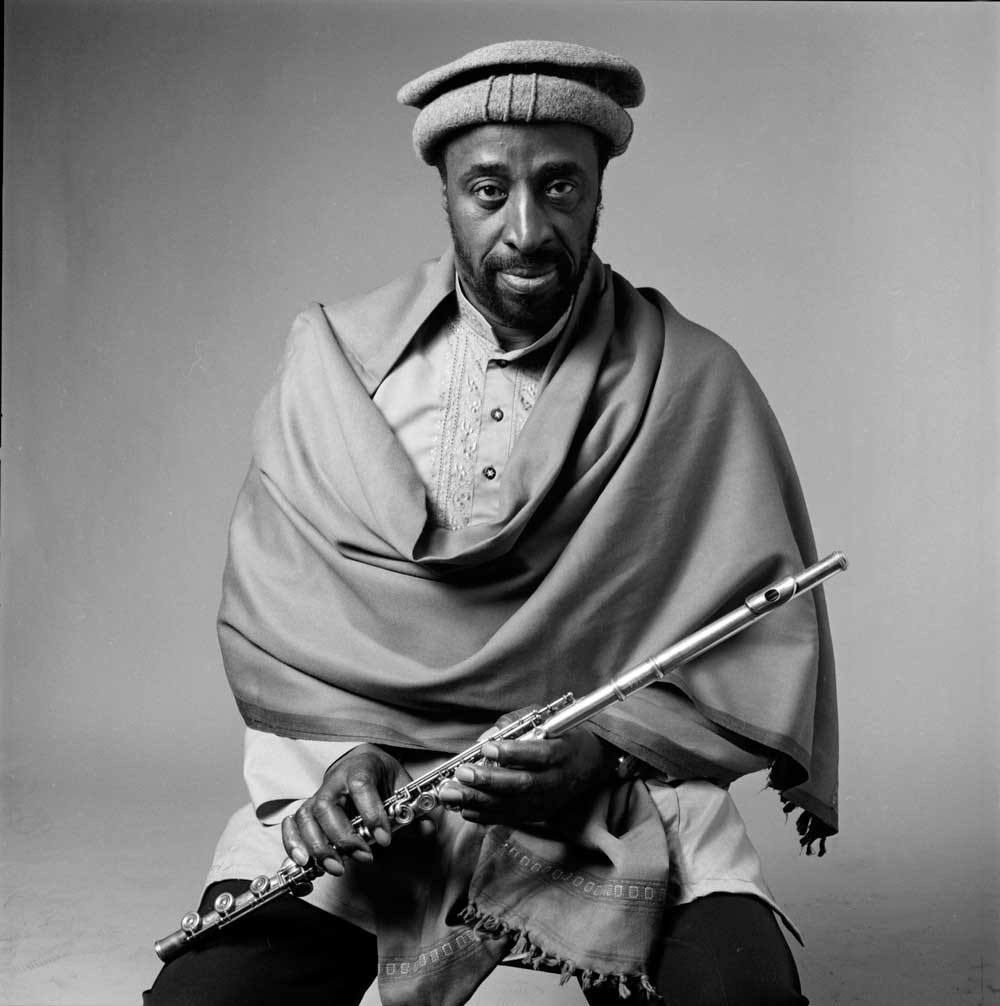
Each culture has some knowledge. That’s why I studied with Saj Dev, an Indian flute player. That’s why I studied Stockhausen’s music. The pygmies’ music of the rainforest is very rich music. So the knowledge is out there.
-Yusef Lateef
I’m in Detroit to catch a couple of concerts by the Northwoods Improvisers, who are performing this weekend at Trinosophes Projects. They are celebrating their 50th Anniversary.
Mike Johnston, Mike Gilmore, and John Plough formed Northwoods Improvisers in 1976 in Traverse City, Michigan. In their formative years, they were greatly influenced by the Spontaneous Music Ensemble and the Art Ensemble of Chicago, and often played together in a family member's cabin in the woods. The initial concept was to create an open musical style with a sense of nature and the forest in its sound.
In 2000, Northwoods Improvisers began performing with Griot Galaxy’s leader, Faruq Z. Bey, who brought Detroit saxophonists Mike Carey and Skeeter Shelton into the ensemble, forming a sextet. Although Bey passed away in 2012, the ensemble performed together until 2014.
The current Northwoods Improvisers sextet solidified in 2022 with members Mike Johnston on bass, Nick Ashton on drums, the Ds: Dominic Bierenga and Donovan Boxey on saxophones, Mike Khoury on violin, and Jack O'Brien on cello and bass. Their most recent release is the outstanding Unified View. From that release, here is Tasbin’, Mike Johnston’s wonderful composition dedicated to Faruq Z. Bey:
Johnstone shared with me the meaning of his composition:
Tasbih’ means prayer beads and glorification in arabic. The last request (that I am aware of) that Faruq made was asking a close friend in Detroit to bring him some prayer beads. He died before he got them. So I titled the piece Tasbih’ based on his last request in an attempt to fulfill it the best way that i could... I sat out on my back screened-in porch one day in a light rain, took my bass out and composed the piece in a long afternoon. Shortly thereafter, I recorded it solo in a gentle rain. It’s not a great performance, but I treasure having the recording with the rain. I based the themes and progression of the piece on musical things and sensibilities that I learned from Faruq.
Last night was my first time seeing Northwoods Improvisers live. After years of listening to their music on CDs, it was terrific to see them play finally. It was a great show at a nice venue. They performed as a septet, with the addition of former Griot Galaxy alumnus Anthony Holland. The highlight of the show for me was Fanfare for A.J., one of Faruq Z. Bey’s last compositions dedicated to AACM drummer Ajaramu Shelton. With his son Sketter Shelton in the audience, it was an awesome and fitting tribute.
Joel Peterson founded the Trinosophes Projects. With the help of Sam Hooker, a founding member of M.U.G., aka Michigan Underground, in 2018, Peterson founded Two Rooms Records, specializing in contemporary and historic recordings from a “genre-free but largely Detroit-centric perspective.” They recently released Griot Galaxy, Live on WUOM 1979.
The Northwoods Improvisers and Griot Galaxy are part of a rich history of tremendous jazz musicians from Detroit, like Milt Jackson, joe Hrnderson, Curtis Fuller, Barry Harris, Kenny Burrell, the Jones brothers (Hank, Thad, and Elvin), Tommy Flanagan, Donald Byrd, Ron Carter, Paul Chambers, Betty Carter, and many others you can read about in Mark Stryker’s book Jazz From Detroit. Another important part of that history is Yusef Lateef.
This week on that Big River called Jazz, we’ll dig in our paddles and discover the world of Yusef Lateef.
Yusef Lateef was born on October 9, 1920, in Chattanooga, Tennessee, as William Emanuel Huddleston. In 1923, his family moved to Lorain, Ohio, and again in 1925 to Detroit, Michigan, where his father changed the family's name to Evans. So he became Bill Evans.
The first instrument he bought was an alto saxophone, but after a year, he switched to the tenor saxophone, influenced by Lester Young's playing. After high school, he launched his professional career and began touring with several swing bands. Evans got his recording career started in Chicago with the Aristocrat label, the predecessor of Chess Records.
Aristocrat was founded in April 1947 by Charles and Evelyn Aron. They hired talent scout Sammy Goldberg to orient the company toward Rhythm and Blues. Goldberg signed to the label Jump Jackson, Tom Archia, Clarence Samuels, Andrew Tibbs, Sunnyland Slim, and a vocal group, the Dozier Boys.
The Dozier Boys started off singing in Chicago's Waller High School around 1946. Originally, they were a spiritual group called the 4 Tones, consisting of first tenor and bassist Cornell Wiley; bass vocals Ben Cotton; baritone, guitar, and arranger Eugene Teague; and his brother, Lucius Teague, on lead vocals. However, Lucius Teague left to study dancing and acting and was replaced by lead tenor and drummer Bill Minor. The group was sponsored and encouraged by Cornell's stepfather, a druggist named Cyrus Dozier; in his honor, they renamed themselves the Dozier Boys.
In early October 1948, a Chicago Defender ad listed them at The Corner, formerly Martin's Corner, at 1900 West Lake Street, where they shared the bill with Jump Jackson and Kenneth Tibbs, the older brother of Andrew Tibbs. On several occasions from the fall of 1948 to mid-1950, the Dozier Boys worked the Beige Room in the basement club in the Pershing Hotel. Incidentally, this is the same club that was called Birdland but was renamed Budland after New York's Birdland threatened legal action.
In November, the Dozier Boys started their recording career with Aristocrat Records. According to Cornell Wiley, Willie Dixon, a friend of the Wiley family and member of the Big Three Trio, introduced them to Leonard Chess.
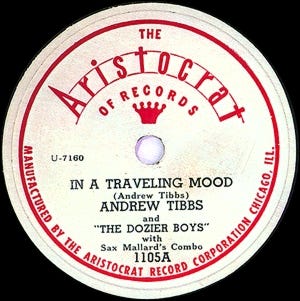
Both Wiley and Ben Cotton remember that their first sides were done backing bluesman Andrew Tibbs at Universal Recording Studios in Chicago. They also provided the instrumentation for the Tibbs recordings, along with a session pianist named Herman "Sonny" Blount, who, after 1952, was known as Sun Ra:
Also, in late 1948, they recorded another session in December at United Broadcasting Studios backing acoustic bassist Eugene Wright and the Dukes of Swing, an 11-piece band. While the Dukes of Swing had been performing in the larger Pershing Ballroom upstairs, the Dozier Boys performed down in the Beige Room. Soon, they became the Dukes’official vocalists. The Dozier Boys remained at the Pershing Hotel until around 1950.
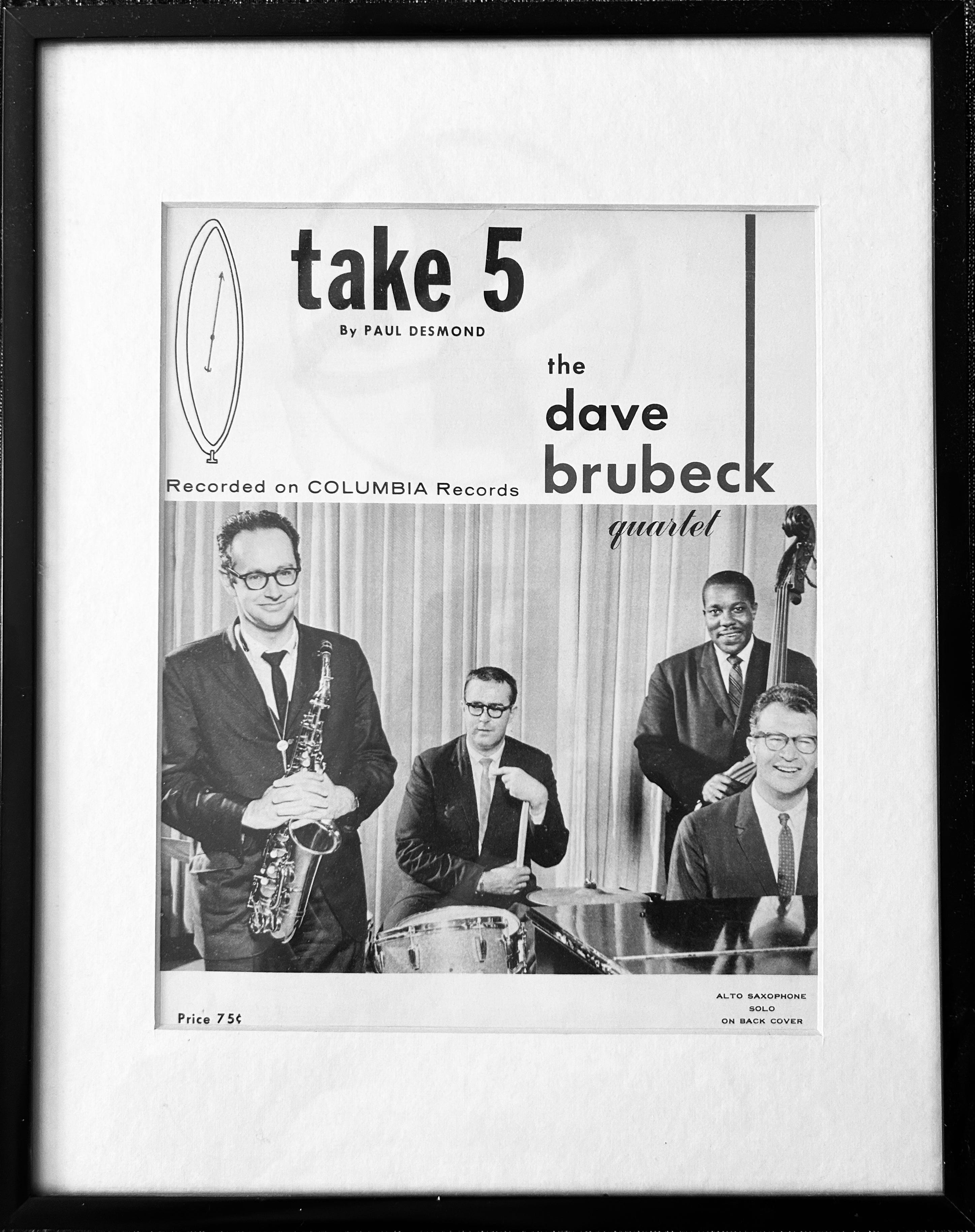
Incidentally, when Wright broke up the Dukes of Swing at the end of 1948, he joined the Count Basie band. He later played with Gene Ammons and Dave Brubeck. Here is “Gene” Wright on the sheet music for Brubeck’s Take Five:
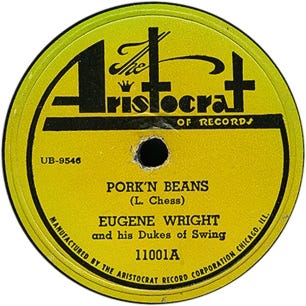
The 1948 edition of the Dukes’ ambitious book was entirely written by Blount, their musical director, and included some of the best young jazz musicians in Chicago. The first trumpeter was Hobart Dotson, who would later contribute heavily to Sun Ra’s 1959 album Jazz in Silhouette. The instrumentals they recorded were honking jump and blues songs with Blount playing piano on Big Time Baby, Dawn Mist, and Pork ‘n Beans, the latter written by Blount but credited to Leonard Chess. It eventually ended up as Aristocrat 11001:
All members of the 11-piece band were present at that Dukes of Swing recording session, and the tenor player happened to be Bill Evans.
Shortly after these recording sessions, in 1949, Evans was invited by Dizzy Gillespie to tour with his orchestra. While traveling with Gillespie, Evans converted to the Ahmadiyya Islamic movement, and he adopted his new Arabic name, Yusef Lateef.
In 1950, Lateef returned to Detroit and a thriving jazz scene. Kenny Burrell encouraged him to start playing the flute and to study music theory and composition with the Larry Teal School of Music, where he encountered the Schillinger system, a highly abstract and mathematical approach to music. He also attended Wayne State University and studied classical music, including Arnold Schoenberg and his serial compositional methods. In addition to the flute, he began studying oboe and exploring a variety of non-Western instruments.
The large Arab population in Detroit at the time influenced Lateef’s music, and he was among the first jazzmen to incorporate Middle Eastern and Asian influences into his work, predating the broader interest in jazz by a decade or more. In 1957, he lived in the Ahmadiyya mosque in Detroit, where he served as its imam and developed a curriculum for Islamic instruction for children and adults.
On April 5, 1957, he traveled to New York City with his group to record Jazz For The Thinker, his debut album released on the Savoy label. That’s the Detroit Institute of Art behind the band and the thinker. Right from the opening track, Happyology, you can hear the Arab influence:
Jazz For The Thinker features his full Detroit-based band that had been working a steady gig at the Detroit Klein’s Show Bar. Lateef reminisces about these early quintet recordings:
I worked at Klein’s Show Bar for five years, six nights a week. We rehearsed every week so we had so much material that had been rehearsed and exercised. We were so tight we were able to go to New York on off-nights and do two albums, easily…. We got off Sunday night and jumped in the …station wagon, and we would drive all the way to Hackensack, New Jersey, and record on Monday and we’d turn right back to Detroit and open up again on Tuesday.
The April session in New York City resulted in two more albums for Savoy. The band returned to New York City in October for another session that resulted in two more Savoy albums. All of these are solid and feature Detroit musicians. During the same trip, Lateef recorded two albums for the Prestige label, The Sounds of Yusef and Other Sounds.
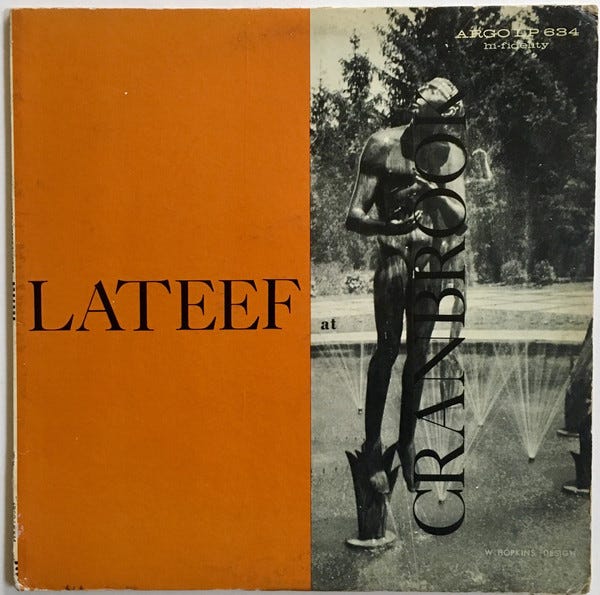
On April 8, 1958, Lateef recorded Lateef at Cranbrook, a live performance at the Cranbrook Academy of Art in Bloomfield Hills, north of Detroit. On the beautifully rendered cover is a picture of one of the bronze figures in the Orpheus Fountain, located outside the Academy and completed in 1937 by Carl Milles, a famous Swedish sculptor who left the Royal Academy of Fine Arts in Stockholm to become head of the sculpture department at the Cranbrook Academy of Art in 1931. The Cranbrook Academy of Art was designed by the renowned Finnish-American architect Eliel Saarinen. Rooted in the Arts and Crafts movement, Saarinen incorporated an eclectic array of influences, including the Prairie School style, Machine Age Modernism, and the Greek Revival style:
Here’s a live version of the track this week’s journey opened with, Lateef’s composition Morning:
Opening in 1932, the Cranbrook Academy evolved from a series of artisan craft workshops in the 1920s to one of the most experimental art schools in the US. In fact, Michigan was home to many ambitious art schools, including the Ox-Bow School of Art, established near Saugatuck in 1910, and the Interlochen Center for the Arts, established in 1928.
In 1960, Lateef moved to New York City, where he began working with Charles Mingus, Babatunde Olatunji, and Cannonball Adderley, and also became a first call for recording sessions, before signing as a leader with Riverside and Prestige.
On September 5, 1961, at Van Gelder Studio in Englewood Cliffs, New Jersey, Lateef recorded the classic Eastern Sounds. The album is, in many ways, a pioneering improvisational exploration in non-Western sensibility, characterized by the use of world instruments that would be taken up more broadly by jazz musicians in the 1960s. For example, Lateef plays the Chinese globular flute. After reading about this ancient instrument, he located one in New York’s Chinatown. He opens The Plum Blossom with an extended solo on the globular flute. The song also features bassist Ernie Farrow plucking the Rabat:
The opening track on the album is Rasheed, which in Arabic means “wise” and is also the name of Lateef’s son, who was 18 at the time. On the liner notes, Lateef says, “In a way, this is a portrait of my son. The boy is very straightforward and, considering his youth, he does show what I would call wisdom.” Here’s Rasheed with Lateef soloing on oboe:
Here’s one more classic from the album. On You’ve Changed, a song popularized by Billie Holiday, you can hear Lester Young’s influence on Lateef. Barry Harris has a very nice piano solo also:
In 1962, Lateef also contributed to another great album, Art Blakey’s African Beat. This was Blakey’s first opportunity to work with drummers from Africa and features compositions by African and American musicians, all based on aspects of West African music. From the album, here is Ero Ti Nr’ojeje:
After undertaking his first pilgrimage to Mecca in early 1966, Lateef returned to New York. He studied flute at the Manhattan School of Music, where he received his bachelor’s degree in flute performance and a master’s degree in music education.
In 1965 and 1966, Lateef made a few nice albums with Impulse!, like Psychicemotus, recorded in July 1965. From that album, here is Bamboo Flute Blues:
That’s Reggie Workman on bass and Detroit’s Roy Brooks Jr. on drums. Brooks was a terrific leader and sideman throughout the 1960s and 1970s. I particularly like his work with Roy Brooks and The Artistic Truth, who, on the short-lived Im-Hotep Records label, released two killer albums: Ethnic Expressions (1973) and Black Survival - “The Sahel Concert” At Town Hall (1974). Check them out.
In June 1966, Lateef recorded The Golden Flute, released by Impulse! in 1967. Here’s Oasis:
By 1971, Lateef was teaching music theory at the Borough of Manhattan Community College, while also enrolled in courses at the New School in philosophy and symbolic logic. Among his students were Albert Heath and Kenny Barron. In 1975, Lateef received his Ph.D. in Education from the University of Massachusetts Amherst. His dissertation was a comparative study of Western and Islamic education. However, unable to find a teaching position, he began touring the world with his family between 1975 and 1980.
In 1988, he was finally hired as an associate professor of music at the University of Massachusetts Amherst. He was sixty-eight years old, but went on to teach for fourteen years and was named a Five College Distinguished Professor of Music.
Yusef Lateef died from cancer on December 23, 2013. He was 93 years old.
When the soul looks out of its body, it should see only beauty in its path. These are the sights we must hold in mind, in order to move to a higher place
-Yusef Lateef
In the 1960s, only California and the UK produced as much music as Michigan did, way more than New York or Chicago. The Motor City music scene was a strong, thriving industry, overshadowed only by the auto industry. But it all crashed and burned with the 1967 Detroit riots. By the end of the 1960s, every large industry, from GM to Motown, had started leaving Michigan.
However, it was on the strength of the foundations laid by Motown and local musicians like Kenny Cox, Roy Brooks, Marcus Belgrave, Phil Ranelin, Wendell Harrison, Geri Allen, James Carter, and Yusef Lateef, among others, that jazz found a footing in post-riot Detroit. I wrote about all that here:
Those strong foundations continue today with the Northwoods Improvisers, and were on full display last night at their 50th-anniversary concert. I want to express my special thanks to their bass player, Mike Johnston, who has been with the Northwoods Improvisers since day one. Among many other things, he has helped me understand Michigan's important musical legacy. With more than forty years separating Johnston and the group’s youngest members, bassist Jack O’Brien and the D’s, that legacy is bound to continue in strong hands.
Next week on that Big River called Jazz, we’ll dig in our paddles and explore the world of the UK’s Jazz Dance movement in the 1980s.
Please hit this link to buy me a cup of coffee if you’d like to show your guide some appreciation for this and past journeys. I thank you in advance for your kindness and support.
If you like what you’ve been reading and hearing so far on our journey and would like to share this with someone you think might be interested in learning more about our great American art form, Jazz, just hit the “Share” button.
From Astaire to Sun Ra: A Jazz Journey is a reader-supported publication. If you feel so inclined, subscribe to my journey by hitting the “Subscribe now” button.
Feel free to contact me anytime to talk shop. I welcome and encourage that.
Until then, keep on walking….
Illuminating, as always. Thank you. I gotta check out that book. Here's a link to the 1st of a three part podcast with Adam Rudolph discussing his time with Yusef Lateef. I remember being struck by the fact that Lateef encouraged everybody in his band to write plays that they would perform. https://mitchgoldman.podbean.com/e/20190401-adam-rudolph-on-yusef-lateef-podcast-1-of-3/
Congratulations to Northwoods for 50 years of creativity. And thanks for keeping Yusef Lateef's legacy alive. One of my all-time favorite tenor players.