
Jazz Kissa
A place of serious listening...


First of all, I don’t see jazz kissa as a vanishing culture. The form will change little by little, but the existence of jazz kissa, which allows people who like jazz to listen to jazz sound sources with a cup of coffee, will not disappear.
–Katsumasa Kusunose
Today, I am sending this journey from Kyoto. I spent a few days in Tokyo before heading down to Kyoto.
Interestingly, one of the first jazz albums I listened to in college was Dave Brubeck’s 1964 Jazz Impressions of Japan. I found it in the school’s library, which had an enormous jazz collection in the basement, along with a few soundproof listening rooms, each with a nice stereo and headphones. The collection is extensive and neatly presented in alphabetical order. I spent a lot of time in that basement and call it “ground zero” of my jazz journey.
I decided to start at “A” and work my way through the alphabet, selecting albums at first mostly for their interesting cover art. Early on, I hit Brubeck’s Jazz Impressions of Japan and thought, “This one looks good.” I took it out and placed it on the turntable. I was not disappointed. After the spirited Tokyo Traffic, it was Rising Sun that caught me. I thought, “Who’s the sax player?” I checked the album cover. “Ok. I like Paul Desmond!” Here’s that track:
After I played the album, I went right to the “D” section and found more Desmond albums.
I was also captivated by the haiku that follows each description of the tune on the back cover. For example, this one from Issa:
The snail does all he can
But oh, it takes him quite a while
To climb great Fuji-San
Since my mom and dad raved about their trip back in the late 1980s, I always dreamed that one day I might make it there. And, here I am.
So, in honor of my visit to Japan, I wanted to resend this piece I wrote nearly two years ago about the Japanese phenomenon known as the jazz kissa.
I can’t speak for other cities, but Minneapolis is beginning to adopt a form of the uniquely Japanese phenomenon called jazz kissa. Within the past two years, two businesses have launched listening rooms with high-end sound systems: Harmony coffee shop (with the motto: Enjoyment in repetition on the endless quest for “Inner Peace”) and HiFi Record Bar at the Macanda by Lake Minnetonka.
Note: since I originally posted this in July 2024, another record bar has opened called Small Hours, a HiFi Wine bar.
Though neither is jazz-specific, it’s a step in the right direction. I’m still waiting for the first jazz kissa to find its way to the Twin Cities.
It is believed that jazz music first reached Japan around 1900, in coastal cities like Yokohama and Kobe, and later in Tokyo. Originally, jazz was performed and enjoyed live in dance halls, but the cost was too high for ordinary people. Jazz kissa was created to make jazz affordable for everyone.
The first jazz kissa is thought to have opened in Tokyo in 1929. It was a general music café, or ongaku kissa, called the Black Bird, located in Hongō Akamonmae, next to Tokyo University. It’s said they played Ethel Waters, Duke Ellington, Jimmy Lunceford, and other 10-inch 78 rpm records for customers. Eventually, there were around 80 jazz kissa in Japan, most of them in Tokyo. However, during WWII, they were either closed or destroyed by Allied air raids.
Following the war and during the occupation, American troops reintroduced jazz. The emergence of jazz kissa allowed the Japanese public to hear jazz records imported from America. In the late 1950s, with the arrival of French nouveau and noir films like Louis Malle’s Ascenseur pour l’échafaud (1958) and Michelangelo Antonioni’s Italian Neorealism classic La Notte (1961), where jazz frequently provided the soundtrack, jazz music gained countercultural appeal in Japan:
But modern jazz captured the hearts of young Japanese people in 1961 when Art Blakey & The Jazz Messengers first came to Japan. More famous jazz musicians followed with tours by Miles Davis, Horace Silver, and Thelonious Monk. However, only the privileged few with enough money could see these performances live. As a result, Jazz Kissa began to re-emerge, featuring high-quality audio equipment that made customers feel as if they were at a live concert.
As time went on, the same rules that applied to concert halls applied to jazz kissa, like “no chatting”. The first jazz kissa to enforce the “no chatting” rule was Mokumba in the Shinjuku ward, a western suburb of Tokyo. It became the most popular jazz kissa in all of Japan. Dig, another jazz kissa in Shinjuku, soon followed, and the “no chatting” rule spread throughout the country. However, these days, jazz kissa are more liberal. Today, of the roughly 600 jazz kissa in Japan, only 3 or 4 continue to enforce the “no chatting” rule.
This week on that Big River called Jazz, we will explore the world of the jazz kissa.
The roots of jazz kissa culture, unique to Japan, can be traced back to about 90 years ago. It’s the history of jazz first spreading from the United States to Japan, and, like a mirror, it reflects the relationship between Japanese people and jazz. This is a relationship that began with Japanese post-war cinema.
Japanese filmmaker Umetsugu Inoue made a trio of films in the 1950s that showcased American jazz music.

The first was Sweet Sixteen’s Jazz Festival, released in 1954 - just two years after the end of the American occupation. It’s important to note that Inoue’s films were not soundtracks but rather traditional musicals, in which the musical numbers are nightclub performances by competing jazz bands. For example, the last half of the film Sweet Sixteen’s Jazz Festival is an extended jazz festival. The success of this film launched the stardom of both singer and actress Yukimura Izumi and Inoue’s directing career.
Inoue’s second film, also in 1954, Tokyo Cinderella Girl, followed the same format and is considered the first real jazz movie made in Japan:
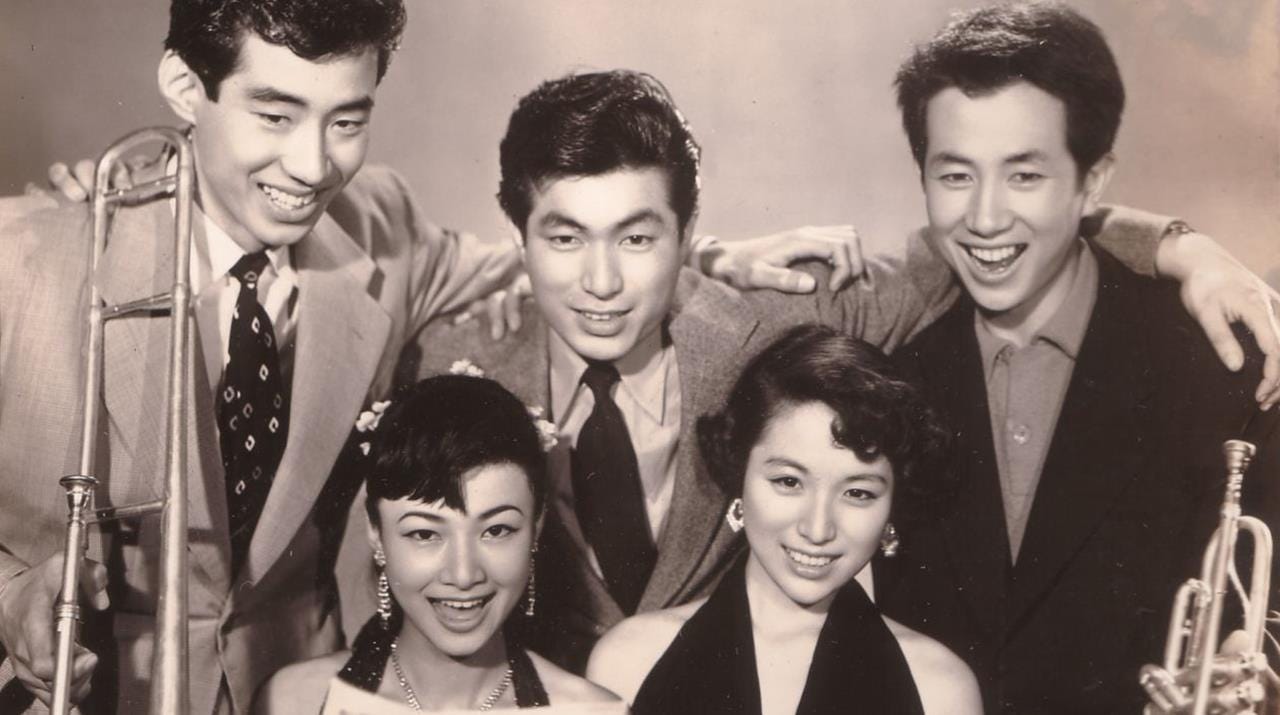
Tokyo Cinderella Girl also stars Yukimura Izumi, and once again, the last half-hour is devoted to a revue in which Izumi, her jazz band pals, and various other acts perform at the Asakusa International Theater.
The third Inoue film, Stormy Man, released in 1957, became that year’s third biggest box-office hit. The film became Inoue’s biggest hit and showcased Japan’s premier movie star, Yujiro Ishihara, at his most charismatic:
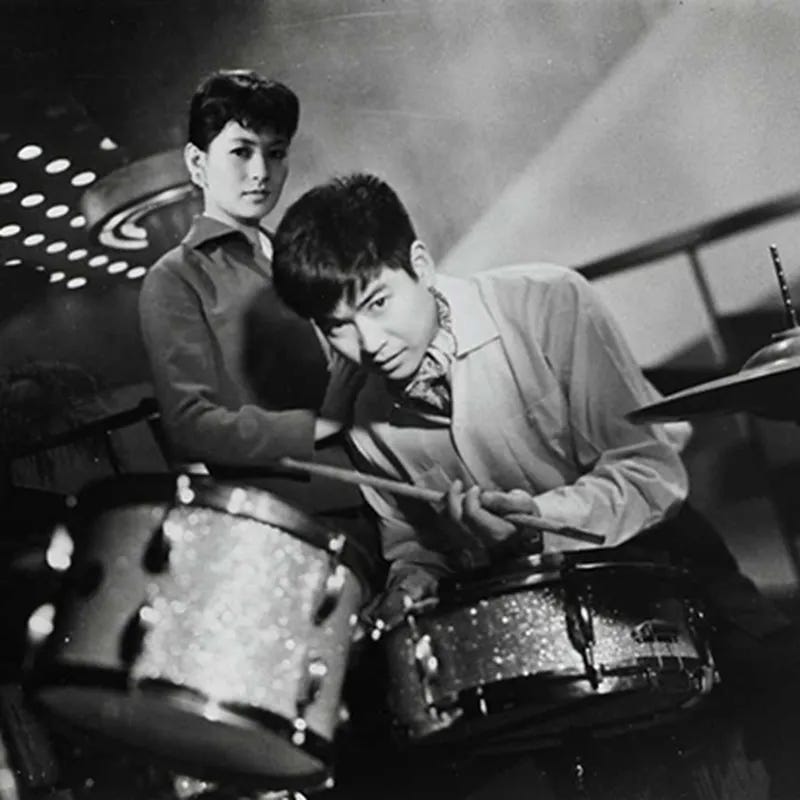
However, another 1957 release, Masaki Kobayashi’s Black River, marked a stark departure from Inoue’s tame musical format.
Masaki Kobayashi was generally known in Japan as a social dissenter. In 1942, he was drafted into the Imperial Japanese Army and sent to Manchuria. As a pacifist and socialist, he refused promotion to a rank higher than private. In 1944, he was taken prisoner and spent a year in a detention camp on Okinawa. He was released in 1946 and returned to filmmaking. He made his directorial debut in 1952 with My Son’s Youth. In 1957, he directed the Japanese film noir Black River, depicting the rampant organized crime and prostitution that had blossomed around American bases in Japan.
Black River deals with post-war domestic life around US Naval Air Station Atsugi, a place American author Donald Richie describes as “an amusement park” for Americans, where the black market runs the streets. The film is set during the American occupation of Japan, and most of the characters are castaways in the “New Japan” that emerged after Japan’s defeat in WWII. Although the film was actually shot after the occupation had ended, Black River openly associates the decadence and misery of the lower depths of Japanese society with the American presence.
It’s therefore not surprising for Kinoshita’s soundtrack to include jazz, as you can hear in the opening sequence of the film:
By the 1960s, jazz was finally finding its way solidly into movie soundtracks with the work of Toshirô Mayuzumi, a celebrated and leading figure in Japanese classical and electronic music. He composed a trio of jazz-inspired soundtracks that, with each release, delved deeper into jazz.
The first is his soundtrack from Mikio Naruse’s When a Woman Ascends the Stairs, released in 1960.

Mayuzumi’s soundtrack uses a more chamber-jazz approach, with piano and vibes playing quietly in the background. However, in his next soundtrack for Koreyoshi Kurahara’s film The Warped Ones, also released in 1960, jazz plays a more prominent role, as you can hear in this clip:
In his third soundtrack for Koreyoshi Kurahara’s Black Sun, released in 1964, Mayuzumi places American jazz at the forefront with several jazz numbers composed in collaboration with the Max Roach Quartet, featuring Abbey Lincoln. This is an excellent soundtrack, which can be found here:
By the time Black Sun was released, American jazz was becoming very popular and in big demand. However, jazz records were not only very hard to find but also very expensive. According to photographer and jazz kissa documenter Katsumasa Kusunose, during the 1960s, the average Japanese office worker earned 20,000 yen a month, and an imported American jazz record cost 3000 yen. This is where jazz kissa came into play.
The number of jazz kissa in Tokyo increased throughout the 1960s and peaked in the late 1970s at roughly 200. Today, there are about 100 jazz kissa and jazz bars open in the region. Interestingly, there are still about 20 jazz kissa that have remained in business since the 1960s and 1970s.
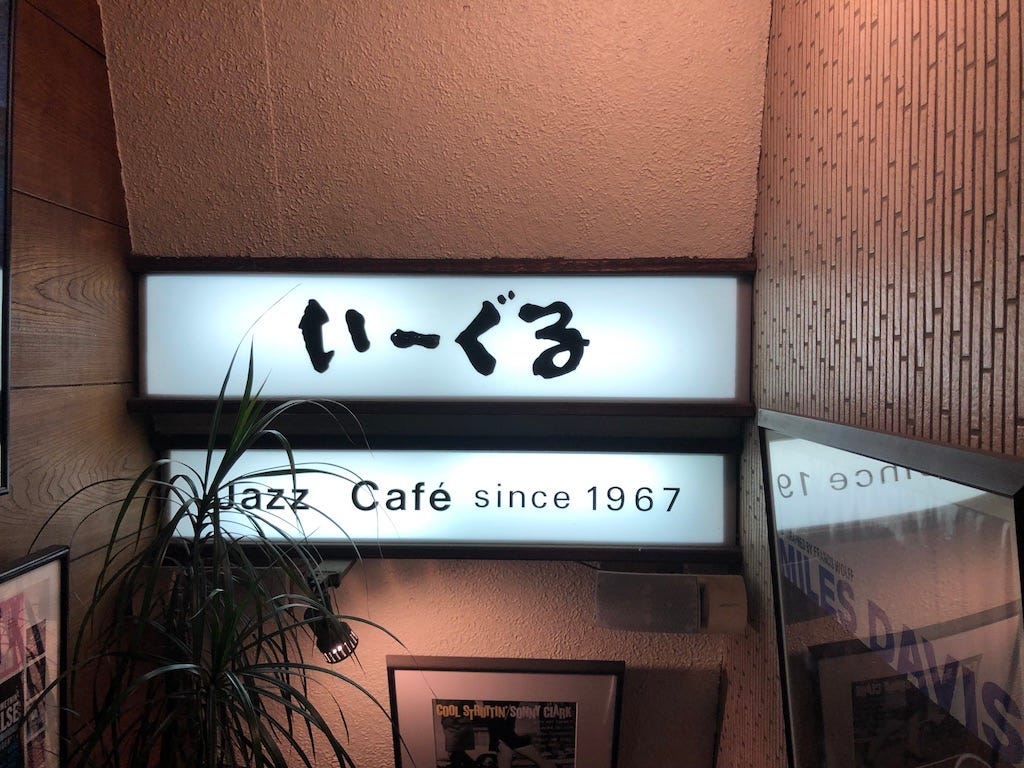
Located in Yotsuya, in Tokyo’s busy Shinjuku ward, Eagle is one of the remaining jazz kissa, and it still enforces the “no chatting” rule. It is also one of the remaining “critically endangered” original jazz kissa:
Here’s a look inside:
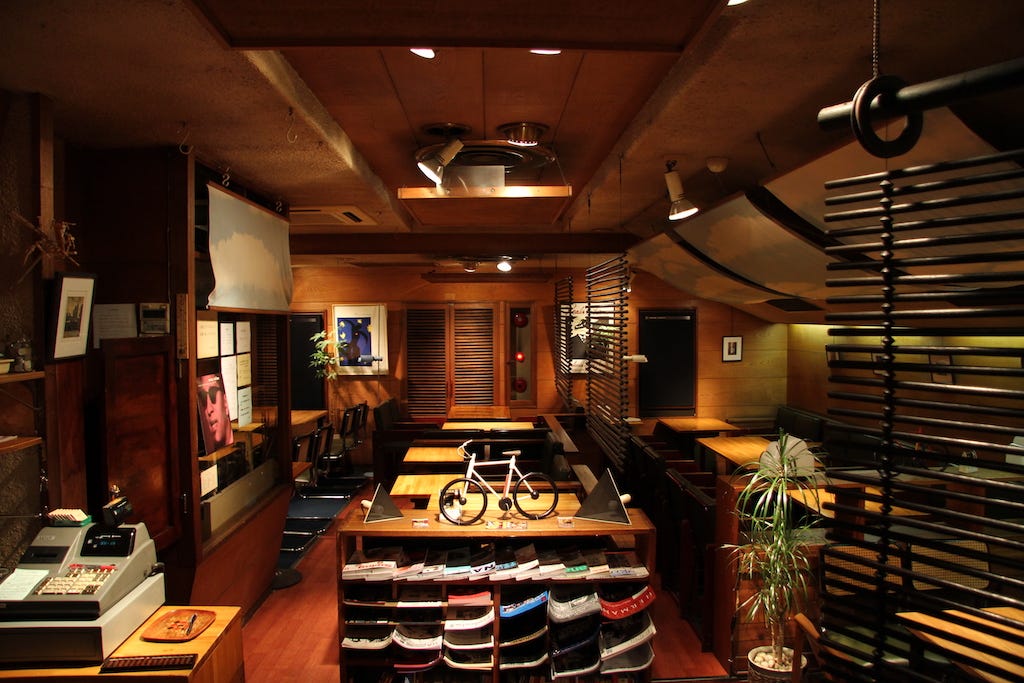
Eagle is the fifth-oldest jazz kissa in Tokyo, and this December it will celebrate its 59th anniversary.
Eagle specializes in loud playback with high-spec audio, featuring JBL speakers and a collection of over 20,000 records and CDs. Eagle is a spacious place for relaxing and maintains “no chatting” rules from 11:30 a.m. to 6:00 p.m. After 6:00 p.m., the atmosphere changes to a jazz bar, and you can talk until closing.
Another jazz kissa classic is the legendary Basie in Ichinoseki, Iwate, in northern Japan. They recently celebrated their 50th anniversary. Basie is also a live jazz venue that has hosted, among many others, Anita O’Day, Elvin Jones, and, naturally, Count Basie. Here’s a look inside:
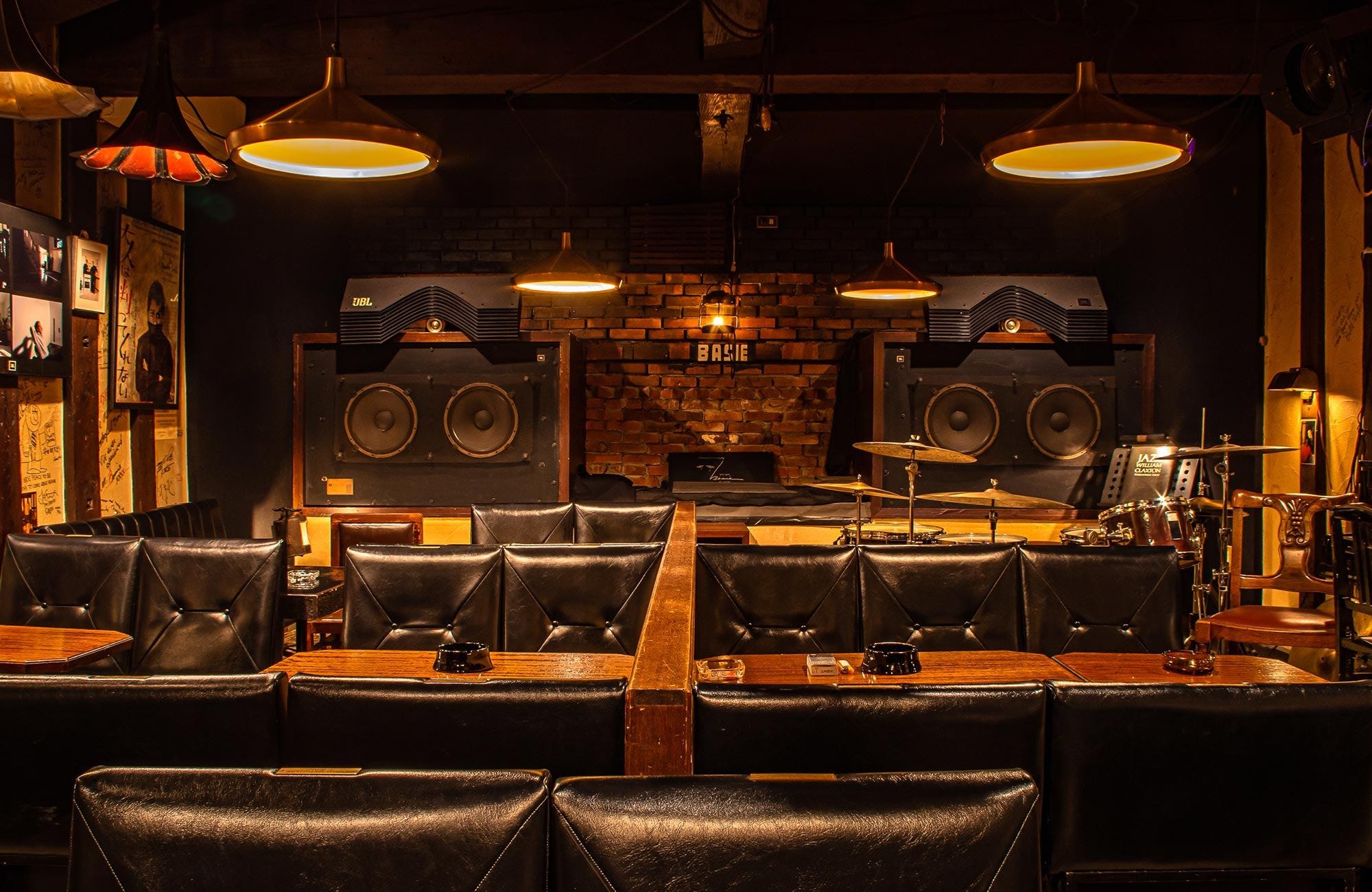
The owner, Seiji Sugawara, has published several books about his sound system, which is among the most highly regarded JBL sound systems in Japan.
A documentary film about Basie was released in Tokyo and other cities in Japan in 2020. You can find more information here. Here’s the trailer - with a sweet Peter Brötzmann cameo at the 40-second mark:
Brötzmann had been to Japan many times since his first trip in 1980 with Alexander von Schlippenbach’s Globe Unity Orchestra. Brötzmann’s favorite jazz kissa was Mary Jane in Shibuya, Tokyo; however, it closed a few years ago. Due to the health problems of aging owners and deteriorating buildings, the number of jazz kissa in Japan has declined. It is unclear if that trend will continue - only time will tell.
Here’s one more for the road. In 2021, using audio transferred from the original ¼” tape reels, Blue Note released First Flight to Tokyo: The Lost 1961 Recordings. This is a previously unreleased live recording at Hibiya Public Hall in Tokyo from January 14, 1961, during The Jazz Messengers’ first-ever tour of Japan. They were among the first modern jazz groups to tour the country, paving the way for more American jazz artists to follow. These live tours, along with the introduction of jazz in European and Japanese cinema, helped kick-start a modern jazz boom throughout Japan that continues today.
The band featured Blakey with Lee Morgan on trumpet, Wayne Shorter on tenor saxophone, Bobby Timmons on piano, and Jymie Merritt on bass. Here’s the trailer for the release:
In the album’s liner notes, Jazz critic Bob Blumenthal wrote:
The performances were captured at the end of a tour that resulted after Blakey was crowned in a Japanese magazine poll as the American musician that the country’s jazz fans were most eager to experience in person. Over the first two weeks of January 1961 the Messengers performed in several major Japanese cities and were received as artistic heroes wherever they appeared.
What I like most about jazz kissa is the respect they give to the music. In this regard, they developed an etiquette that goes beyond the “no chatting” rule. For example, if you are playing records, you must play at least one whole side and place the record’s cover in a visible location for listeners. The reason for this etiquette is one simple fact: jazz kissa are a place for serious listening to jazz by both the people playing the records and those listening to them. I say well done - as it should be.
Next week, on that Big River called Jazz, we’ll dig in our paddles to explore the world of Maggie Nichols and the Feminist Improvising Group.
If you like what you’ve been reading and hearing so far on our journey and would like to share it with someone who might be interested in learning more about our great American art form, Jazz, just hit the “Share” button.
From Astaire to Sun Ra: A Jazz Journey is a reader-supported publication. If you feel inclined, subscribe to my journey by hitting the “Subscribe now” button.
Feel free to contact me at any time to talk shop. I welcome and encourage that.
Please hit this link to buy me a cup of coffee if you’d like to show your guide some appreciation for this and past journeys. Know in advance that I thank you for your kindness and support.
Until then, keep on paddling….
My intro to Jazz Kissa was this post. What a great concept. The film Black River is a very good film noir. Eddie Muller showed it on Noir Alley.
I have a playlist on my Apple Watch that I use when I run a 5K race. All the songs are fast paced jazz tunes. Fun fact: the first track, which gets my race kicked off, is Tokyo Traffic!