
Jazz Dance in London
Absolute beginners....

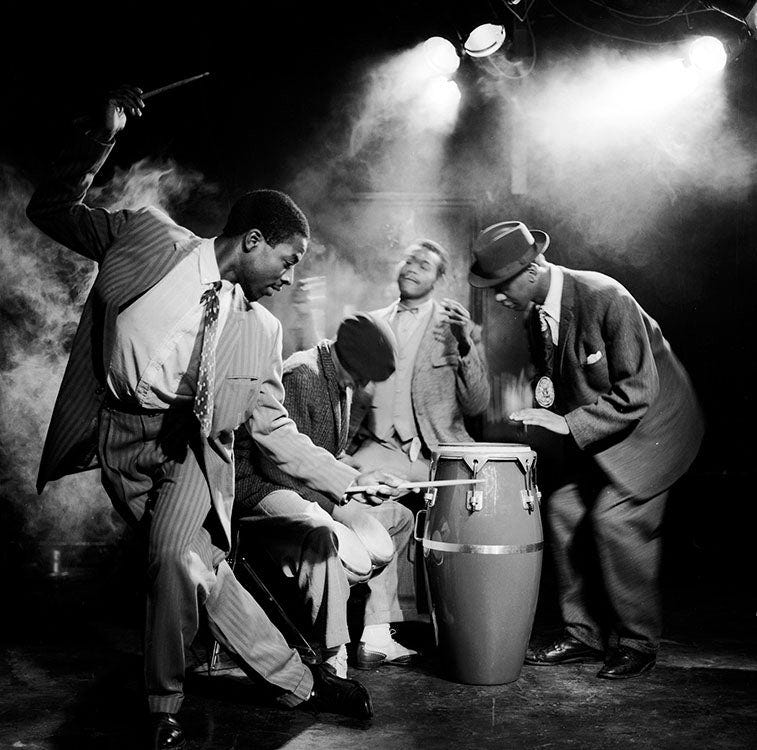
There can be no doubting that we have ourselves a new “scene” on our hands - a sort of movement registering a very low resistance to jazz music and its strange bedfellows.
-Mark Webster, The Wire, April 1985
In 1983, a college friend introduced me to a new band called The Style Council, an English pop band formed in 1982 by Paul Weller. Weller had earlier played in the rock band The Jam, who released 18 consecutive top 40 singles in the UK, from their debut in 1977 to their break-up in December 1982, including four number one hits.
The cassette he played for me was Introducing The Style Council, their debut just released in the States. Whenever we drove down to New York City for the weekend, we’d crank it on the car’s cassette player. I loved it.
Their more popular hit songs like Long Hot Summer and Headstart for Happiness were on Side 1, but we preferred Side 2 with the longer club mix version of Long Hot Summer, followed by Paris Match and the killer instrumental, Mick’s Up:
When Mick’s Up finished, we hit rewind and listened to those three over again.
Their next album, Café Bleu, was just as good. In particular, I liked The Whole Point of No Return and a new version of Paris Match with Tracey Thorn’s cool vocals:
And check out the cool trench coats. My friend and I went out and got our own trench coats. Café Bleu had a definite jazz influence that I liked, such as Mick’s Blessing and Blue Café:
Over the next year, The Style Council released more great albums, and their song Have You Ever Had It Blue? was featured in the 1986 British film Absolute Beginners:
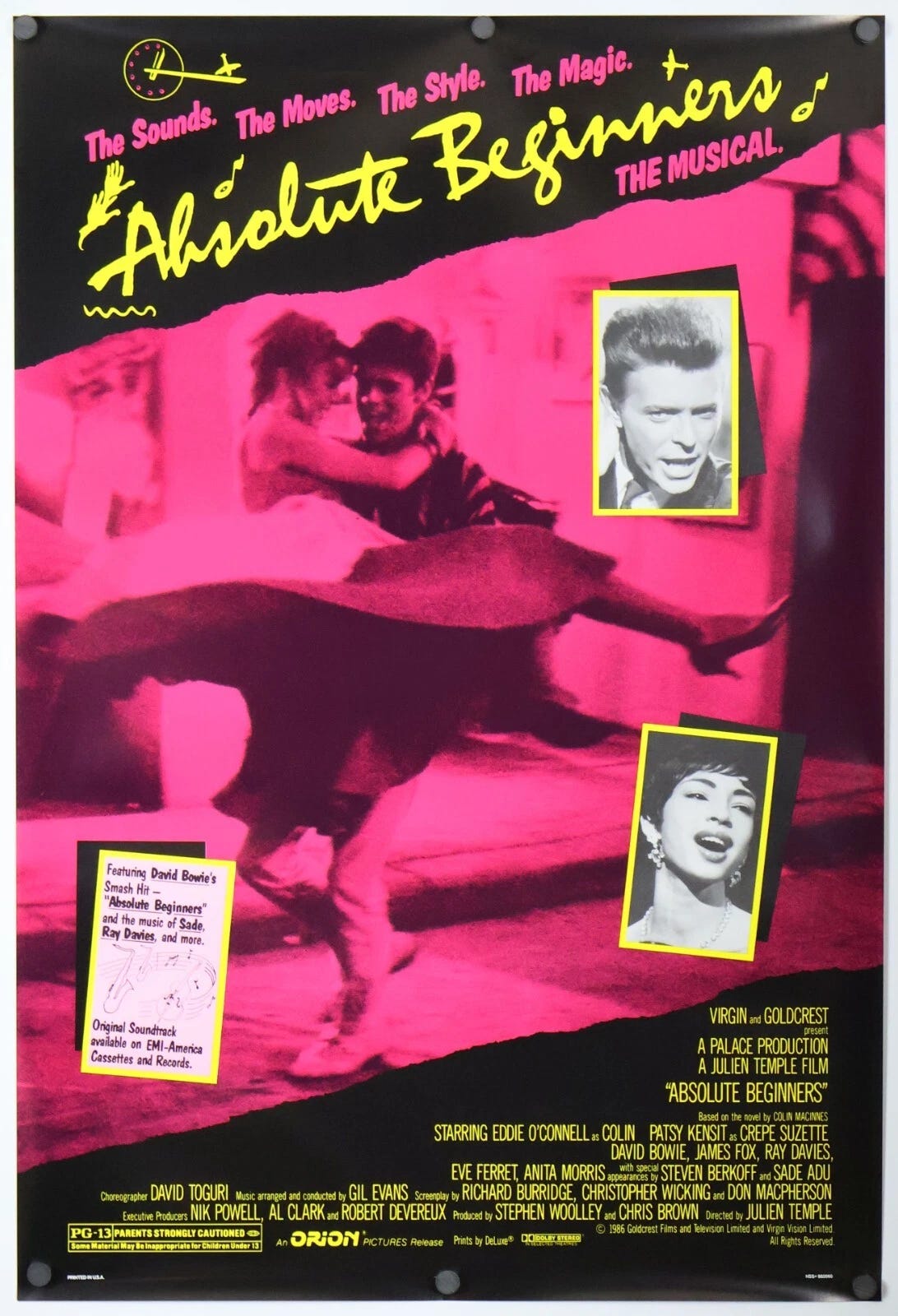
The film is a musical adaptation of Colin MacInnes' book about life in late 1950s London:
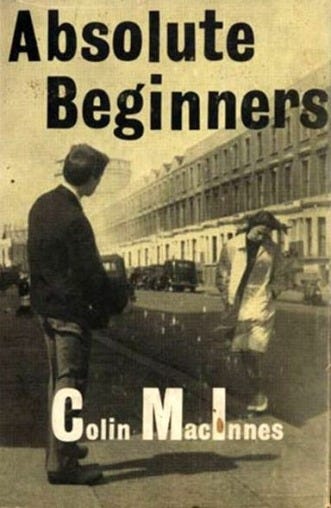
Absolute Beginners is the narrator's opinion of London’s newly formed teenage culture and its fixation on clothes and jazz music during the simmering racial tensions in the summer of the Notting Hill race riots.
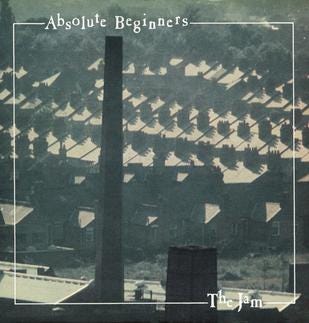
Paul Weller called MacInnes’ Absolute Beginners “a book of inspiration.” Before The Style Council, while with The Jam, Weller named a song after the novel, which reached number 4 on the 1981 UK Singles Chart:
Later, after he formed The Style Council, he wrote a song called Mr. Cool’s Dream, a reference, I take it, to the character Mr. Cool in MacInnes’ Absolute Beginners.
Here’s the scene from the film that featured Have You Ever Had It Blue. The song kicks in at the 4:40-minute mark, with some nice sax work by Gary Barnacle, a legendary UK session man who played on several songs and albums by the Clash:
Although Absolute Beginners received bad reviews, I could never figure that out; it totally worked for me. It was nicely scored by the great Gil Evans and starred David Bowie, who appeals to me artistically as both a singer and an actor.
Absolute Beginners was directed by Julien Temple, who, besides Bowie, also included in the film Sade, Slim Gaillard (from Slim and Slam fame), Working Week, and the Jazz Defektors, the four dapper dance ensemble at the beginning of Sade’s song Killer Blow:
From this clip, you can get a feel for the whole Jazz Dance scene brewing in London during the mid-1980s. It was filmed at the London club The Wag, ground zero for the new Jazz Dance trend. As a tap dancer myself, I was instantly attracted to that scene.
This week on that Big River called Jazz, we’ll dig in our paddles and discover the world of London’s 1980s Jazz Dance scene.
After I finished college and Dutch language training at the Defense Language Institute in Monterey, California, I was sent to the Netherlands. When I landed at Schiphol Airport in Amsterdam, it was September 1985.
Not long after arriving in the Netherlands, I took leave to visit family in London. My mom was born into a large family in Twickenham, so I had many relatives in the London area. While there, I went to The Wag club on Soho’s Wardour Street, the haven for a new Jazz Dance movement, which I had heard about from some guys at Ray’s Jazz Shop on Shaftesbury Avenue.
The Jazz Dance scene started in the Spring of 1982, when Chris Sullivan took over the Whisky A-Go-Go on Warbour Street and renamed it The Wag. Here’s a terrific 1984 video about the Jazz Dance scene from a segment of the BBC2 "Whistle Test" music program. It was filmed at The Wag:
What amazed me most about The Wag was that it was filled with young people like me dancing to old jazz tracks like Lee Morgan’s Sidewinder. The Wag was not like Ronnie Scott’s, where you pay to get in and sit around while everyone is eating dinner and drinking wine. The Wag was where, if you got the feeling, you got up and started dancing. The Wag was really a unique place and one of the best clubs I’ve ever been to. And at that time, London was in its prime.
When I was at The Wag the first time, it only had one floor. The DJ that night was Paul Murphy, who is interviewed in the video above at the 5:00-minute mark. At the time, I knew very little about him. However, as I would learn later, Murphy had become the figurehead of London’s new Jazz Dance movement. His Monday night sessions in 1984 at The Wag were legendary, drawing the dressiest and best jazz dancers.
Paul Murphy grew up in South London and got his start as a DJ on Saturday nights in 1979 with a show called JAFFAS (Jazz and Funk, Funk and Soul) at a pivotal club called the Horse Shoe. In August 1982, when “Boo” Mehmet, who with Colin Parnell had created the legendary partnership with the original “Jazzifunk Club,” left the Jazz Room at the Electric Ballroom, Murphy took over their Friday night shift. And the rest is history.
Murphy held court at the Electric Ballroom until the Spring of 1984, when Sullivan asked him to run the music scene at The Wag. Murphy agreed and sold the key albums integral to the ballroom crowd to Gilles Peterson.
Incidentally, The Wag was where, a year before, in August 1984, David Bowie filmed his video Blue Jean, also directed by Julien Temple:
I left London that week, eager to make it back to The Wag again someday.
In the Summer of 1986, I left the Netherlands and was stationed in Verden, West Germany, a small northern town between Bremen and Hanover. That was the British sector, and I lived not far from a British Army garrison in Soltau, where I could pick up UK radio stations. Late one Saturday night, driving home from Hanover, I found Gilles Peterson’s Mad On Jazz show on BBC London Radio. Peterson kept me linked to the Jazz Dance scene happening in London. One night, he talked about the upcoming Soho Jazz Festival.
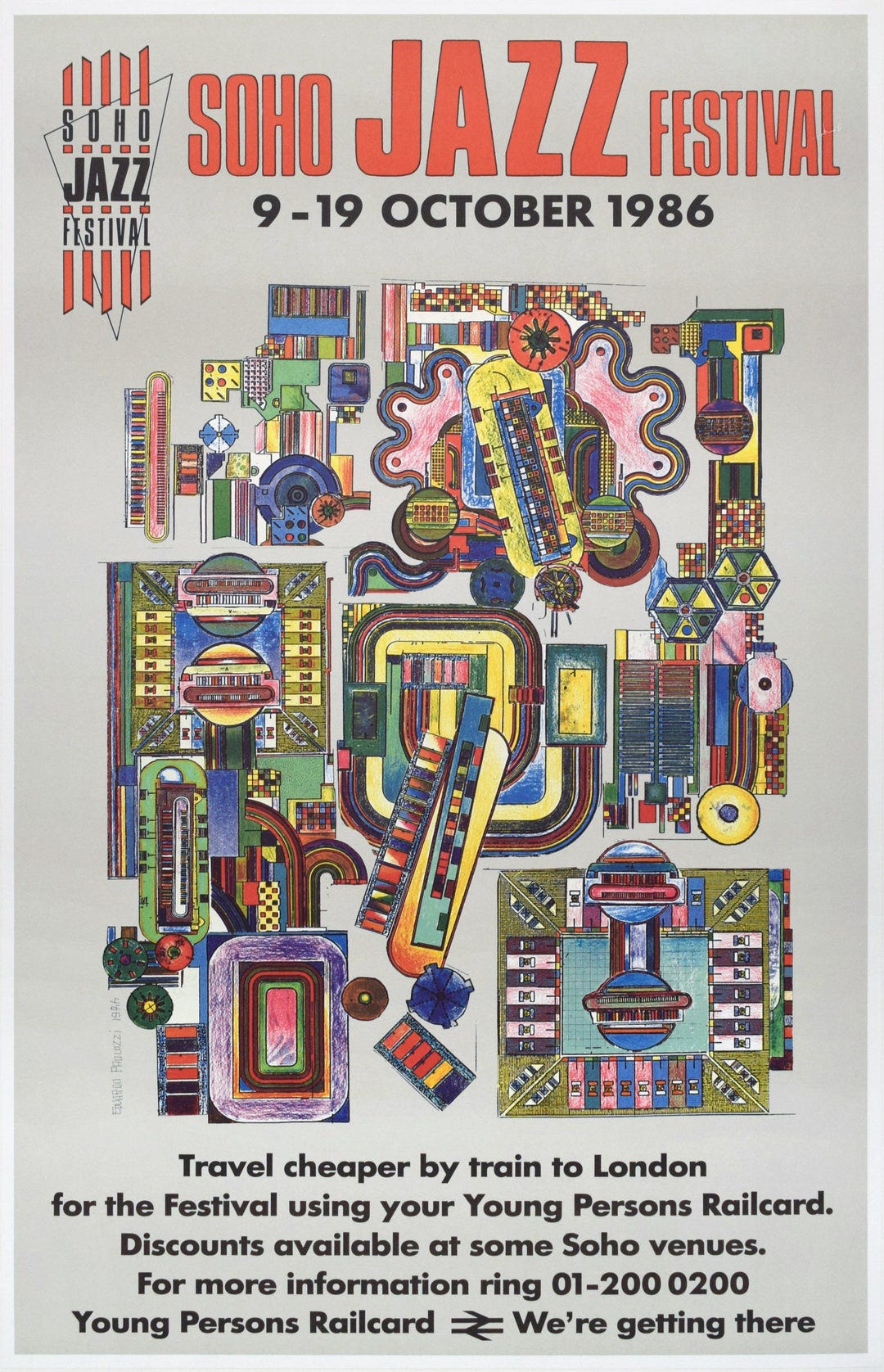
So I got a long weekend pass and drove to London. However, when I went to The Wag, unfortunately, Murphy wasn’t there. He had left suddenly in July over an argument about wages. The DJ that night was Baz Fe Jazz, who had worked part-time at Murphy’s famed record store, Fusions, while attending the Arts Educational School near the Barbican on Golden Lane in London.
Baz Fe Jazz, whose real name is Barrington Wilmont, came from Coventry in the Midlands before establishing himself in London. As a dancer himself, he fit in well with the elite club dancers, which led him to move to London to train as a dancer. He was always in direct competition with Gilles Peterson.
Also, that night I saw an amazing dance ensemble that was either The Jazz Defektors, a troupe comprised of the very best dancers from Manchester, or IDJ (I Dance Jazz), a troupe of the best London-based dancers - really the first Jazz Dance troupe in the UK and worthy of further research. Either way, these cats were killing it.
The festival and many of the artists who performed there are captured in this music documentary, 10 Days That Shook Soho (note: there’s a short blackout in the video at the 25:10 minute mark, so skip past that):
That’s Baz Fe Jazz at the 12:41-minute mark, DJing at The Wag.
Come to think of it, when I was there the second time, there was a cool spiral staircase and another staircase next to the main bar to get to another jazz room on the second floor. So it’s very possible that Peterson was playing upstairs that night, but I didn’t go up there, as the tunes Baz Fe Jazz was playing and the dancing were great.
Also that week, I saw the straight-ahead quartet led by Tommy Chase, a hard-driving drummer who was popular with the jazz dance crowd, and a solo show by Georgie Fame, whom I knew very little about. As I learned later, he recorded a song I listened to a lot as a kid: Sunny.
The Jazz Dance scene of the 1980s was as much about drummer Tommy Chase as anyone. When Murphy took over the music at The Wag, he contacted Chase’s manager, Honest Jon, as in the London record store owner, about coming to The Wag. As a result, Chase became a virtual resident.
On the 13th and 14th of November 1983, at Porcupine Studios in Mottingham, London, the Tommy Chase Quartet recorded their first album, Hard!. It was released on Boplicity Records in 1984. From the album, here is The Message:
Here’s a video of the Tommy Chase Quartet and jazz dancers from a 1987 BBC Channel Four popular Saturday Live TV show:
Bands like the Tommy Chase Quartet and Courtney Pine were among the first live hard bop bands I saw stretch out their music. It was an exciting time and an important part of my jazz journey, and still a few years before I would hear the sounds of free improvisational music.
Here’s a couple more for the road. Although I never got to see Gilles Peterson DJ live in London, I still listened to his radio shows while in West Germany. Over the years, Peterson became an important advocate and longtime champion of Sun Ra’s music. In October of 2015, Peterson curated a Sun Ra compilation released by Strut Records:
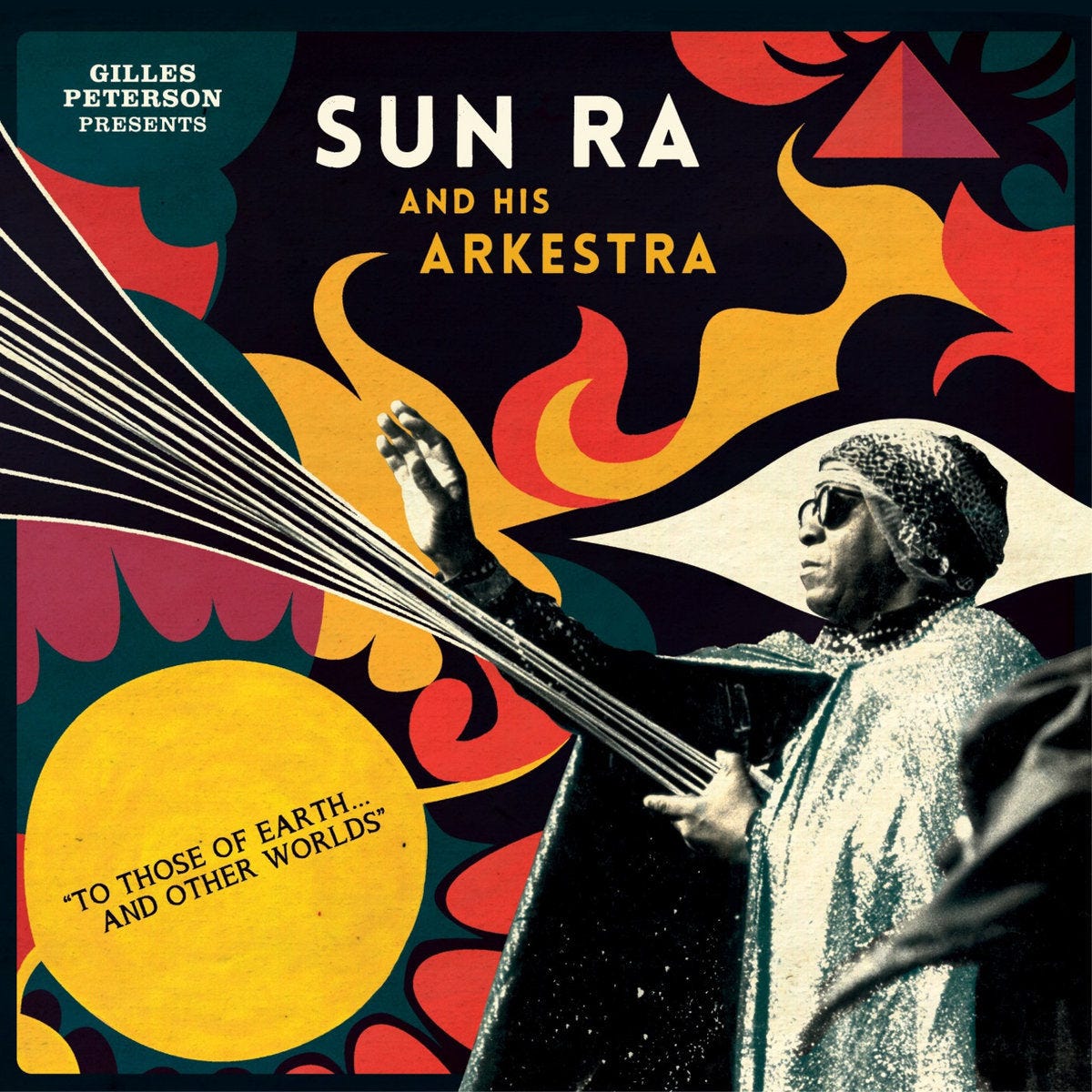
Incidentally, Peterson is also an avid collector of Sun Ra albums, as I am. Here’s a short video from BBC Radio 4, where he talks a little about his collection:
For a short time, I was lucky enough to get a taste of the Jazz Dance scene in London, which ramped up in 1982 and then slowly faded away in 1988.
By July 1986, Murphy had left The Wag. Journalist for The Wire magazine, Mark Webster, wrote:
Murphy disappeared and then the scene fell on its arse. From my perspective, when Murphy wasn’t around anymore the big dream had died. It genuinely went underground.
I understand how these things change over time, but looking back on the Jazz Dance scene now, I wonder why it happened. What brought these young people, like me, to jazz music - digging it for the good, solid music it is? More importantly, can it happen again?
By the end of 1987, the jazz dance portion of my journey had died. In London, the Jazz Dance movement was being replaced by the Acid Jazz movement, which I missed out on. Before I left Europe to return to the States, I was about to begin a new portion of my journey and an unexpected change.
In the summer of 1987, I went to the North Sea Jazz Festival in Den Haag. I was there mostly to see Oscar Peterson and some Blues bands. However, after a long day of music, as I was on my way back to the car, I passed a tent and heard sounds I had not heard before. I stopped and looked into the tent, and there was the Willem Breuker Kollektief. I was stunned. But that’s a story for a little further down the river…
Anyway, before we go, here’s one in memory of that first Soho Jazz Festival, where Georgie Fame sang the wonderful song Eros Hotel, a song he wrote with American poet/lyricist Fran Landesman, best known for her lyrics to: The Ballad of the Sad Young Men, which Roberta Flack made famous on her debut album First Take; and Spring Can Really Hang You Up the Most, which Mark Murphy sings so beautfully on his great 1961 Riverside album Rah, supported by an orchestra including Bill Evans, Wynton Kelly, Urbie Green, Ernie Royal, Clark Terry and Jimmy Cobb. Before we get to Georgie Fame, here’s Murphy singing Spring Can Really Hang You Up the Most:
I had to include this; after all, it is Spring in Minnesota right now.
This is a similar version to the way Georgie Fame performed Eros Hotel at the 1986 Soho Jazz Festival - stay with this one all the way until his nice nod to Thelonious Monk’s Crepuscule With Nellie near the end:
I’ve never been alone with you
I don’t know how good you could be
And if we should collaborate
With the music of you
With the lyric of me
So let’s go up to the Eros Hotel
And write some love songs on the sheets
The sheets are warm and soft as silk
From all the love that might have been…
Next week on that Big River called Jazz, we’ll celebrate a bit of a milestone, my 300th edition of From Fred Astaire to Sun Ra.
Please hit this link to buy me a cup of coffee if you’d like to show your guide some appreciation for this and past journeys. Know in advance that I thank you for your kindness and support.
If you like what you’ve been reading and hearing so far on our journey and would like to share this with someone you think might be interested in learning more about our great American art form, Jazz, just hit the “Share” button.
From Astaire to Sun Ra: A Jazz Journey is a reader-supported publication. If you feel so inclined, subscribe to my journey by hitting the “Subscribe now” button.
Feel free to contact me anytime to talk shop. I welcome and encourage that.
Until then, keep on rowing….
Thanks for this and all the best from Twickenham. I’m re listening to Style Council and Georgie Fame.
Great reminiscences, lovely article. I arrived in London in 1985 only just discovering Jazz (in part from the Style Council/Everything But The Girl connections).I listened to a lot of the music you mention but never made it to the Wag. It was such a vibrant scene, I saw IDJ a couple of times and Working Week were one of my first Jazz gigs, then Courtney Pine. Gilles Peterson's BBC Radio 6 show is still a weekly listen and that scene's influences are still very apparent.