
James Merrill
Yes, they call me, Jimmy...

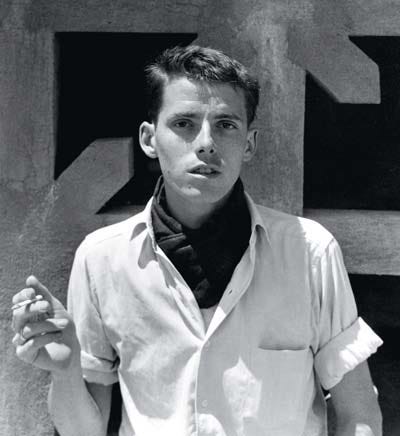
Always the black swan moves on the lake; always
The blond child stands to gaze
As the tall emblem pivots and rides out
To the opposite side, always. The child upon
The bank, hands full of difficult marvels, stays
Forever to cry aloud
In anguish: I love the black swan
-James Merrill, from his poem The Black Swan
It’s not often that you get to meet your heroes, and people often say it’s a letdown. But not for me. I have met three, and each time I was enlightened.
The first two meetings, with two blues legends, happened in the same year, early in my life. The third, with one of America’s greatest poets, came much later.
The first meeting was in 1978, when I was in junior high school; my brother took me to see John Hammond inside a downtown St. Paul brownstone, a place called Wilebski’s Blues Saloon. It was a small place, a second-story flat converted into a bar. Not many people were there, less than twenty, I suppose. So after the show, my brother took me up to see him.
He shook my hand and said, “Hi, I’m John Hammond. What’s your name?”
He asked me how I heard about the show, and I told him I’d heard his music on the radio - his Footwork album had just been released on the Vanguard label. I pulled my harmonica out of my pocket and told him I was learning to play.
He shook his head and said, smiling, “I like that. Keep it up.”
We left, and I was surprised at how “normal” he was. I met him a couple of times in San Francisco, a few more times in Chicago, and one last time in Minneapolis at the Dakota Jazz Club. He was always the same.
The second meeting was later that year, when my mom took me to see John Mayall at an old roadhouse south of the Minnesota River. My English mom got into it with the bouncer because he wouldn’t let us go to the dressing room to meet John Mayall. Then Mayall, who must have heard them, stuck his head out of the door and yelled. “I’m John Mayall. Come on down here.” And we did.
I brought his most recent album to the show, a deliberate move. On one of his older albums, which I also had, he’s scolding the audience for calling for his old hit, Room to Move. He says back to them, “What’d you come here for? To hear an old record or something? No. That’s very much in the past.”
When we reached him, he talked to my mom about England for a bit. Then he turned to me and said, “What you got there?” pointing to the record.
When I handed him the album, I think he appeared a little surprised. I told him my favorite songs on the album were Table Top Dancing Girl and Lady. He laughed at that and signed my album, “To Bill. Thanks for the good old support! John Mayall.” He handed it back to me and told us to enjoy the show.
Just like meeting John Hammond, I was surprised at how genuine and nice John Mayall was. So unaffected and down-to-earth. These experiences deepened my admiration for them, and I became and stayed a devoted fan for life.
The third meeting came many years later, in 1993, when James Merrill came to Chicago, not long after I moved there from California. He was in town to give a reading from his new memoir, A Different Person, a terrific account of the years 1950 to 1953, when he was distancing himself from his parents and their struggles.

I can’t recall where the event was held. It was downtown and well attended. After the reading, I stood in line for a long time to meet him. I had brought along a few books for him to sign. When my turn finally came, I stood before him, a little shocked, tongue-tied as they say. He smiled and patiently waited for it to pass. Then, he spoke to me, “Hello. Thank you for coming. I see you have a few books there. What’s your name?”
That snapped me out of my stupor. I greeted him and handed him the books.
He signed the first two, and as he opened the last, The Changing Light of Sandover, I said, “That’s my favorite. May I ask you a question about it?”
“Yes, of course,” he replied, looking up at me with sudden interest.
I sheepishly asked him, “Did you guys really believe in that Ouija board?”
He quizzically cocked his head to one side, and looked me right straight dead in the eye, and for a moment, time stood still. I felt as though he was transmitting something, but I didn’t know what. After a few seconds, he smiled and chuckled a bit. Then, without answering and quite workmanlike, he looked down, opened the book, signed it, handed them all back to me, and said. “It was very nice to meet you, Tyler.”
I thanked him again. As I walked away, I wondered why he hadn’t answered my question; however, when I got outside and opened up The Changing Light of Sandover, this is what he’d written:
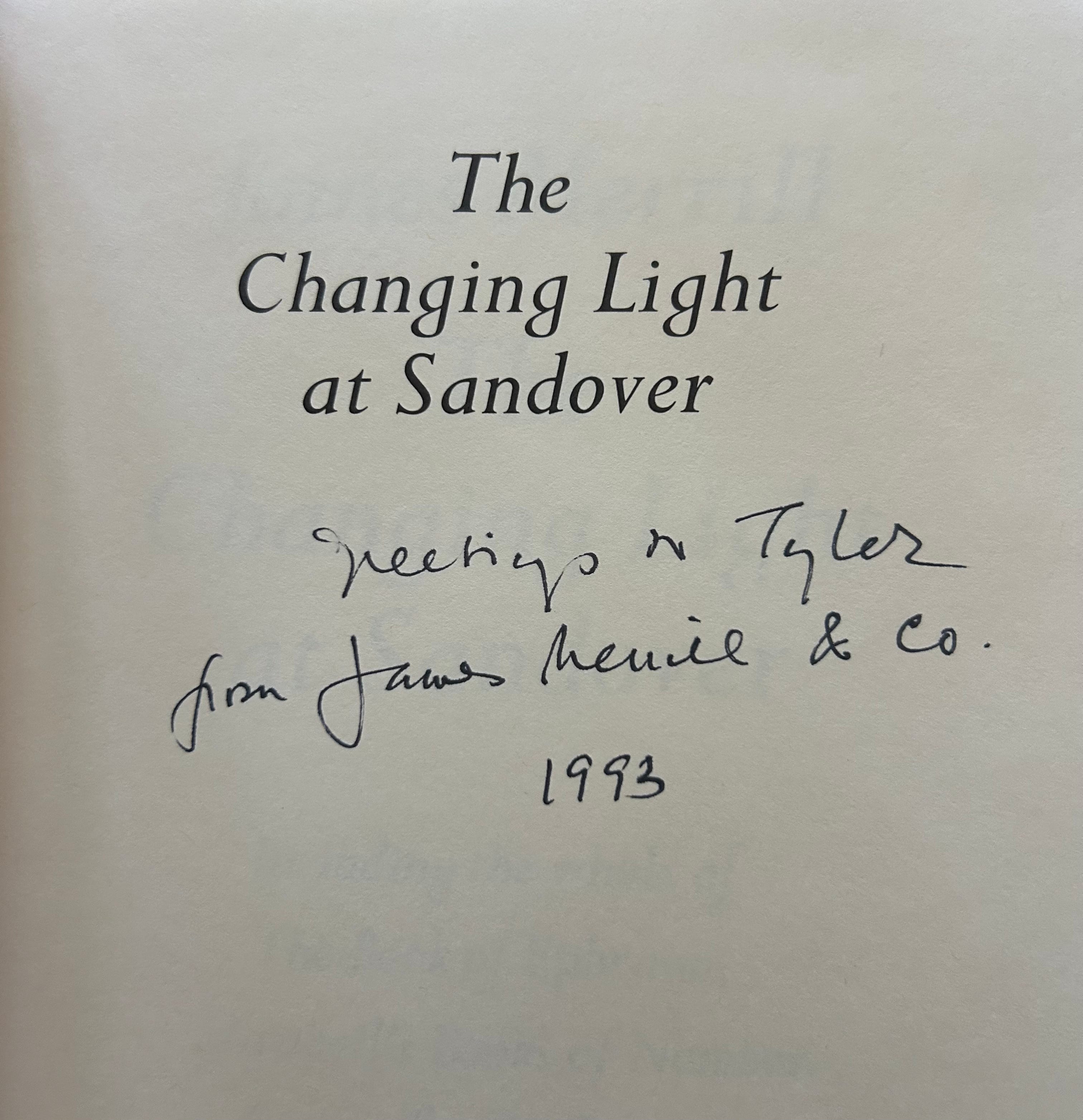
He’d answered the question after all: “From James Merrill & Co.” The perfect response.
Early in his life, Merrill saw himself as a misfit, like a black swan - different from the harmonious white swan. I can identify with that feeling. I think that’s why I have always held Merrill in such high regard and close to my heart. I sensed we were kindred spirits. A feeling that would strengthen later in my life.
James Merrill, like John Hammond and John Mayall, was a perfect gentleman. I think this is why I have remained such a devoted fan and supporter of their art over the years.
Earlier this year, James Merrill’s Poetic Places exhibit opened in Olin Library at Washington University in St. Louis. The exhibit ended last week. From their website:
American poet James Merrill was a world traveler. He loved discovering new destinations and exploring new cultures, and he found deep inspiration in them. He also had certain home bases that provided frequent creative stimuli throughout his life. On the occasion of Merrill’s centenary year in 2026, this exhibition showcases six such locations, whether a house, a city, a country, or even an imaginary place that transcended the physical and defined his epic literary trilogy.
This week on that Big River called Jazz, on the occasion of his centenary year in 2026, we’ll dig in our paddles and discover the world of James Merrill.
James Ingram Merrill was born in New York, New York, on March 3, 1926, and grew up in Manhattan and Southampton on Long Island. He was the only child of Charles Merrill, co-founder of the brokerage firm Merrill Lynch, and his second wife, Hellen Ingram, who came from a socially prominent family in Jacksonville, Florida.
Merrill spent his childhood at the grand mansion known as “The Orchard” in Southampton. He attended New York City’s all-boys St. Bernard’s School and enjoyed all the social privileges and expectations of the son of one of New York’s most powerful men.
In 1937, when he was 11, Merrill began piano lessons with Carol Longone, who introduced him to opera, the art form that, besides poetry, would mean the most to him. That fall, on September 24, 1937, Longone and his grandmother, Mis’ Annie, took him to the Hippodrome for his first opera, Verdi’s Aida, as you can see from the ledger page he kept, which meticulously lists all the operas he saw, where he saw them, and with whom he saw them:
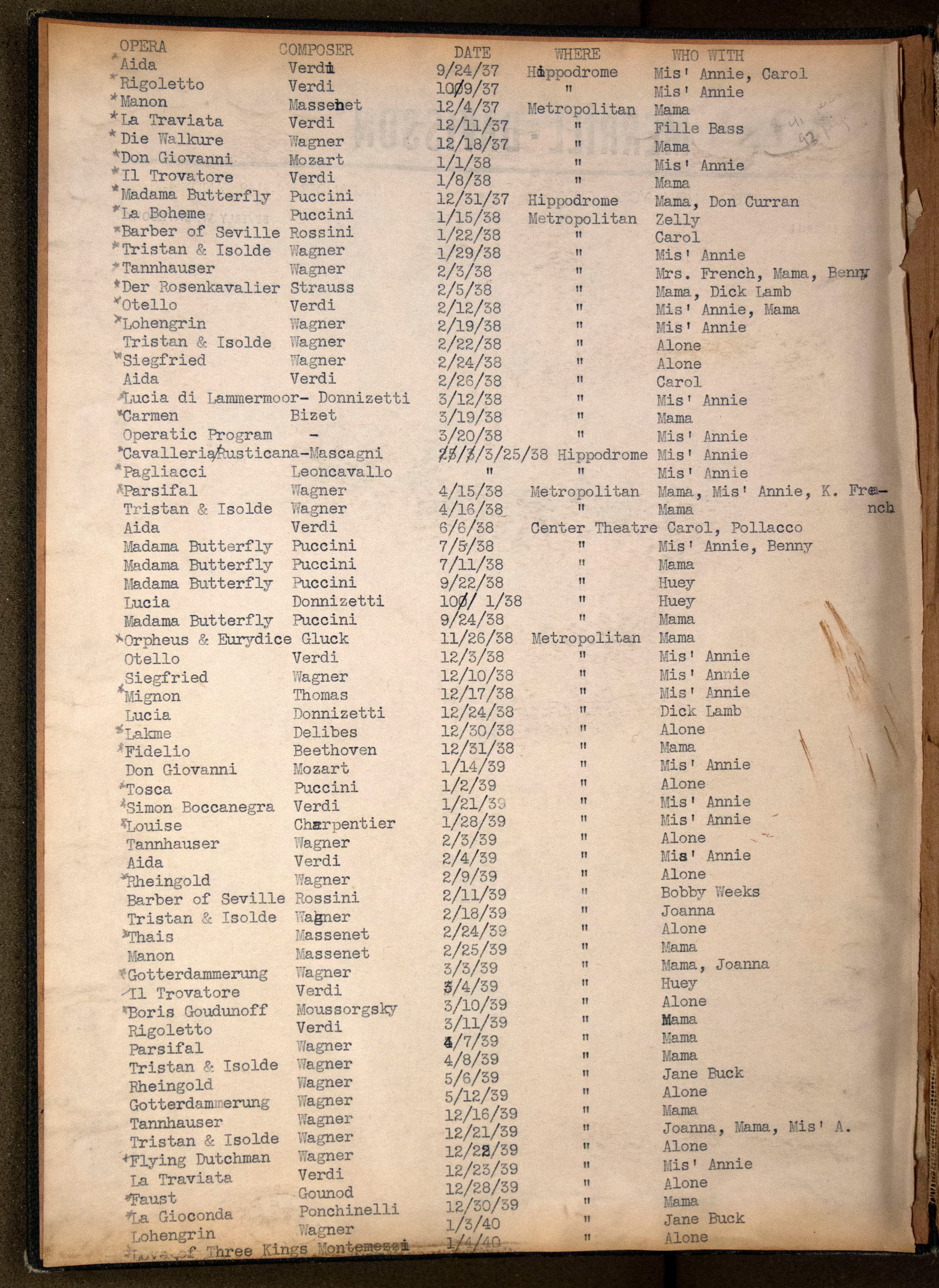
On December 18, his mother took him to Die Walküre, the second of the four epic music dramas that constitute Richard Wagner's cycle Der Ring des Nibelungen. He identified with Brünnhilde, the Valkyrie who gives up immortality for human love.
In his biography, James Merrill: Life and Art, Langdon Hammer writes:
With Carol at the keyboard and Hellen or Mis’ Annie as his escorts at the Metropolitan, opera was for Jimmy a woman’s world, and he was drawn to the strongest women on the stage. In Wagner’s Ring cycle, he was fascinated not by the sword-wielding Siegfried, but by Brünnhilde, whom Siegfried awakens from the circle of fire in which she sleeps.
Earlier that spring, his mother and father had separated, and in the fall, he and his mother moved out of Southampton and into the Carlyle Hotel on the Upper East Side of Manhattan. The separation devastated him. He grew up lonely, raised primarily by a French governess. In a 1938 letter from Hellen to Charles, she wrote, “Our son has suffered more than you have any idea.” Hammer wrote:
Jimmy had indeed suffered, and it was probably true that his father had no idea how much, preoccupied as he was with his son’s growing interest in the “aesthetic side” of life. Probably Jimmy himself didn’t know what he felt. Suddenly called on by both parents to stand up as “head of the family,” whatever that meant, he had simply thrown himself headlong into the Metropolitan Opera season.
And what a season it was. On January 1, 1938, he saw Mozart’s Don Giovanni; on the 8th, Verdi’s Il Trovatore; on the 15th, Puccini’s La Bohème; and on the 22nd, Rossini’s The Barber of Seville. But I think it was the Metropolitan Opera’s January 29 performance of Wagner’s Tristan and Isolde, with the great Norwegian soprano Kirsten Flagstad, that hit him the hardest:
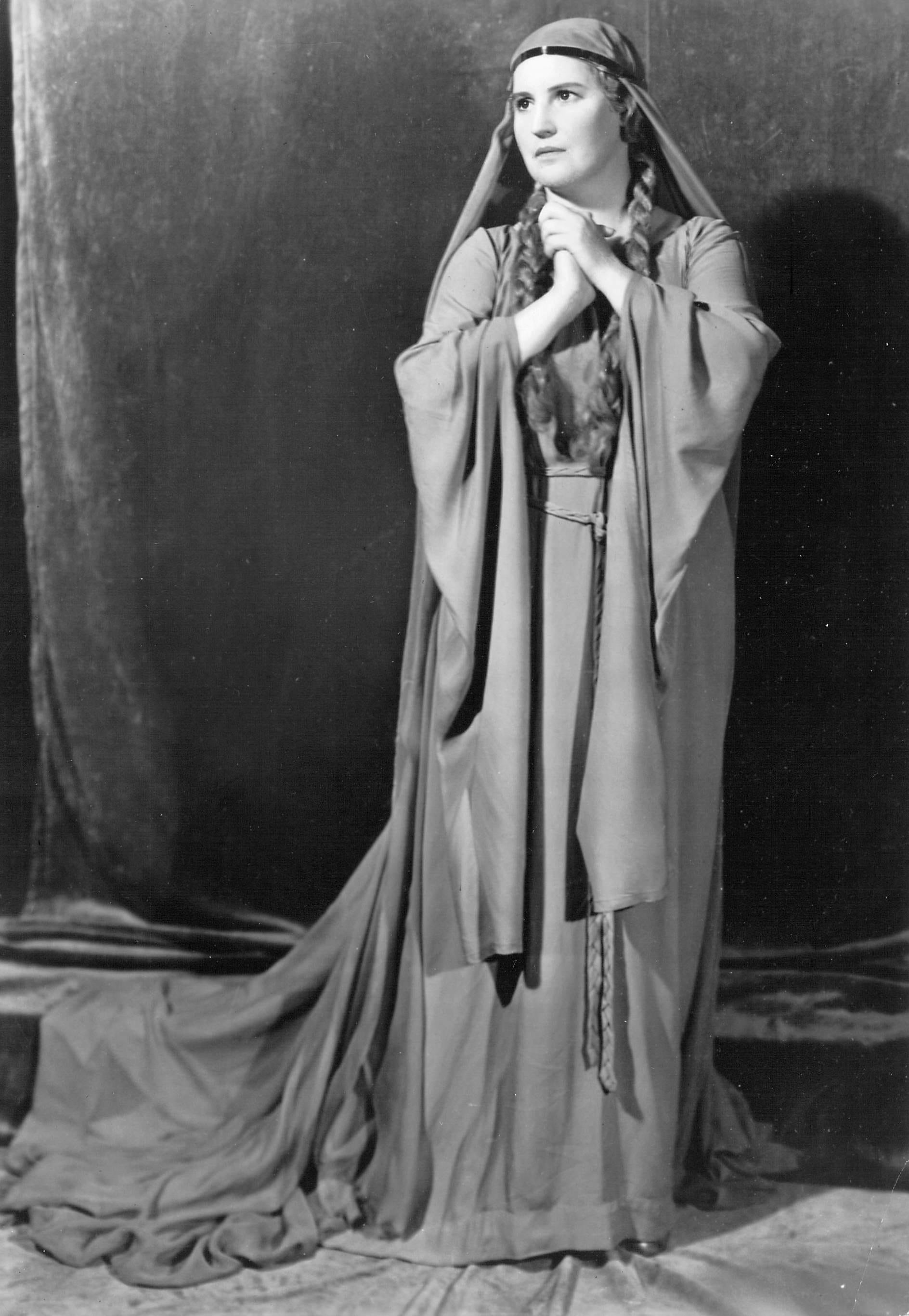
As you can see from the ledger above, he went on to see Flagstad in Tristan and Isolde an astonishing five more times within the next year.
From the opening phrase of the Prelude to Act I, when Merrill heard the famous “Tristan chord,” his life was changed:
Here is an amazing video about the Tristan chord, filmed at Haus Wahnfried, where Wagner once lived:
As the legendary pianist Stefan Mickisch explains, the Tristan chord is a chord of tension and longing. For Merrill, it represented the unresolved discord of his life.
By the time he first saw Tristan and Isolde, and heard the resolve he had been longing for in the “Liebestod” (Love-Death) aria, Merrill was living in a broken home, which he wrote about years later in the poem Broken Home from his 1966 collection Nights and Days, which won the 1967 National Book Award for Poetry. Hammer continues:
Compared to other forms of suffering and deprivation, the breakup of a wealthy child’s home may not count for very much. But for James Merrill, it opened a rift in the world that would never be repaired. Divorce, far less common at the time than it is today, was stigmatized for children as well as their parents: to be the child of a “broken home” amounted to a diagnosis.
Merrill needed a change, and in 1939, his enrollment as a 9th grader at Lawrenceville School in New Jersey, near Princeton, could not have come at a better time.
His 10th-grade year was an important step in that change. He met Frederick Buechner, affectionately known as “Freddy.” Buechner quickly became his best friend and remained a major influence on Merrill for more than a decade. Merrill’s first collection of poems was Jim’s Book, privately printed in 1942, surprisingly by his father while his son was a sixteen-year-old student at Lawrenceville.
In 1943, Merrill attended Amherst College, but in 1944, after he turned eighteen in the middle of his sophomore year, his studies were interrupted for 8 months while he served as an infantryman in the U.S. Army. He reported to Fort Dix, New Jersey, and a month later was sent to Camp Croft in South Carolina.
He returned to Amherst in 1945. In early September, he met Kimon Friar, who was teaching a world literature class. Friar was fifteen years older and living the literary life that Merrill wished for himself. He accepted Merrill as his informal poetry student, and one of the exercises he gave was to write a poem about a swan and a lake in a specific meter and stanza form. Merrill turned the exercise into a poem for the teacher, the man he describes in A Different Person as his "first love,” and adds that with Friar, “numberless adolescent daydreams were being realized.”
The result of Friar’s exercises was Merrill’s book, The Black Swan, which was privately printed in an edition of 100 copies in Athens in 1946, while Merrill was still in college:
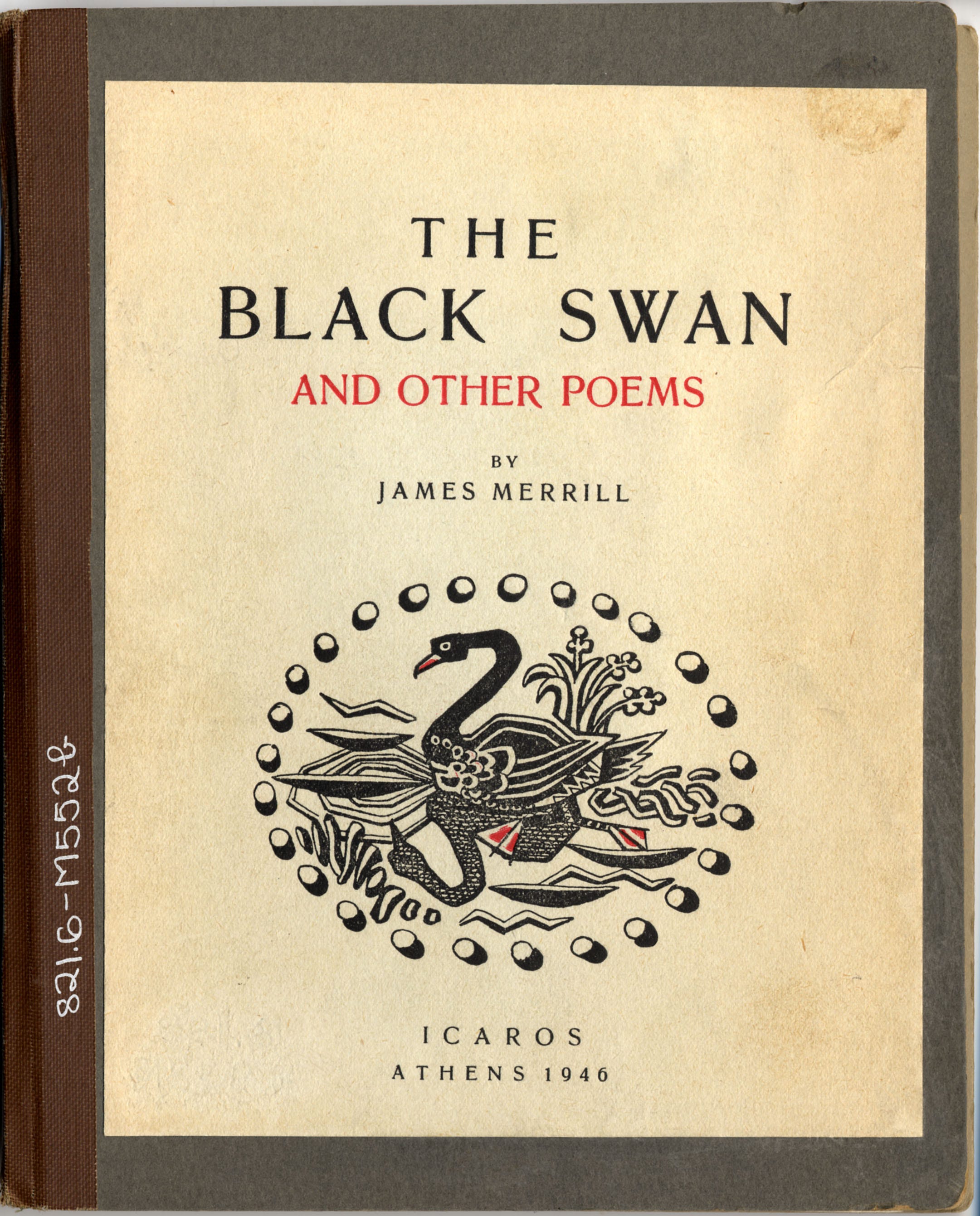
The Black Swan may be read as both a meditation on a poetic image and a love poem for Friar. According to Friar, Merrill referred to him as the “black swan” because his complexion turned so dark in the summer.
However, when Merrill’s mother got wind of the relationship, she insisted that he see a psychiatrist. “What is the point of going to a doctor if your mind is made up?” he wrote Friar in 1946. “I cannot discover myself until I have a chance to be myself, and that chance is what you have given me.”
In 1947, Merrill graduated from Amherst College summa cum laude and moved back to New York City to live with his mother. He taught at Bard College for a year before deciding to spend the next two and a half years traveling through Europe.
Merrill’s trip was his opportunity to, as Hammer wrote, “face the difference that his talent, wealth, and sexuality made, and the isolation that came with that difference. The question was not so much who he was as who he might become.” It was a chance for him to become a different person. Merrill wrote:
New York and most of the people I knew had begun to close in. Or to put it differently, I felt that I alone in this or that circle of friends and could see no way into the next phase… Was I ever coming back? Yes, yes, one of these days. But of course I would be a different person then.
So in March 1950, meaning to stay as long as possible, off he sailed for Europe. This was the period Merrill covered in A Different Person.
In 1951, while he was overseas, First Poems was published by Alfred A. Knopf. It was not his first book of poems. There had been Jim’s Book, a collection of his Lawrenceville poems and prose surreptitiously collected by his father, printed on thick stock in a hardbound limited edition of two hundred copies as a surprise Christmas gift. And after that, The Black Swan was sponsored by Friar. Both publications were private editions of his school poems. However, First Poems was the first trade book he could claim wholly as his own, backed by a major publisher.
When Merrill returned to New York City in late 1952, the transformation he had hoped for wasn’t complete; however, it had begun.
Upon arriving, it was Christmastime. He stayed at the Plaza, planning to find an apartment and move in by the new year.
When he arrived at the Plaza, a package awaited him, although not wrapped in Christmas paper. It was from his old friend Freddy from Lawrenceville. The card read, “Welcome home. You know you’ve always wanted one.” It was an Ouija board. Merrill writes,
Thus, while Freddy never won me to Christ, he once again - as when at fourteen he made writing a poem seem the most natural and desirable thing in the world - put me in touch with a whole further realm of language.
In May 1953, Merrill met David Jackson, and in 1954, they found their semi-permanent home for the next forty years, on the third floor of 107 Water Street, in the seaside village of Stonington, Connecticut.
It was in Stonington, in June 1953, that Merrill and Jackson both fell in love and discovered the Other World by spending evenings at a Ouija board. They began holding candlelit séances after dinner, and what started as a pastime soon became a “marvelous nightly pudding” of messages from the spirit world, which Merrill would diligently jot down and then type up - not ready to share just yet with the world.
In 1959, Merrill and Jackson began making extended trips to Greece, and by 1962, Merrill began to mature as a writer and as a person. That year, with Water Street, and even more in 1966 with Nights and Days, which won the 1967 National Book Award, his poetry became more autobiographical. For example, Merrill’s poem The Broken Home, first published in Nights and Days, explored two central issues: the trauma of his parents’ divorce and his own incomplete or “broken” home.
While in Greece in the fall of 1965, they took up the Ouija board again casually at first, with Merrill writing, “We rang up Ephraim the other day - 1st time in 4 years.” However, soon the sessions wth spirits became more serious and solemn - the complex metaphysical lessons from greater supernatural beings replaced Ephraim’s lighthearted and amusing comments.
Merrill kept copious notes on the proceedings, and in 1974, he was ready to begin working on the “Sandover project.” After over twenty years of off-and-on communication with spirits of the Ouija board, he wrote the roughly 2,500-line poem The Book of Ephraim.
Merrill recalled in his memoir how the poem’s idea came about:
One day, when the time was ripe, Kimon planned to write a long poem based on Yeats’s system: spiritualism, the phases of the moon, the gyres of history. A long poem was the test of any poet’s powers. He cited Dante, Milton, Rilke, Pound. What would their shorter works amount to without the great achievements that crowned them? The notion struck me at twenty - at forty, too, for that matter - as a dangerous form of maglomania, and I wasn’t buying any of it. But at fifty? Longer than Dante, dottier than Pound, and full of spirits more talkative than Yeats himself might have wished, the Sandover project held me captive. It was Kimon’s dream, only I was realizing it in his stead.
In the mid-1950s, Merrill’s Sandover project (“Sandover” is the name Merrill and Jackson gave to their home in Stonington) was still just a dream and years away. He wrote to his mother that he had “talked” to the spirit of a first-century Jew named Ephraim. He told her, “If you think I am mad, do so. For myself, I believe it utterly.” He later described their evenings with the Ouija Board as a “kind of map of my imagination.”
He felt The Book of Ephraim could be his magnum opus, which “could be perfectly awful, or it could be the Divine Comedy.” The Book of Ephraim appeared in his collection Divine Comedies, published in 1976 by Atheneum. It was considered to be Merrill’s breakthrough and won the Pulitzer Prize for Poetry in 1977.
The two volumes that followed Divine Comedies, Mirabell: Books of Number (1978) and Scripts for the Pageant (1980), continue the narrative begun in The Book of Ephraim. These three poems form a trilogy along with the new Coda: The Higher Keys, which was published in 1982 as the unprecedented 560-page epic The Changing Light at Sandover. It received the National Book Critics Circle Award in 1983.
The Changing Light at Sandover is Merrill’s masterwork, embracing mysticism and the occult, in which Merrill, like Yeats—whose wife was a medium—believed he received inspiration from the world beyond. Merrill organized each section of the trilogy to reflect a different component of their homemade Ouija board. The twenty-six sections of “The Book of Ephraim” correspond to the board’s A to Z alphabet, the ten sections of “Mirabell: Books of Number” correspond to the board’s numbering from zero to nine, and the three sections of “Scripts for the Pageant” (“Yes,” “&,” and “No”) correspond to the board’s Yes & No.
The Changing Light at Sandover is so different from his earlier work that I wonder, “Why did he write it?”
Merrill had most often been described as a poet of the self, preoccupied with love and loss, not inclined to comment or editorialize on political and moral issues. Hammer suggests that Merrill used the Ouija Board to renew poetry’s ancient task of soliciting speech from the gods. However, he also suggests that it was much more than that, given that it was difficult for Merrill to “publicly” take a position - the gods did the talking for him. Hammer writes:
On one level, it was the privilege and punishment of a homosexual whose cherished desires were despised by the people who taught him how to love - his parents - as well as the public at large. (That last point explains a lot about his dislike of public poetry and public positions taken by poets.) On another level, doubleness was the attribute of a postmodern
According to Hammer, the question Merrill poses in Sandover is: “How can the world (not just the human world) survive the threats of nuclear war and environmental destruction?” That question is still very valid today.
In the end, James Merrill often saw his world as far away, otherworldly. The Sandover project brought him closer to it.
On the occasion of James Merrill’s centenary, I think of the final scene in Wagner’s Tristan and Isolde. After four and a half hours, in the “Liebestod” aria, the Tristan chord is finally and gloriously resolved. You can hear the moment at the 4:55 minute mark:
This makes me wonder if James Merrill, the exquisitely self-conscious young man at ease in wealthy society, preoccupied with music, art, drama, and books, whose story began as a boy alone in his room, desperate for his mother’s goodnight kiss, ever felt transformed? Did he ever become that different person he longed to be? Did he feel the Tristan chord resolved in his life?
When I think about James Merrill, I am always taken back to our 1993 meeting in Chicago, and that long silence and the stare he gave me after I questioned him about the Ouija board. I have always felt that he was like Don Quixote, believing in something that wasn’t true to protect his innocence and make his life feel more meaningful. But if it made him smile and shrug through the worst of it, then so be it. Who doesn’t do that?
In her heartfelt book Familiar Spirits, a memoir of James Merrill and David Jackson, Allison Lurie declares about Merrill’s Sandover project:
Perhaps it was natural that he should have wanted more, that he should have hoped to create a long, serious poem, a major work that could stand next to those of Yeats, Auden, and Eliot. In the opinion of some critics he succedded brilliantly. Sandy McClatchy, who is one of James Merrill’s co-executors, has called Sandover,
“…with the possible exception of Whitman’s Song of Myself, the stangest and grandest American poem ever: at once eerie, hilariuos, and heartbreaking.”
I can agree with these last three adjectives, though not with the overall judgment.
I view Merrill’s Sandover project in much the same way as Lurie does. And, at the end of the day, I refuse to define James Merrill by the Sandover project, which has, in some ways, overshadowed his wonderful lyric poems.
I think that it should also be mentioned that very early on, James Merrill responded intensely to his friends’ financial needs, whether in an emergency or to make a dream come true. So it is no surprise that in 1955, Merrill established the Ingram Merrill Foundation. This private foundation used funds from his substantial family inheritance to support the arts. Over the course of four decades, the foundation would provide financial support to hundreds of writers and artists, many of them in the early stages of promising but not yet profitable careers. No one will ever know the extent of the foundation’s generosity, which was often secret but often changed lives. The foundation stayed active up until James Merrill passed away on February 6, 1995, from an AIDS related heart attack. His ashes are buried next to David Jackson at Evergreen Cemetery in Stonington, Connecticut.
Perhaps some of my obsession with James Merrill, and Jazz for that matter, is my love for the underdog - they both know they create for a limited audience. It’s no secret that the great American public doesn’t read much poetry and listen to much jazz, and even less free and improvisational music. In a 1983 interview, when his friend, the American writer and literary critic David Kalstone, asked if he wouldn’t like a larger audience, Merrill answered:
When I search my heart, no, not really…. Think what one has to do to get a mass audience. I’d rather have one perfect reader.
I take some comfort in knowing that he felt that way.
Next week on that Big River called Jazz, we’ll dig our paddles into the waters of Abdullah Ibrahim (Dollar Brand).
Please hit this link to buy me a cup of coffee if you’d like to show your guide some appreciation for this and past journeys. I thank you in advance for your kindness and support.
If you like what you’ve been reading and hearing so far on our journey and would like to share it with someone who might be interested in learning more about our great American art form, Jazz, just hit the “Share” button.
From Astaire to Sun Ra: A Jazz Journey is a reader-supported publication. If you feel so inclined, subscribe to my journey by hitting the “Subscribe now” button.
Feel free to contact me anytime to talk shop. I welcome and encourage that.
Until then, keep on paddling….
I have another rabbit hole to run down. There is a pattern developing here, & it has proven to be a fun one. Before your post I was only vaguely aware of James Merrill. The Stephen Fry video was a blast. He truly understands that, "Music is the best."