
Greenwich Village
And it ain’t free...

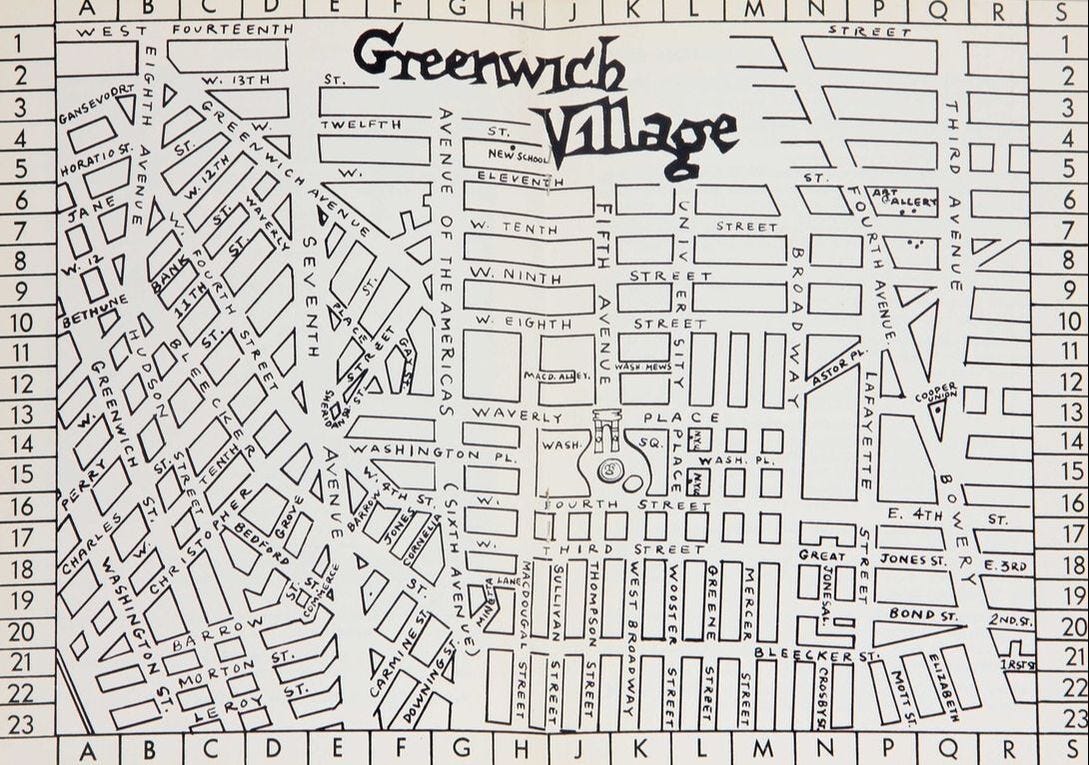
The One remains, the many change and pass.
-Shelley from Adonais
During college in the early 1980s, I was lucky to live close to Greenwich Village in New York City.
At the time, I knew nothing about the Village. I wasn’t from around those parts. I wasn’t a Downtowner, Manhattan speak for Greenwich Village, SoHo, and the Lower East Side folks. I was from White Bear Lake, Minnesota. Like the guy in the Dylan song Talkin’ New York, I rambled outa the wild west.
Ramblin’ outa the wild West,
Leavin’ the towns I love the best.
Thought I’d seen some ups and downs,
‘Til I come into New York town.
People goin’ down to the ground,
Buildings goin’ up to the sky.
Wintertime in New York town,
The wind blowin’ snow around.
Walk around with nowhere to go,
Somebody could freeze right to the bone.
I froze right to the bone.
New York Times said it was the coldest winter in seventeen years;
I didn’t feel so cold then.
I’d walk for hours in and around the Village, exploring this new scene. Back when there was no Google, you couldn’t idly search things out online. It was an active search. Combing the maze of streets, I cultivated my education in architecture, art, and jazz. I went at it alone with no fancy ideals about the Village’s past or present.
As I think back on those early mornings walking the streets of the Village, before the shops opened up, I hear something like this one from the Skipper, Henry Franklin:
I came from working-class people, both on my mother’s side in England and on my father’s side in America. Growing up, there was no talk of fine wines in our home. No opera on the stereo. No fancy books or records sitting around. No pretense. We were not poor, but we lived a culturally unsophisticated life. Besides going to church on Sundays, my folks did not impress upon me a dogma. As I recall, I was free to think for myself.
As I wandered around a one-mile or so radius from my house in White Bear Lake, which extended up past my elementary school, to Bellaire Beach, into Birchwood Village, and out into White Bear Lake, I was an open book. Beyond what I learned in school, I was without influence. I lived in my own world, on a voyage of discovery.
I was an introspective child and lived in my own world. I minded my own business, had few friends, and read few books, besides what was assigned in school. However, I loved to watch TV. I watched mostly sports and old movies. I emulated both sports stars and movie stars. As I got older, I poured most of my time into sports and dancing, becoming very good at both, and it was sports that helped me get into college. By the time I left my home for New York at 17, I had managed to cultivate a narrow sophistication in the world of art, centered primarily on music and dance, rooted in what I had discovered on my own.
When college started in the fall of 1980, I made an important discovery in the basement of the college library - a kind of ground zero. It was filled with jazz albums. One of the first I picked out of the stacks was Miles Davis’s Kind of Blue - I liked the cover. From there, I went to Cannonball Adderley, John Coltrane, and Bill Evans.
As often as I could, starting about 1981, I went down to New York City and stayed at the Soldiers’, Sailors’, Marines’, Coast Guard, and Airmen’s Club. About a year or so later, as I was looking for places to hear jazz in the city, I noticed that Jimmy Cobb was playing at the Blue Note with the Nat Adderley Quintet. I recognized Jimmy Cobb’s name from Kind of Blue. So I headed down to Greenwich Village for the first time. It would be the first of many trips to the Village over the next three years, and I came “face to face” with the sound I had been hearing since my early days of Fred Astaire, James Bond, and other movie soundtracks I’d heard on TV as a kid. It was the sound of jazz.
But the Greenwich Village I spent four years walking around in the early 1980s was not the same Greenwich Village of the 1960s. There was nothing trendy about it then, when the area South of Houston was barely a neighborhood, filled with warehouses, small manufacturing shops, and artists’ lofts.
By the mid-1970s, it had become “SoHo,” and the artists living there were getting priced out by upscale stores and galleries. This trend continues today and is summed up well by Thurston Moore writing about Marzette Watts in Now Jazz Now:
Until his passing in 1998, Marzette would continue to produce music, make films, teach, learn, be a family man, and remain at the 27 Cooper Square outpost until New York City became increasingly too expensive to live in. These days that address is a swnaky, hipster doofus hotel. And it ain’t free.
This week on that Big River called Jazz, we’ll dig in our paddles and discover the ever-changing world of Greenwich Village.
I’d spend the weekend, which for me back then was most often Saturday afternoon until midday Sunday - I had classes on Saturday morning. So I’d go out Saturday night and get up early on Sunday morning, eat breakfast, and wait for the stores to open up and make my way down to where the used record and book stores were, like Bleecker Bob’s Records on 3rd Street and Strand Book Store on Broadway and East 12th Street.
Early Sunday Morning has always been one of my favorite paintings. It was also one of my favorite times in Greenwich Village.
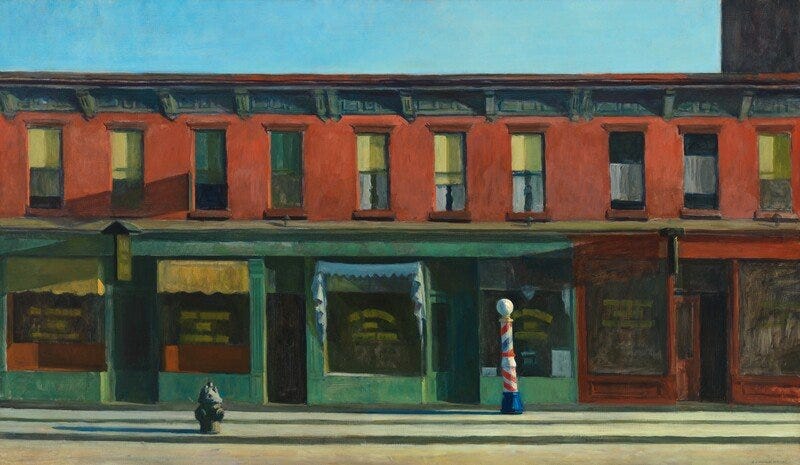
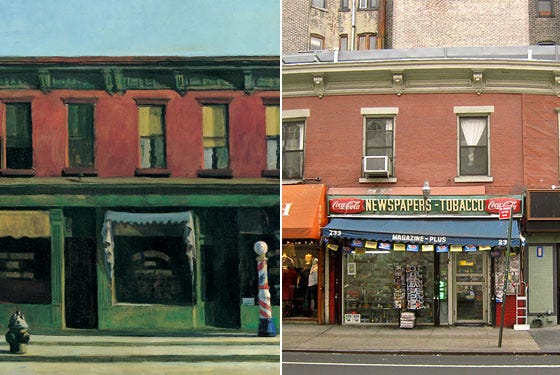
In 1930, when Washington Square North resident Edward Hopper finished this simple painting of low-rise buildings, he recorded it in his ledger as “Seventh Avenue Shops.” However, many believe that the distinctive cornices, barber shop pole, fire hydrant, and morning shadows are in fact on Bleecker Street, just west of Carmine Street:
A short walk down Carmine, across 6th Avenue, was the Gaslight on MacDougal Street, where, on October 22, 1959, Allen Ginsberg gave his first public coffee-shop reading. That night, he wrote in his journal:
…and glimpsed the One behind the transient clouds in the haze - The many change and pass, as I was walking down the street, I passing this life toward my ever-menacing present Death - Inevitable - That I realize again the Glimpse of the One because I know I pass with the Many as all has passed before - that even the street is new and changing tho I remember it of old - a shadow that flies, with all the buildings.
The Gaslight was originally a "basket house" where unpaid performers would pass a basket around at the end of each set, hoping to be paid. Opened in 1958 by John Mitchell, the Gaslight showcased beat poets Allen Ginsberg and Gregory Corso but later became a folk-music club, where Dylan cut his teeth.
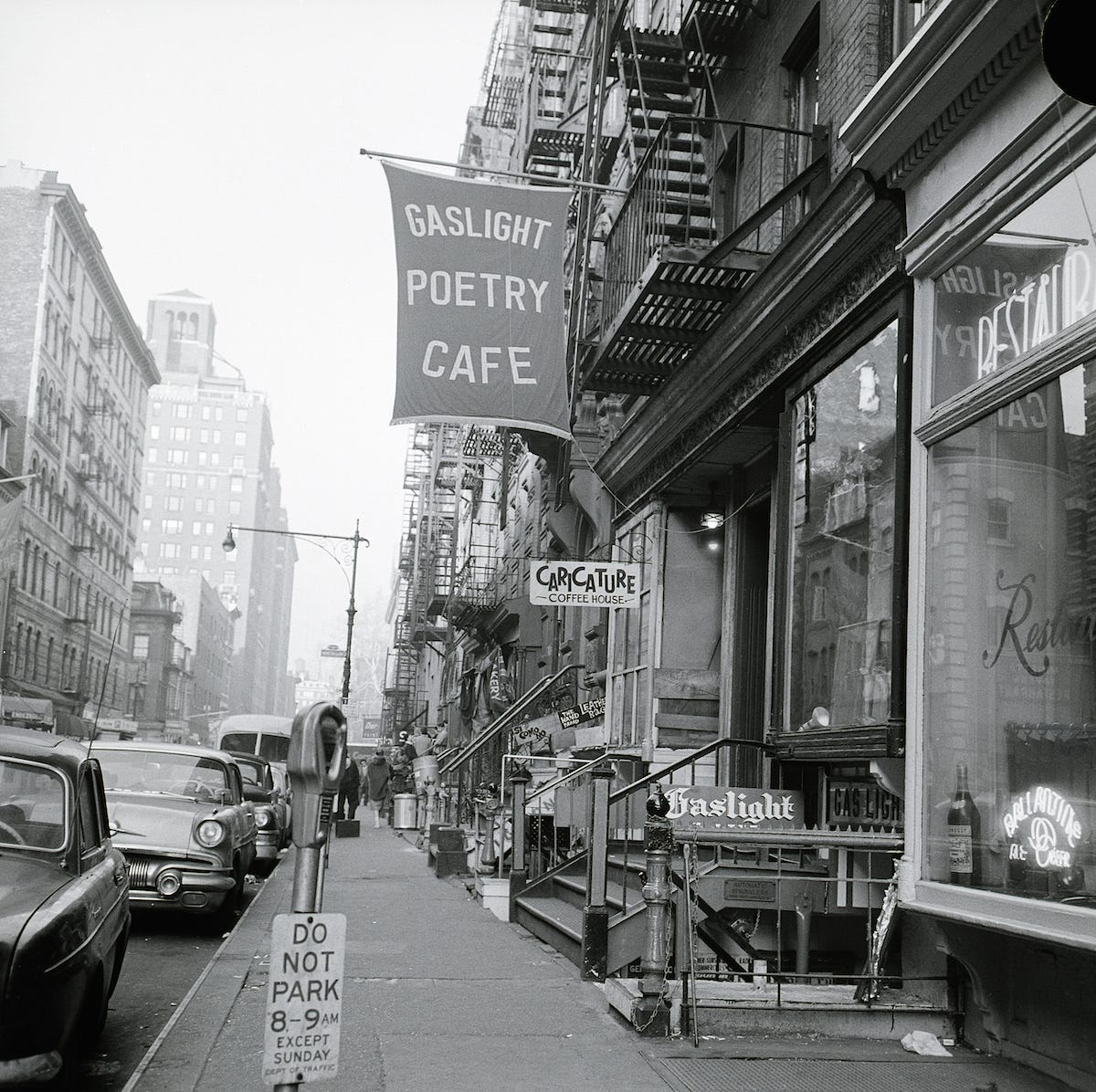
But the Gaslight closed in 1971, so I never went there. I can’t recall whether anything was there at all when I walked by in the early 1980s. The space is now the Up & Up, which can be summed up by its motto: high-end, low-key:
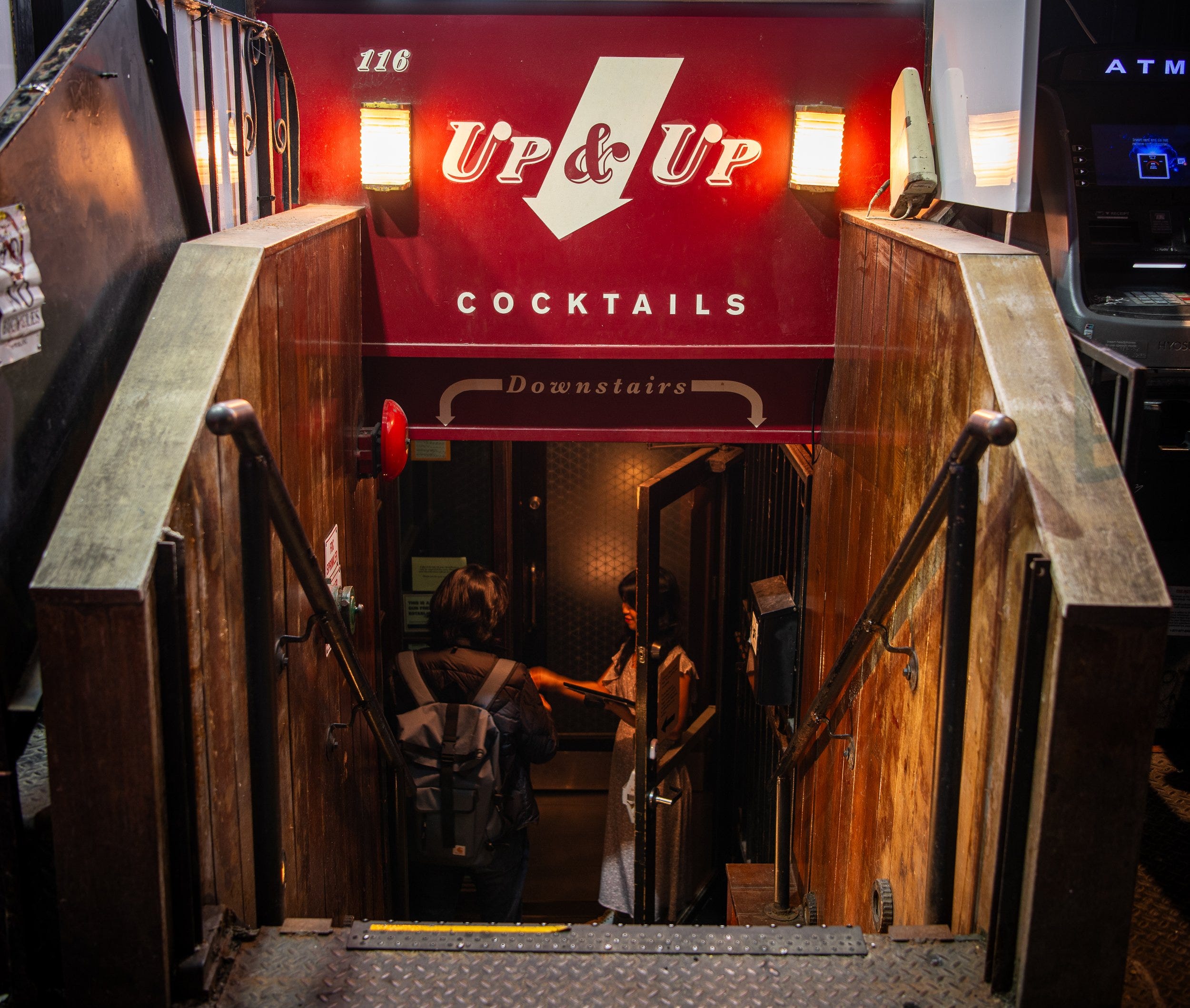
Their website says, “The Up & Up is the perfect marriage of an intimate cocktail den and a social, comfortable, neighborhood bar.”
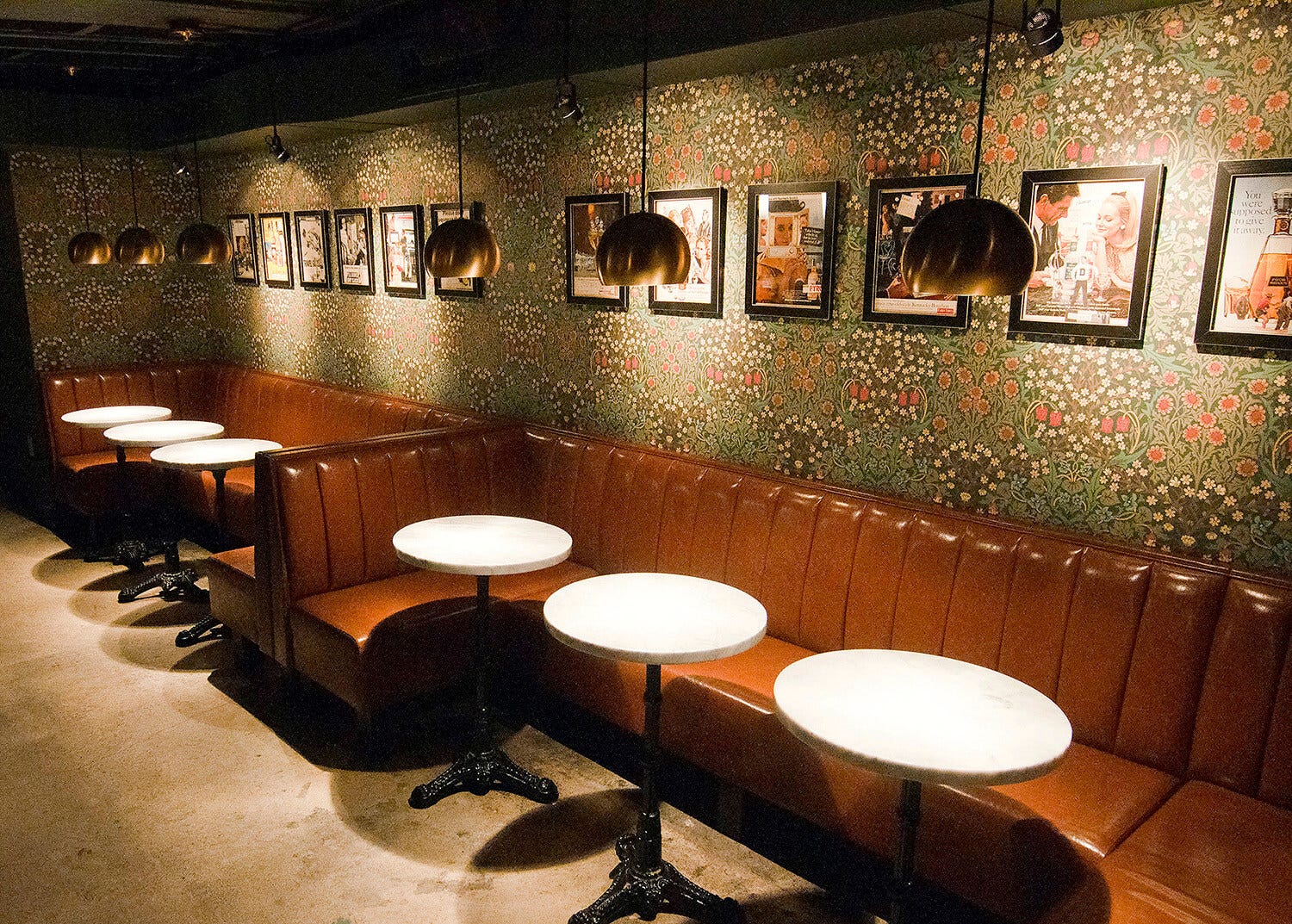
But bring your wallet, as the Up & Up is more high-end than low-key. And it ain’t free.
Back up 6th Avenue to Greenwich Avenue was Midnight Sun, a tanning salon I hung out at a lot, just down the street from the Village Vanguard:
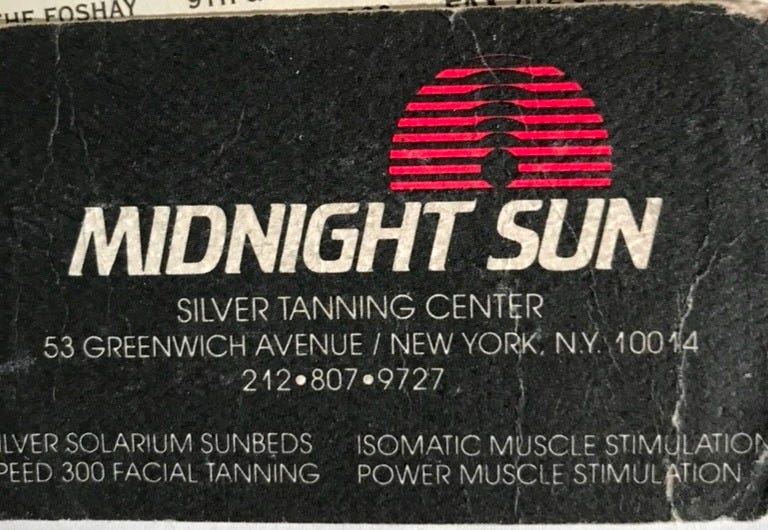
My high school girlfriend, who moved to New York City in about 1982, worked there, back when tanning salons first opened and were all the rage. After she’d close up on Saturday night, we would walk around the Village deciding where to go next before heading to her apartment on West 57th Street by Carnegie Hall, back when you could afford to rent a place up there while managing at a tanning salon.
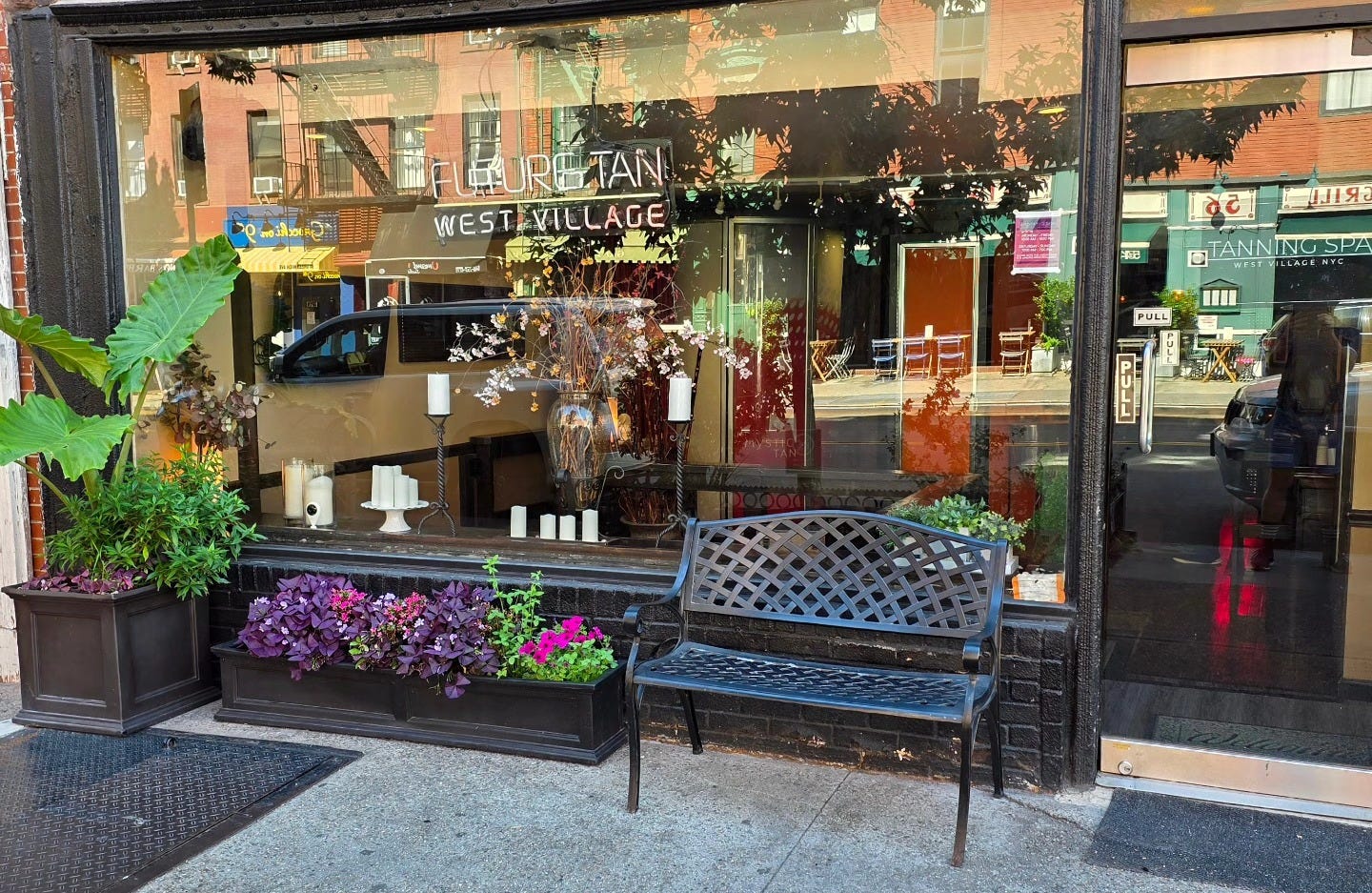
As you can see, the Midnight Sun location is still a tanning salon. Now it’s called Future Tan:
Heading back down 6th Avenue to 14th Street was The Living Theatre. It was founded in 1947 in New York City and was loosely based on Antonin Artaud's Theatre of Cruelty and the Surrealists’ Theatre of Cruelty in 1930s France. It is the oldest experimental theater group in the United States. For most of its history, it was led by actress Judith Malina and painter, poet Julian Beck.
In 1959, with the help of producer and architect Paul Williams and his wife, Vera B. Williams, and in collaboration with John Cage and Merce Cunningham, they opened their first theater on 14th Street, which served as the theater’s home for five years. Mostly under Williams’s direction, many friends and artists pitched in to renovate and build the space, with The Living Theatre occupying the second and third floors, and Cunningham’s dance studio on the top floor.
On January 13, 1959, the theater premiered its first major production, Many Loves by William Carlos Williams, who came to see the show; Malina and Beck had known him for several years. In July of 1959, they opened Jack Gelber’s play, The Connection, about four white junkies and four black jazz musician junkies waiting for their heroin fix to arrive. Finally, “the Connection” played by black actor Carl Lee, arrives, and everyone shoots up, taking turns in the bathroom by a door upstage. One junkie takes too much and almost overdoses, and people feel it’s time to go. During the intermission, the actors mixed with the audience, begging for spare change.
A lot of Jazz music is performed during the play. Many great musicians cycled through the play over its three-year run, including Freddie Redd, Jackie McLean, Cecil Taylor, and Tony Williams. The Connection became a feature film directed by the American experimental filmmaker Shirley Clarke, using many actors and musicians from the original stage production, such as pianist Redd and McLean, who also recorded The Music from “The Connection” released by Blue Note Records in 1960. Here’s a scene from Clarke’s film:
Due to financial constraints, the nomadic company has occupied numerous spaces over the years, most recently closing its Clinton Street location in 2013. Following the death of co-founder Malina, the company has operated without a permanent home. Their old 14th Street and 6th Avenue location is now a 13-story, million-dollar residential condominium building. And it ain’t free.
In the late 1960’s and into the early 1970’s, many of Lower Manhattan’s closed factories and warehouses were converted into living spaces and performance venues, which spawned the loft jazz scene. Musicians went into the loft because it was a place to play. In his article Loft Jazz, Phil Freeman writes, “The loft jazz scene, as its name indicates, was as much about economics (and the New York real estate market) as music; the two evolved side by side.”
Perhaps two of the most well-known were Sam Rivers’ famous jazz loft, Studio Rivbea, primarily located at 24 Bond Street in the NoHo, which opened in 1970, and Rashied Ali's loft, known as Ali's Alley, located at 77 Greene Street in SoHo, which opened in 1973. Freeman aptly continues:
With these two tenor titans gone [John Coltrane and Albert Ayler], the music seemed to draw in on itself, becoming more introspective and experimental, just as the overall economy of New York City took a tumble. (By the middle of the [1970s], the city was on the brink of bankruptcy.) Real estate was dirt cheap, and actual jazz clubs didn’t like booking free/avant-garde players, so some musicians took matters into their own hands. Drummer Rashied Ali opened Ali’s Alley on Greene Street, while saxophonist Sam Rivers and his wife Beatrice named their Bond Street loft Studio Rivbea. Ornette Coleman purchased a building on Prince Street which he called Artist House,
Ultimately, the loft scene was an interregnum between the free jazz era and the more conservative jazz scene of the early 1980s. Gentrification and rising rents, which forced many musicians out of the spaces that had hosted so many performances and recordings, coincided with the arrival of the Marsalis brothers, Branford and Wynton, and the hard bop-oriented classicism of the so-called “young lions.”
Perhaps the essential document of the loft jazz era is the 5LP set Wildflowers: The New York Loft Jazz Sessions, recorded in May 1976 at Studio Rivbea:
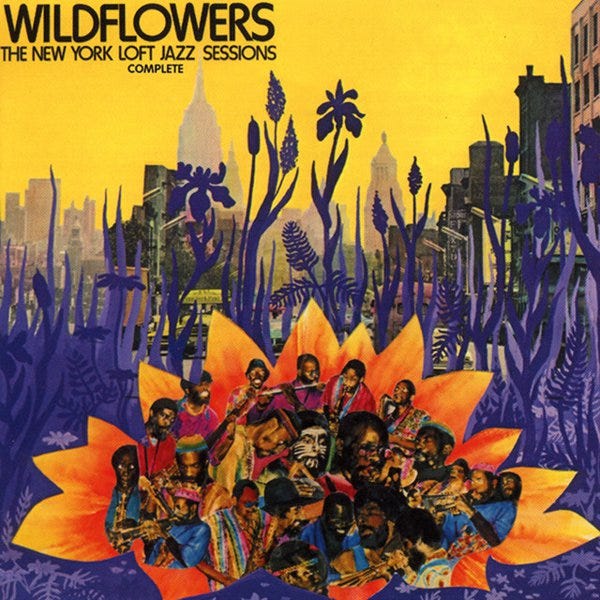
It features brilliant performances by a broad range of players, including Rivers, Anthony Braxton, David Murray, Fred Hopkins, Henry Threadgill (with Air), Roscoe Mitchell, Randy Weston, Sunny Murray, Wadada Leo Smith, and many others.
The song Clarity (2) is an excellent representation of the mid-to-late 1970s avant-garde jazz sound, with Fred Hopkins on bass, Phillip Wilson on drums, Oliver Lake on flute, and Michael Jackson on guitar:
In the 1970s, just as the loft jazz scene was starting to gain traction, so too did real estate development - the city had other plans. As upscale stores and galleries moved in, the loft scene shut down. For example, in the late 1960s, Ornette Coleman purchased the loft at 131 Prince Street in SoHo. Around 1968, he renovated it, and in 1970, it became his live-work loft and performance space, Artists House. He held performances there until he was evicted from the building around 1975.
However, the economics didn’t stop the musicians and artists. In his book Easily Slip Into Another World, A Life in Music, Henry Threadgill wrote:
The city was mired in the throes of a severe economic downturn, but that didn’t keep us away - if anything, it made the art scene feel more edgy, less predictable.
I’m not sure there’s ever been an equivalent anywhere to this mass migration in the history of the arts, in terms of the sheer numbers and the range of disciplines. People sometimes forget that it involved not only artists themselves but also a much broader range of arts professionals, from production technicians to stagehands to graphic designers, editors, and journalists.
I’ve been away for so long now, I have no idea where the art scene Threadgill mentions has taken root. That’s a story for someone else's journey. On a recent trip, this made me realize that the early-1980s Greenwich Village I walked through is also not the Greenwich Village of today.
We are all traveling with the past inside us. We are traveling roads other folks have gone before. Places like Greenwich Village and SoHo are still there, just the faces and places change. As Shelley wrote, “The One remains, the many change and pass.”
After I left New York for good in the summer of 1984, on my way across country to Georgia, Oklahoma, and finally California, I thought about a line from a song by Bruce Hornsby and the Range that was popular at that time, “That's just the way it is. Some things'll never change…”
Next week on that Big River called Jazz, we’ll dig our paddles into the waters of J.B. Lenior.
Please hit this link to buy me a cup of coffee if you’d like to show your guide some appreciation for this and past journeys. I thank you in advance for your kindness and support.
If you like what you’ve been reading and hearing so far on our journey and would like to share this with someone you think might be interested in learning more about our great American art form, Jazz, just hit the “Share” button.
From Astaire to Sun Ra: A Jazz Journey is a reader-supported publication. If you feel so inclined, subscribe to my journey by hitting the “Subscribe now” button.
Feel free to contact me anytime to talk shop. I welcome and encourage that.
Until then, keep on walking….
Thanks for your memories and research. I was lucky to have been a frequent visitor to the Village in the seventies, day and night. My favorite jazz loft, however, was Soundscape on 52nd St. I saw Sun Ra at Two Saints twice, saw Rahsaan Roland Kirk and Sonny Rollins at the Vanguard, and a lot of other shows in a lot of small places. I miss that Village - a lot was free.
Thanks for taking me to a place I will most likely never visit. The jazz loft scene is one of those, if only scenes for me. If only I could have heard the music, live. I have the Wildflowers on CD. It's a one of a kind compilation. See you next week.