
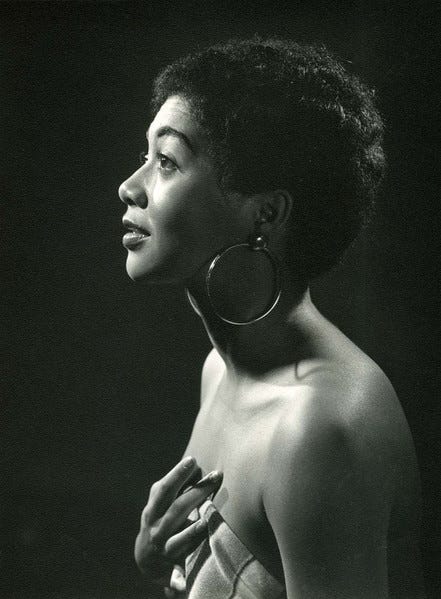
Frances Taylor
Pas de deux...

Mother of Muses, sing for me
Sing of the mountains and the deep dark sea
Sing of the lakes and the nymphs of the forest
Sing your hearts out, all your women of the chorus
Sing of honor and fate and glory be
Mother of Muses, sing for me
-Bob Dylan
It was Fred Astaire who inspired me to take up tap dancing while in junior high school.
I tapped all the way through my senior year and won the 1980 Minnesota State Tap Dance Championship. However, when I left for college in New York that summer, I left my tap shoes behind.
My high school girlfriend was also a dancer. We danced at the same studio. She moved to New York City in 1981 and trained at a Gus Giordano satellite dance school - I say that tentatively, as it could have been with Joe Tremaine or another downtown Manhattan school. Anyway, I was able to make it down to see her from time to time, and she took me to see the Alvin Ailey American Dance Theater in Manhattan more than once. In particular, I remember seeing them perform Stack-Up at the New York City Center. They were fantastic.
Alvin Ailey had his first experience with concert dance in 1946, when he saw the Ballets Russes de Monte Carlo and then the Katherine Dunham Dance Company at the Los Angeles Philharmonic Auditorium. Dunham’s troupe performed her landmark Tropical Review, one of the first theater productions to present African and Caribbean themes in an authentic setting, which awakened an unknown spark of joy within Ailey. Years later, in 1958, at 27, he founded the Alvin Ailey Dance Theatre and in 1969, the Alvin Ailey American Dance Center in Brooklyn, New York. Dunham was known as the “matriarch and queen mother of Black dance,” who, according to Ailey, “put Black dancing on the map.”
Although a talented dancer and choreographer, Katherine Dunham studied anthropology extensively and earned a degree from the University of Chicago. She then spent the next 18 months as a postgraduate academic fellow investigating the Caribbean islands. After returning from her studies, she lectured at the Yale University Anthropological Club and contributed to different scientific journals. But her heart was in dance, and in 1931, at the age of 21, Dunham and Mark Turbyfill formed Ballet Nègre, one of the first Black ballet companies in the United States. In 1940, in Chicago, she founded the Katherine Dunham Dance Company.
Her company performed in the 1940 Broadway production of Cabin in the Sky, staged by George Balanchine and starring Ethel Waters. The show ran for 20 weeks in New York and then had an extended run on the West Coast. After Cabin in the Sky, the Dunham troupe stayed in Los Angeles, where they appeared in a few movies. The last was the 1943 film Stormy Weather, in which her troupe received title credit, as you can see on this lobby card:
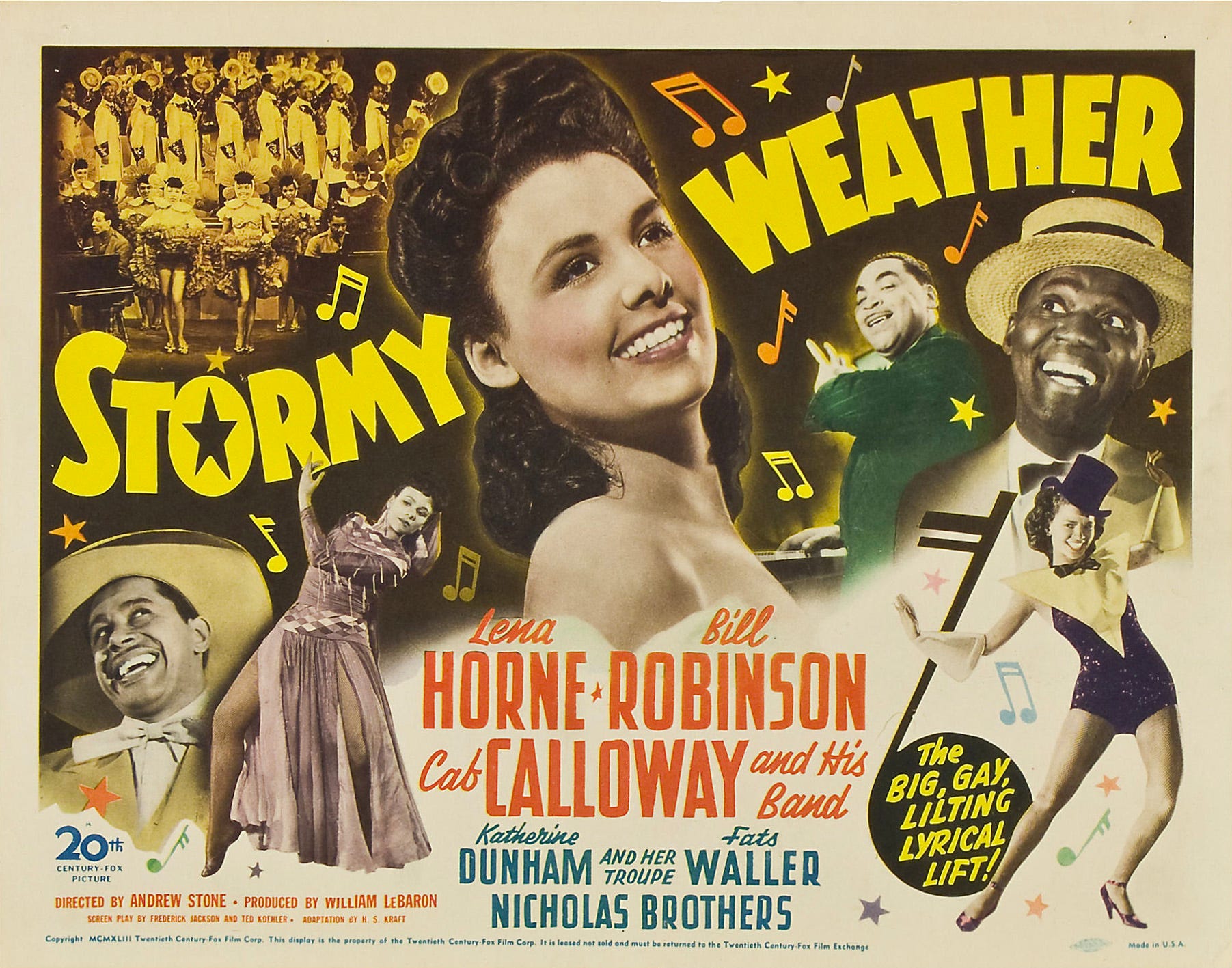
After Stormy Weather, Dunham returned to New York City to establish a permanent home.
In 1948, her troupe went to Europe with he stunning A Caribbean Rhapsody, which opened at the Prince of Wales Theatre in London and then at the Théâtre des Champs-Élysées in Paris, marking the beginning of more than 20 years during which Dunham performed with her company almost exclusively outside the United States.
For almost 30 years, she led the Katherine Dunham Dance Company, the only self-supported American black dance troupe at that time. The company helped launch the careers of many great Black performing artists, including Alvin Ailey, Talley Beatty, Rosalie King, Eartha Kitt, and Frances Taylor, who would later be known as Miles Davis’ muse.
This week on that Big River called Jazz, we’ll dig in our paddles and, in celebration of the legendary trumpeter’s Centennial on May 26, discover the world of Frances Taylor.
Frances Elizabeth Taylor was born in Chicago on September 28, 1929. Growing up, she lived, breathed, and ate ballet. She started in classical ballet at the age of 8. Like Alvin Ailey, she was inspired to dance at 14 after seeing a Ballets Russes de Monte Carlo performance featuring Alexandra Danilova in Swan Lake and Maria Tallchief as the Sugar Plum Fairy in The Nutcracker.
In 1948, at 18, after receiving a scholarship to study the Dunham Technique in New York, she joined the Katherine Dunham Dance Company. Following two years of training, she toured extensively with the professional troupe throughout South America and Europe. After a performance in Paris, the French press called Taylor the “Leslie Caron of the Tropics.” The nickname originated from the October 17, 1951, article in Paris-Presse l’Intransigeant, where the headline read, “Katherine Dunham’s Two Assets: A Voodoo Priest and the Leslie Caron of the Tropics.”
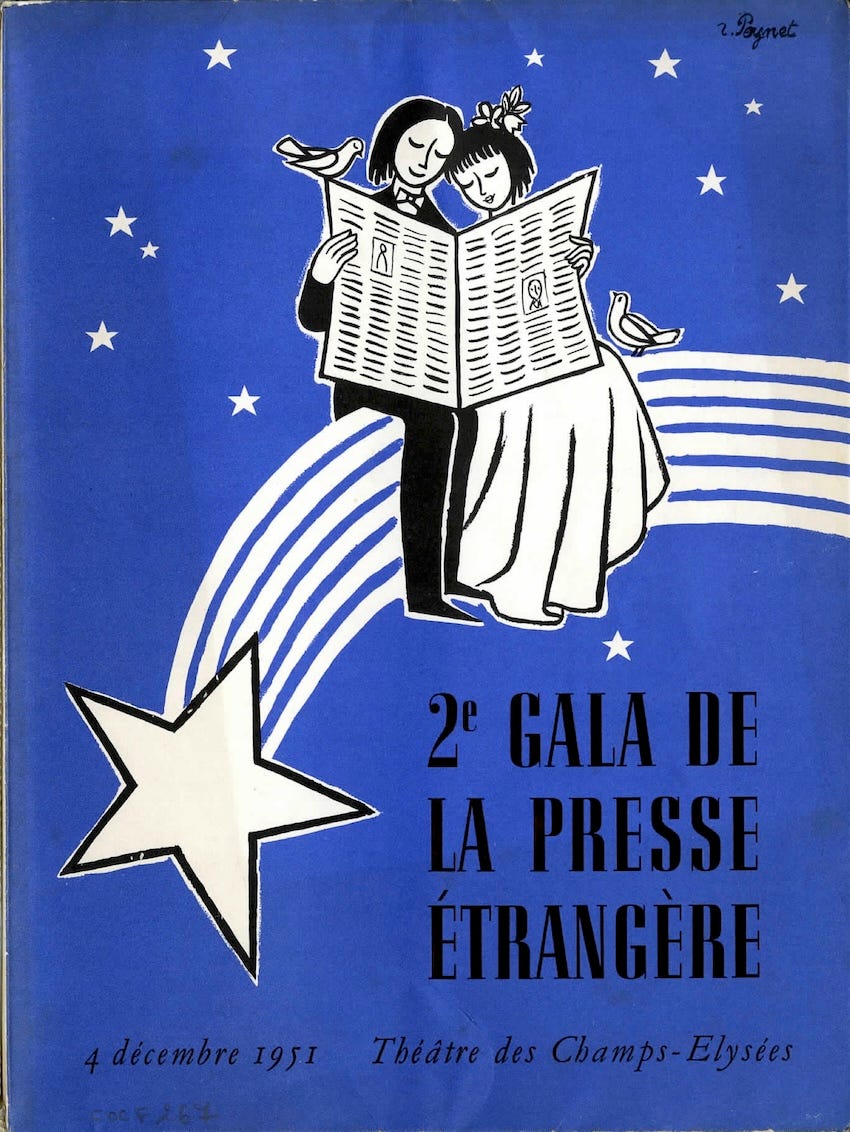
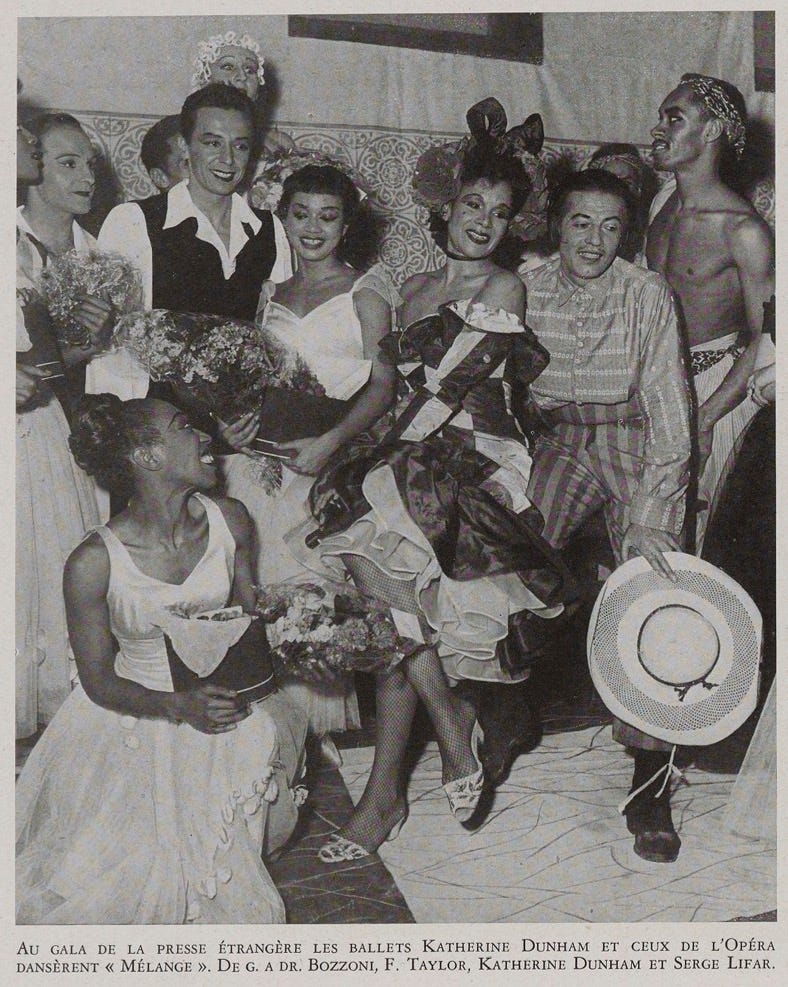
In 1951, Taylor was recruited to dance with Max Bozzoni and members of the Paris Opera Ballet in the 2nd foreign press gala, held on December 4, 1951, at the Théâtre des Champs-Élysées, becoming the first black dancer to perform with the company:
Here’s a photo from the event. Taylor is between Bozzoni on her right and Dunham on her left:
In September 1952, tagged as “Europe’s Dancing Doll,” Taylor landed on the cover of Ebony magazine, where Miles Davis may have first come under her spell:
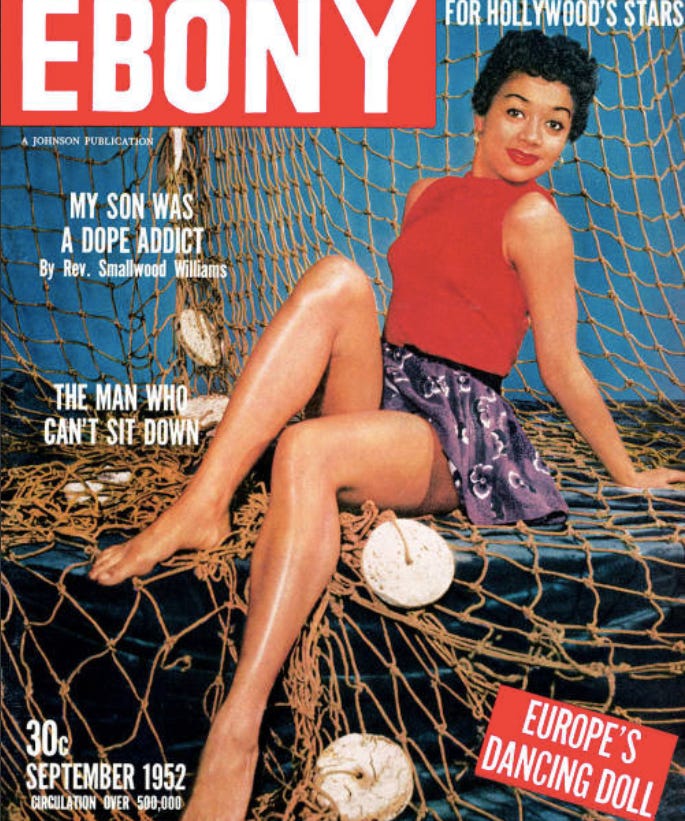
The two would first meet in 1953 at Ciro’s, a celebrity nightclub on the Sunset Strip in Los Angeles. At the time, Taylor was performing at the club with the Dunham company. In a rare interview with Gail Mitchell for Billboard magazine in May 2001, Taylor recalls:
We met briefly. But I was into my own thing; I wasn’t a jazz follower. That’s probably what stimulated him.
Their introduction was facilitated by Davis’ drummer Max Roach, who encouraged him to “check out” a talented young dancer in the Dunham troupe. Davis was smitten; however, Taylor initially turned down Davis's proposal.
As it turned out, in 1955, in Mexico City, Taylor would marry Haitian Jean-Marie Durand, whom she had met in Argentina in 1954 and who was another member of Dunham's company. After Taylor separated from Durand in 1957, she set off for New York City to make her name on Broadway.
One night, after performing with Sammy Davis Jr. in Mr. Wonderful, she ran into Miles Davis again at the corner of 52nd and Broadway. She recalls, "Miles said, ‘Now that I've found you, I'll never let you go."
The meeting reminds me of Fred Astaire and Ginger Rogers in Irving Berlin's “Change Partners” from their 1938 film Carefree, with Davis asking Taylor, “Won’t you change partners and dance with me?”
Taylor fell under his spell, and so began their pas de deux.
Taylor immediately became Davis’ muse, and on May 26, 1958, he recorded Fran Dance, named for Taylor. It was released on Jazz Track, a Columbia album that also included the American release of the soundtrack for the 1958 Louis Malle film Ascenseur pour l’échafaud, recorded on December 4, 1957, and previously released in Europe as a 10-inch LP on the Fontana label.
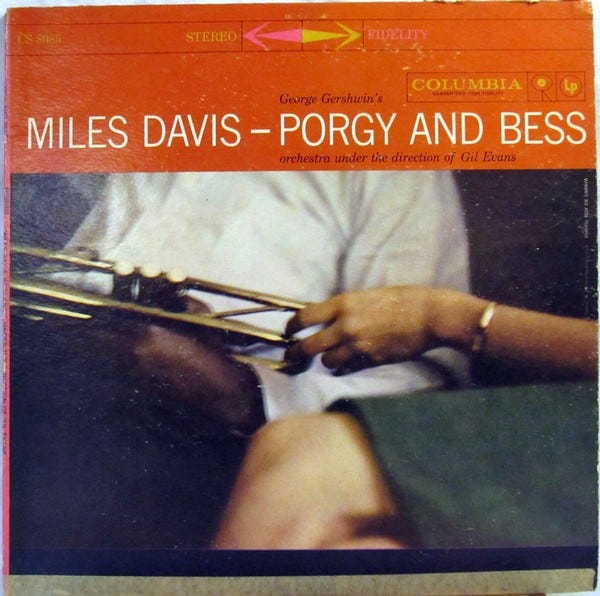
Soon after they met, Taylor began performing in the New York City Center's Off-Broadway production of Porgy and Bess. After seeing the show, Davis became interested in recording an album of songs from the Gershwin opera. He approached Gil Evans with the idea, and they began a collaboration that led to recording sessions in July and August 1958. The eventual album was released in March 1959 and included the first photograph of Taylor on a Miles Davis album cover, albeit only part of her arm and leg:
In January 1959, when the Les Ballets Africains, the national dance company of Guinea, came to the Martin Beck Theatre (now the Al Hirschfeld Theatre) in Midtown Manhattan, Taylor took Davis to see the show. The performance featured the kalimba and fresh 6/8 and 5/4 polyrhythms performed by drummers from Guinea and Senegal. These new sounds and his desire to get back to his roots influenced the ideas he brought to the studio on March 2 and April 22, 1959, for the Kind of Blue recordings, which were released in August 1959.
Also, earlier in 1959, Taylor insisted that Davis attend a performance by flamenco dancer Roberto Iglesias, which not only influenced Flamenco Sketches, the final track on Kind of Blue, but also Davis’ next studio album, Sketches of Spain, recorded in November 1959 and March 1960. In the Mitchell interview, Taylor recalls:
When we left the theater, we went to Colony record shop at 52nd and Broadway, and Miles bought every flamenco album he could get. The next day, he called [arranger] Gil Evans, saying that this is what he wanted to do, which became Sketches of Spain. It remains haunting for me because I had a part in that.
In between the Sketches of Spain sessions, Davis and Taylor were married on December 21, 1959, in Toledo, Ohio.
Taylor’s marriage to Davis spelled the end of her dance career. Despite major offers, including one to appear in the film version of West Side Story, which she had appeared in at the Winter Garden Theatre in 1957, she was consigned to the role of mom to her son from her first marriage, stepmom to Davis’ three children by Irene Birth, and housewife.
Between the dates of the Sketches of Spain recording sessions, Davis had not curtailed his touring, performing in and out of New York. After the sessions ended, Davis recalled, “After we finished working on Sketches of Spain, I didn’t have anything inside of me. I was drained of all emotion…” It’s not surprising, then, that Davis did not return to the studio until March 1961 for Columbia’s Someday My Prince Will Come.
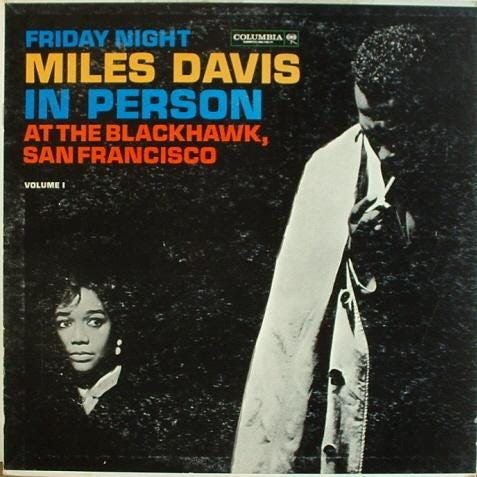
His next album was the legendary In Person, Friday Night At The Blackhawk, San Francisco, Volume I, a live recording from San Francisco’s Black Hawk nightclub on April 21, 1961. The album was released by Columbia in September 1961 and featured a pensive-looking Taylor on the album cover:
In March 1961, Davis recorded Someday My Prince Will Come. It was released in December 1961 with a much less tormented-looking Taylor on the cover:
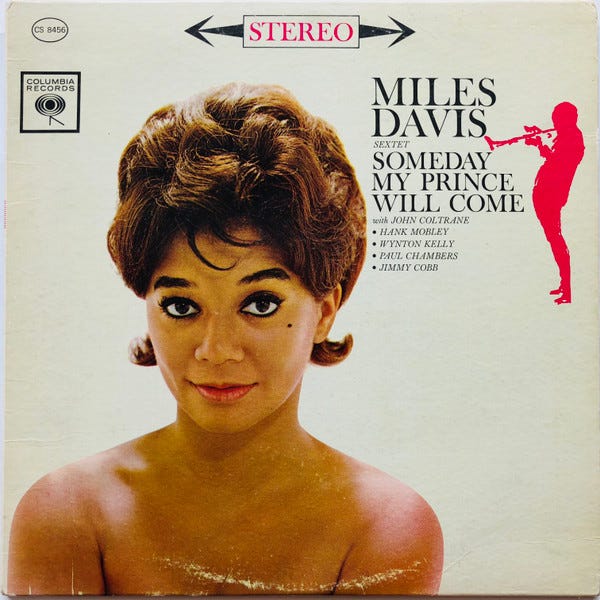
The last song on Side 1 is Pfancing, named for Taylor:
By the time Davis released E.S.P. in August 1965, not only the album’s cover, but the feel of the album’s music foretold a troubled relationship. It was their last dance. Taylor shared with Mitchell, “Look at that little face on the cover. It was only a matter of days before I left running for my life.”
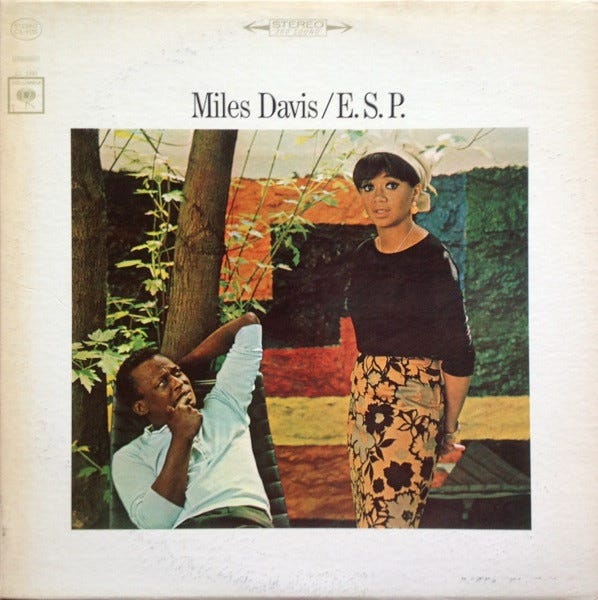
E.S.P. would be Taylor’s last Miles Davis cover. Tormented by his jealousy and cocaine induced mood swings, it was the beginning of the end of an era. She went to California to stay with her friend, singer Nancy Wilson. Taylor filed for divorce in 1966, and it was finalized in 1968.
Frances Taylor, like most dancers, myself included, was enamored of Fred Astaire, one of the namesakes of this substack. In the end, perhaps Frances Taylor was just looking for her Fred Astaire, and, unfortunately, Miles Davis could not play that role.
In Los Angeles, Taylor eventually taught private dance classes and began dancing on TV specials with the likes of Elvis Presley. She remained in Los Angeles until she died on November 17, 2018. She was 89 years old.
Here’s one more for the road. When I think about Frances Taylor and the idea of muses, I am reminded of Bob Dylan’s Mother of Muses from his Rough and Rowdy Ways album:
It is theorized, and I believe it to be true, that Mother of Muses was inspired by Dylan's having won the Nobel Prize in Literature in 2016. In her 2018 book, Om Bob Dylan, Sara Danius, secretary of the Swedish Academy, described his reaction to receiving the prize: "When he had the golden medal in his hand, he turned the backside up, looked at it for a long time and seemed amazed" by an engraving that depicted a poet listening to and writing down the song of a Muse playing a lyre.
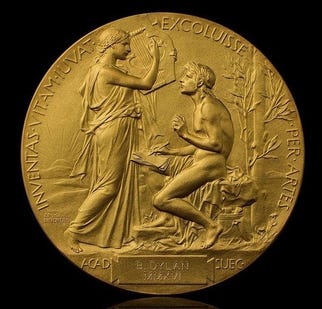
The Latin inscription is adapted from Virgil's Aeneid, "Inventas vitam iuvat excoluisse per artes", which literally translates to: "It is beneficial to have improved (human) life through discovered arts".
Dylan’s final sentence in his June 5, 2017, Nobel lecture was:
I return once again to Homer, who says, “Sing in me, oh Muse, and through me tell the story.”
Next week on that Big River called Jazz, we’ll dig our paddles in to remember Sun Ra.
Please hit this link to buy me a cup of coffee if you’d like to show your guide some appreciation for this and past journeys. I thank you in advance for your kindness and support.
If you like what you’ve been reading and hearing so far on our journey and would like to share this with someone you think might be interested in learning more about our great American art form, Jazz, just hit the “Share” button.
From Astaire to Sun Ra: A Jazz Journey is a reader-supported publication. If you feel so inclined, subscribe to my journey by hitting the “Subscribe now” button.
Feel free to contact me anytime to talk shop. I welcome and encourage that.
Until then, keep on walking….
The week Frances Taylor was on the cover of Ebony was the week I was born. Thanks for the historical account knitting together a lot of cultural knowledge - that, obviously, I was not privy to.
Thanks for connecting a lot of dots for me. Frances on the album covers was a pretty obvious sign. I'm looking forward to reading about Sun Ra next week. Yesterday was his birthday & I listened to him all day long.