
David Bromberg
Traveling with the past within me...

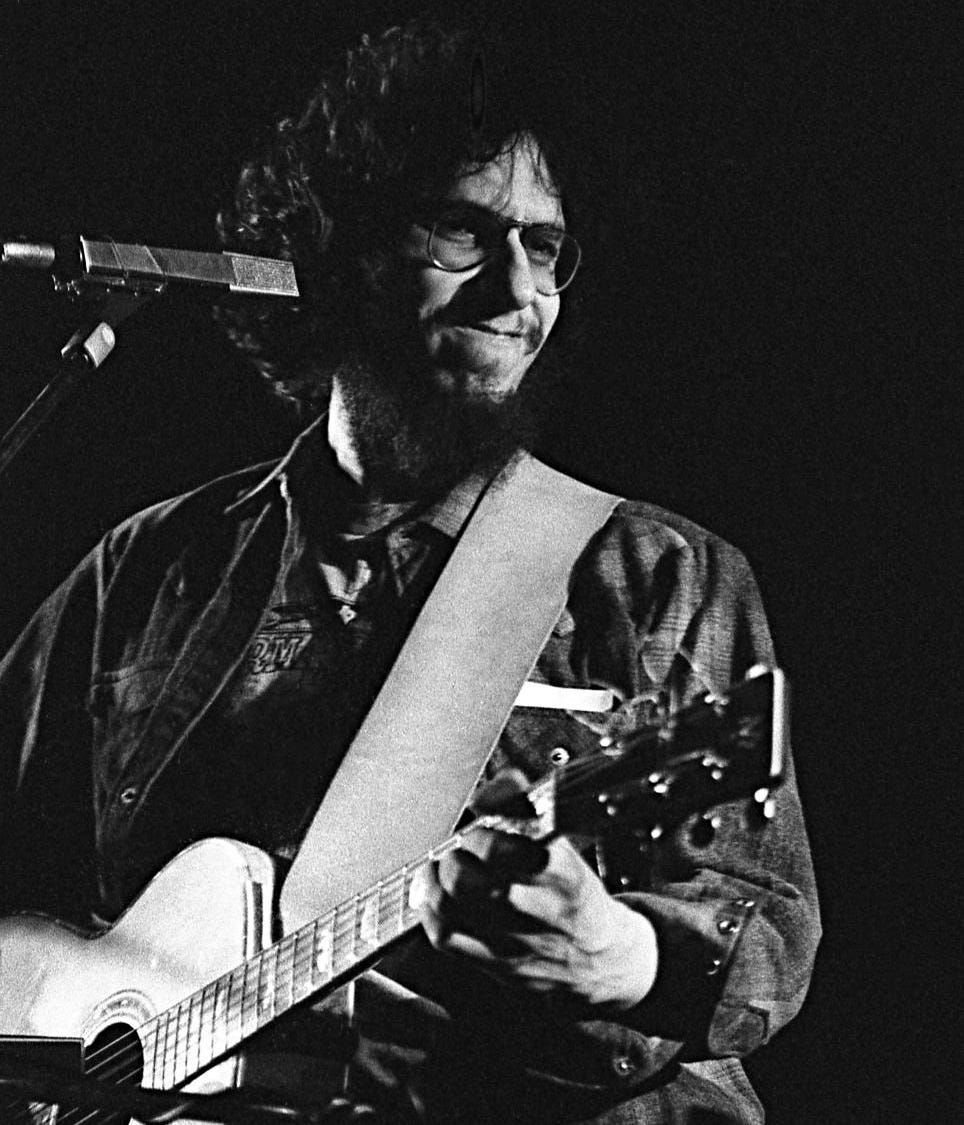
David Bromberg is an American icon.
-Dr. John
In 1982, during the spring of my sophomore year in college, I met a folk singer from Chicago. She travelled around the country in a van playing the college circuit. When she came to our college, I played harmonica onstage with her on a blues tune. After the show, we went to the Bear Mountain Inn, where she was staying, and took a walk around Harrison Lake.
We became good friends, and when she hit the road, we became pen pals, sharing homemade compilation cassette tapes of songs from our favorite artists. She was a big Steeleye Span fan and sent me some of their stuff. I sent her a lot of blues.
During the summer, while I was at Air Assault School in Fort Campbell, Kentucky, she invited me up to her place in Wheaton, Illinois. I flew up for the weekend, and we had a great time in Chicago. Maybe a little too good, I missed my flight back to Kentucky, so she offered to drive me there in her van. I knew PT formation was early on Monday morning, so we’d have to drive through the night. I tried to stay awake, but after Evansville, Indiana, around the Kentucky border, I fell asleep until we arrived at the entrance to Fort Campbell, near Clarksville, Tennessee. When we got onto post, it was about 4:30 in the morning, and I was starting to think I’d miss formation. She stepped on it and sped to the barracks; however, there was an MP on the side of the road, and he pulled us over - the kiss of death.
She rolled down the window, and the MP asked her, “Where are you going so fast, ma’am?”
She told him, “This is my friend, and he’s got to get to Air Assault School for formation.”
The MP looked around her at me, then back at her. Then pursing his lips as if to whistle, he said, “Go for it.”
The MP stepped back from the van, and she stepped on it again. With wheels screeching, she sped to the barracks.
When we got there, she slammed on the brakes, and I noticed that everyone was already in formation, but the cadre had not yet come out of their barracks. I hopped out, ran to the barracks, changed into my PT uniform, and sprinted into formation.
At Air Assault School, once you step over the line and into the area of operation, every time your left foot hits the ground, you shout, “Air Assault.” I can still remember the scene: it’s pitch black, quiet, and here I am running to formation, and each time my left foot hits the ground, yelling, “Air Assault, Air Assault, Air Assault…” As soon as I joined my squad and got in line, the doors of the cadre barracks flew open, and we were called to attention. We were all present and accounted for. It was a minor miracle.
She hung around that day while I was at school. We met that night and went swimming in a giant rock quarry outside of Clarksville, where there were fireworks. It was the 4th of July.
When I was back at college, in the fall of 1982, the start of my junior year, she came out to perform again. We met before the show, and she handed me two albums and said, “I think you’ll like these.”
The first was Jazz by Ry Cooder, and the second was David Bromberg's Wanted Dead or Alive:
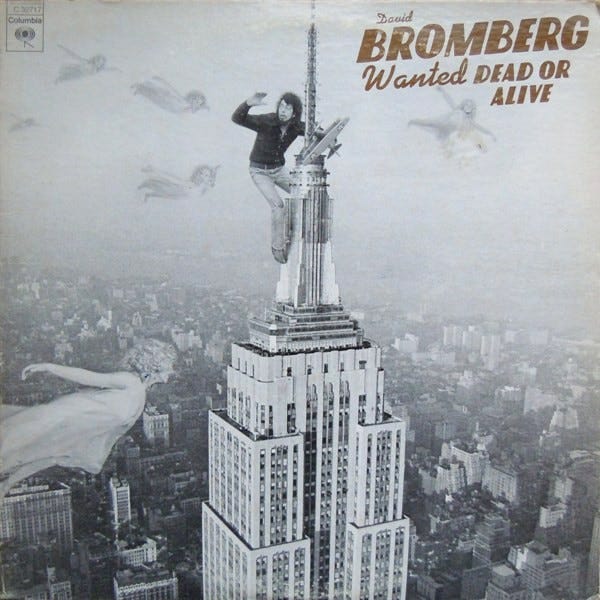
I had never heard of either artist. Magically, over the years, both have become two of my favorite artists.
We hung out together that weekend, and she hit the road to her next gig. We slowly lost touch with each other.
I remember she told me that she liked Send Me To The 'Lectric Chair, from the Bromberg album, which is on the second side. The first side was recorded with the Grateful Dead in San Francisco in August of 1972; however, I preferred the second side, which Bromberg recorded in New York City at Columbia’s Studio C in September of 1973. However, it wasn’t until I went down to Bleecker Bob’s in the Village and bought his 1972 self-titled debut album that I fell in love with his music and became a fan.
As I would learn over the years, Bromberg’s albums during the 1970s helped to define today’s American folk music. Along with Bob Dylan, Bromberg kept one foot in the best music of the past while exploring new ways to keep it fresh.
This week on that Big River called Jazz, we’ll dig in our paddles and discover the world of David Bromberg.
David Bromberg was born in Philadelphia and raised in Tarrytown, New York. He started playing guitar when he was 13 years old. He soon developed an interest in blues and folk music, becoming a big fan of recordings by Pete Seeger, the Weavers, Josh White, Django Reinhardt, and Big Bill Broonzy. The Josh White Comes Visiting album, which also featured Broonzy, was a major inspiration. After he graduated from high school, in the mid-1960s, he attended Columbia University and studied musicology, but dropped out after a couple of years and moved to Greenwich Village. Bromberg immersed himself in the growing folk scene in the Village.
When Bromberg heard Reverend Gary Davis play in a club, he asked him if he would give him guitar lessons for five dollars a lesson. It was from the Reverend that Bromberg learned his distinctive fingerpicking style. After a while, the blind Reverend asked him if, instead of paying him, he would help lead him around town. He asked Bromberg to take him to church, where he learned a lot from the Reverend about the Black church. It became a family to him.
He played around in the Village basket houses and, before long, he was backing up Richie Havens and John Sebastian, and later Chubby Checker on a gig in Florida and Rambling Jack Elliot at the Gaslight Cafe in the Village. After two State Department tours with a group called the Phoenix Singers, he was back in New York City. Eventually, he became known as the finest guitar slinger in the Village and sat around waiting for something to happen. That was when he met the New York City native and Texas transplant, Jerry Jeff Walker.
He gigged with Walker for four years and, in 1968, recorded on Walker’s album Mr. Bojangles. Here he is playing on Walker’s song Mr. Bojangles:
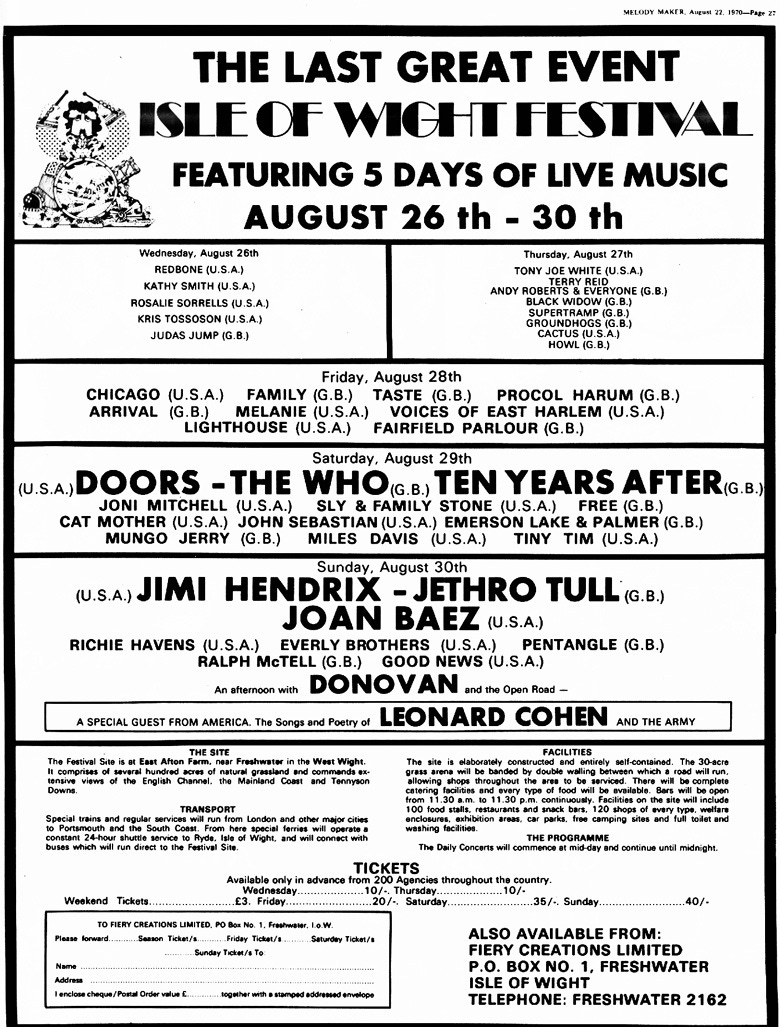
After this recording, in 1969, Elektra called Bromberg for a session on Tom Paxton’s album The Things I Notice Now. After more studio and live gigs with Paxton, Bromberg recorded with Tom Rush and Richie Havens. Then, Bromberg was invited to accompany folk singer-songwriter Rosalie Sorrels for the opening night of the now legendary 1970 Isle of Wight Festival, which boasted Jimi Hendrix, the Doors, The Who, and Miles Davis. Here’s the entire lineup:
It was while playing with Walker at the Bitter End on Bleecker, between LaGuardia and Thompson, that Bromberg met Bob Dylan. Bromberg recalled, “He was there to hear Jerry Jeff. He told me afterwards that he liked my guitar playing, and I just mumbled something in reply. Al Aronowitz introduced us.” Aronowitz was an American rock journalist best known for introducing Bob Dylan to The Beatles in 1964.
In a November 1970 meeting with Stephen Fuller from Rolling Stone magazine, Blomberg recalls:
[Bob Dylan] showed up again when I was playing with Paxton at the Bitter End. As a matter of fact, Paul Colby told me later that Dylan told him he was going to do a record with me but he sure didn’t tell me that. But he started showing up every time I was at the Bitter End. I was playing with all kinds of people – Paxton, Doug Kershaw, a girl named Ky and some others but he showed up once a week everytime I was there. Every time he came in we talked and I became more coherent. At one point he said he’d like to get me in a studio sometime but it was too good to be true so I didn’t really want to believe it until it happened.
Dylan called Bromberg about a month later, and they met at the studio. That was the beginning of the New York sessions for Dylan’s 1970 Self Portrait album, which was, according to Bromberg, “…mainly me and Dylan where I was decorating his singing with my guitar… On the Self Portrait album, I was sitting right across from Dylan, and I played whatever came to mind, and there was hardly any discussion.”
In October 1970, Columbia Records released Bob Dylan’s New Morning, which contains one of my favorite Dylan tunes, If Dogs Run Free:
The song features scat-singing Maeretha Stewart as a guest vocalist, Al Kooper on piano, and Bromberg on Dobro.
In Fuller’s Rolling Stone article, Bromberg recalls:
On the new one [New Morning] there were more musicians in the studio – Dylan had the songs pretty well worked out beforehand. What they did was sit me in a corner where I had dobro, mandolin, mandocello, electric guitar, acoustic guitar and Dylan string guitar. Usually what I did rather than the solo things on Self Portrait was a lot less obvious things. Most tunes were first takes, sometimes second, because Dylan likes a spontaneous sound. Maybe the best thing I did on the album was not to play too much.
I find his work on New Morning, like his acoustic intro on the title song and his gut-string lead on Three Angels, real “unsung treasures”:
Besides Ry Cooder and David Bromberg, my Chicago folk singing friend also introduced me to the fiddle-playing tap dancer, John Hartford, who brought me a lot of comfort on my trip down the Mississippi River, which I wrote about here:
Bromberg met another legend, John Hartford, at the Philadelphia Folk Festival, and they became friends and played together a lot. Interestingly, Hartford then asked Bromberg not to play on his next album, but to produce it, which became Aereo-Plain, a blend of traditional bluegrass musicianship and 1970s hippie sensibility:
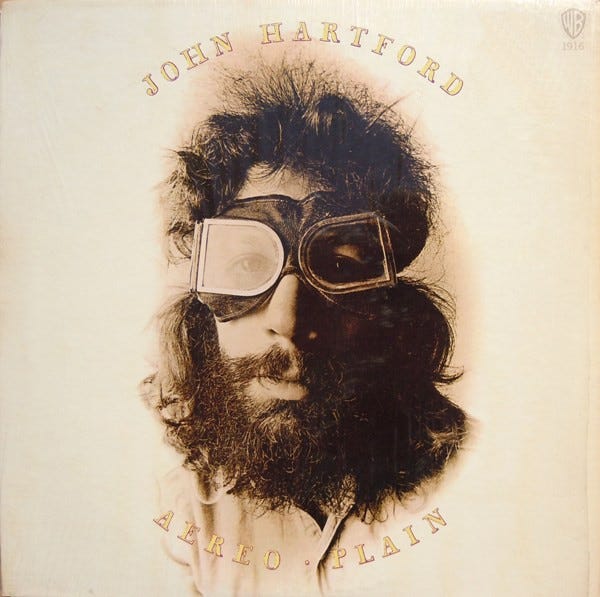
The album sold poorly; however, Aereo-Plain inspired a genre now known as "Newgrass". About the session, Bromberg recalled, “We'd sit around and smoke pot and play Sally Goodin for an hour and a half. That approach kind of became, after a while, newgrass." Hartford told Bromberg to "let the tapes roll, we don't want to hear playbacks until you've put the master together.”
Evidently, Bromberg did well as Aereo-Plain became an inspirational album for many young bluegrass musicians.
In 1971, Bromberg signed a record contract with Columbia Records, and in 1972, he finally made his debut as an artist on a major record label. The album was simply named David Bromberg. This is a terrific debut, and I always thought Dylan’s songs from the film Pat Garrett and Billy the Kid sounded a lot like Bromberg’s Last Song For Shelby Jean, which was featured above.
I can still remember the first time I heard Bromberg’s version of Delia. It had it all for me, and then, like a shot to the heart, this harmonica came in at the 3:44 minute mark, and laid me down. I thought, “I know that harmonica player. I’ve heard him before.”
I grabbed the album cover and, sure enough, it was Will Scarlett, who I’d heard years ago on my brother’s Hot Tuna album, which had another of my all-time favorite songs, New Song (For The Morning):
Here’s a wonderful video of the beloved Will Scarlett playing with Justin Norton’s band, recorded at the Monkey House in Berkeley, California, on January 20, 2024. Go to the 5:17 minute mark to hear him play Know You Rider:
Go here for a clearer video of Scarlett’s solo on this song. This may be his last performance, as he passed to the Western Lands on September 24, 2025. Man, could old Will Scarlett play. He was one of my biggest inspirations as a harmonica player.
That first David Bromberg album still holds a special place in my heart. It’s been over 40 years since I bought that album, but it’s still a part of me.
David Bromberg’s next release, Demon In Disguise, was released by Columbia Records in 1972 and included another of my favorite Bromberg tunes, Mr. Bojangles. He’d played with Walker, who wrote the song, so during the song’s spoken interlude, I believe we’re hearing about the real Mr. Bojangles:
Demon In Disguise was recorded with members of the Grateful Dead, and both Will Scarlett and Jody Stecher play on Jugband Song, which is nice. Jody Stecher was a big influence on Bromberg.
Here’s a great song, Hood River, Roll On, by Jody Stecher and Kate Brislin from their fine album Heart Songs: The Old Time Country Songs Of Utah Phillips:
By 1980, though, Bromberg had become burnt out from too much time on the road and, at the height of his career, left performing for over 20 years. According to Fiona Hutchings in a review of a Bromberg 1998 collaboration, The Player: A Retrospective, he shared:
I decided I didn't want to be one of those guys who drags himself onto the stage and does a bitter imitation of something he used to love...I had to find another way to live my life and that I would enjoy.
So in 1981, Bromberg went to the Kenneth Warren School of Violin Making in Chicago to learn to build and repair violins, and for over 50 years pursued a fascination with violins. He and his wife lived in Chicago for over 20 years before moving to Wilmington, Delaware, in the early 2000s and opening David Bromberg Fine Violins.
Over the years, he became a recognized authority on American violins, their history, and construction. The result of this 50-year treasure hunt was the establishment of the world's largest American-made violin collection. Only in 2002 did Bromberg return to performing and recording.
In 2007, Bromberg recorded an amazing solo album, Try Me One More Time, his first studio album in almost 18 years. It was nominated for a Grammy Award for Best Traditional Folk Album, his only Grammy nomination. From the album, here he is singing the influential American folk and blues musician Elizabeth "Libba" Cotten’s song Shake Sugaree:
And here he is on his take of Levee Camp Moan:
Here’s one more for the road. Another studio musician on Dylan’s New Morning album was Charlie Daniels. Daniels had also played on Dylan’s 1969 Nashville Skyline and 1970 Self Portrait albums.
I first heard Charlie Daniels in the late 1970s, while I was in high school, when two songs from his 1976 Epic Records album Fire on the Mountain got a lot of airplay on the radio in the Twin Cities. The first was Orange Blossom Special:
The other was Long Haired Country Boy:
Charlie Daniels would go on to even greater fame with his song The Devil Went Down to Georgia, which appeared on his 1979 album Million Mile Reflections, released during my senior year in high school.
David Bromberg’s final show was Saturday, June 10, 2023, at The Beacon Theatre in New York City. It was his Last Waltz. For a good look at his life and career before 2012, watch the film David Bromberg: Unsung Treasure, directed by Beth Toni Kruvant.
I never did get the chance, so Linda, if you are out there, thank you for introducing me to such wonderful artists. Their spirits led the way for me. They showed me the road to follow and brought me so much joy and comfort over the years. And to David Bromberg, a legend of American music, thank you for all the wonderful music you shared with us over the years. Enjoy retirement!
Next week on that Big River called Jazz, we’ll dig our paddles into the waters of Paul Bley.
Please hit this link to buy me a cup of coffee if you’d like to show your guide some appreciation for this and past journeys. Know in advance that I thank you for your kindness and support.
If you like what you’ve been reading and hearing so far on our journey and would like to share this with someone you think might be interested in learning more about our great American art form, Jazz, just hit the “Share” button.
From Astaire to Sun Ra: A Jazz Journey is a reader-supported publication. If you feel so inclined, subscribe to my journey by hitting the “Subscribe now” button.
Feel free to contact me anytime to talk shop. I welcome and encourage that.
Until then, keep on walking….
Fascinating post. I definitely need to check our Mr. Bombers. I have a Charlie Daniels story. My Dad owned a Buick & GMC dealership in Sapulpa, OK. It's a small town about 12 miles from Tulsa. Charlie was driving to Tulsa to record with some Tulsa musicians. He stopped at my Dad's dealership to look at the new Rivieras. He was driving a two or three year old Riviera. During their visit he asked my Dad if he liked country music. My Dad replied, "I am real fond of Johnny Cash." Charlie went to his car & retrieved an 8-track of Nightrider. He told my Dad to give it a listen, he might like it. Charlie left & headed to Tulsa. One of my best friends sister was the parts manager. She ran onto the showroom floor & yelled at my Dad, "TJ, that was Charlie Daniels." That was 50 years ago. Thank you for the flashback.
New Lee Highway Blues!