
Corridos
A meeting across the river...

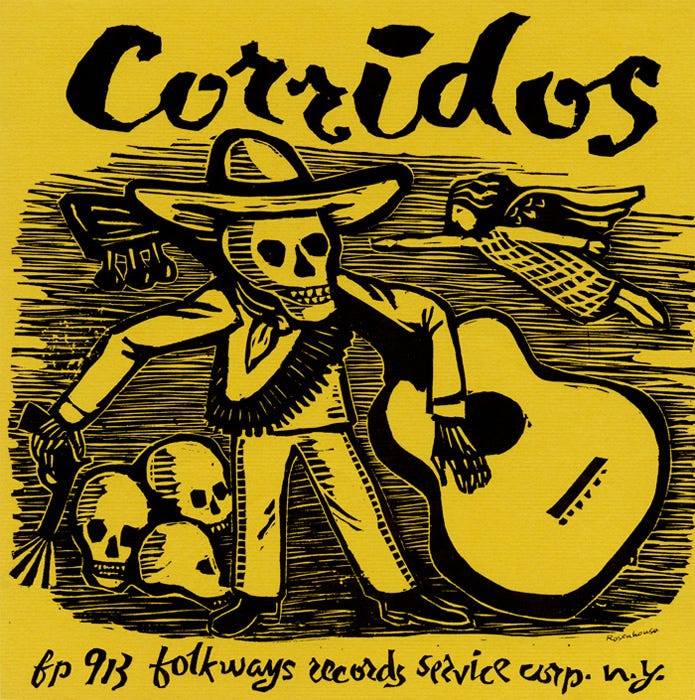
From the late nineteenth century through the present day, corridistas have documented the actions and exploits of the famous, the infamous, and the anonymous everyman. Like newspapers for the literate classes, the corrido is a first draft of history, but in this case, written by and for society’s downtrodden and dispossessed.
-Agustin Gurza in Strachwitz Frontera Collection of Mexican and Mexican-American Recordings
I had intended for this week’s journey on that Big River called Jazz to cover a two-week journey to discover the world of surrealism in Hollywood, beginning with one of my favorite Fred Astaire movies, the fantasy Yolanda and the Thief. But this will have to wait for a little further down the river.
Growing up as a kid, there was never much music in my house. The only music my mom listened to was in the car. My dad was tone deaf, and the only time I ever heard him sing was in church. He never talked to me about music of any kind, or I should say he only did once.
It happened in the early 2000s, sometime after my wife and I moved from Chicago to Minneapolis. We were entertaining relatives at our house, and I played the Lone Star movie soundtrack:
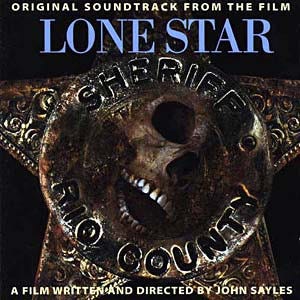
I’m not sure why I picked that CD; looking back now, it seems like an odd choice. But for some reason, I thought it might make good background music. The first track is Mi Único Camino by Conjunto Bernal:
As it played, my dad walked by the speaker and stopped. After listening for about twenty seconds, he turned to me and said, “Now that’s good music.” Then, he just walked away. At the time, it didn’t occur to me that it was the first and would be the last time he ever shared with me a musical preference of any kind.
My dad grew up in Palisades, Colorado, a small town near Grand Junction. To raise money for his family, after school as a kid, he picked peaches at a nearby orchard. I can imagine him during breaks on some hot Colorado evening, sitting under a peach tree listening to the Norteño music of the migrant workers, who came up from New Mexico and Texas. Maybe that’s where he’d heard that music?
Recently, I was in Chicago for the 61st Chicago International Film Festival. One of the films I saw was Christine Turner’s documentary, Sun Ra: Do the Impossible:

It was great and naturally right down my alley. However, it was another film that caught my attention, Curtis Miller’s documentary A Brief History of Chasing Storms. In the film, Miller tells about a road trip he took to America’s “tornado alley,” mapping the destructive nature of the natural disasters that pass through. One of the towns he visited was Lubbock, Texas, which was hit by an F5 tornado on May 11, 1970. The tornado damaged an area covering 15 square miles, almost one quarter of the city, and caused 26 deaths and 1,500 injuries.
During a section of the film, as the camera slowly pans the countryside around Lubbock, you hear playing in the background the entire two-part corrido Una Tragedia en Lubbock (A Tragedy in Lubbock), written and performed sometime in the early 1970s by an obscure group called Conjunto los Desconocidos, aptly named in English, The Unknowns.
Even though I have no idea what they’re singing about, since I don’t speak Spanish, it’s the sound of the music I like; it calms my nerves. Here’s Part 1 of Una Tragedia en Lubbock:
…and Part 2:
This recording is part of the Frontera Collection, a legendary archive collected over 60 years by Chris Strachwitz. With nearly 170,000 individual recordings, it is the world’s largest repository of commercially produced Mexican and Mexican American vernacular recordings. I wrote about Chris Strachwitz and his collection here:

The cornerstone of the collection is the corrido.
In its simplest definition, the corrido is a ballad or narrative song that tells the tales of heroic people, iconic events, and even famous horses. Although the oldest known corridos in the Spanish Empire are from eighteenth-century Argentina and Chile, predating those of Mexico, the music is considered quintessential Mexican and relatively modern.
In his 1999 article What is a Corrido?, UCLA professor Guillermo Hernandez concludes:
Corridos recount stories of heroic and often tragic figures who left us their example as they confronted difficult situations in their communities. Many of the names of narrators and characters, as well as their trials and tribulations, remain only in that collective and unofficial history that is the corrido tradition.
Chris Strachwitz recounts a story from the 1960s about when a Swedish record distributor visited him in California. He decided to introduce his guest to the grassroots music of working-class Mexican Americans by taking him to a cantina in the Mission District, the famed Latio barrio in San Francisco, where Texas-style conjunto was performed. To his amazement, the second song the band played was a classic corrido of a fugitive folk hero, Gregorio Cortez.
Strachwitz wrote:
It was quite extrordinary. Corridos have an amazing life. They are written about events that took place decades ago, but they still resonate with people as if they were hearing them for the first time.
With its long history, the corrido has evolved from a strictly oral tradition to a commercially recorded product of popular culture; however, the central themes and characters have remained unchanged.
This week on that Big River called Jazz, we’ll dig in our paddles and discover the world of corridos.
The growth of corridos in Mexico spans the turbulent one-hundred-year period between the War of Independence of 1810 and the Mexican Revolution in 1910. Another defining historical event that helped shape the evolution of the corrido was the war between Mexico and the United States, which occurred in mid-century between independence and revolution. All three upheavals imbued the corrido with a growing sense of national identity.
Here’s an example of corrido sheet music from 1915, at the height of the Mexican Revolution:
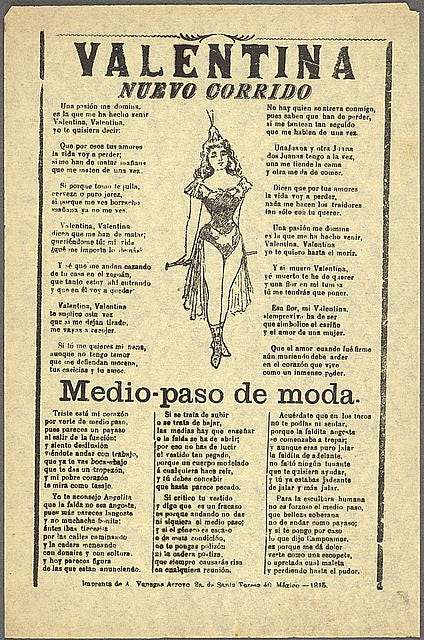
What I find interesting is the cultural clash at the heart of the corrido, as evidenced by the disparate ways the two sides viewed the song’s protagonists, as heroes or villains, depending on what side you were on. To Anglos, the protagonists were bandits and outlaws who deserved to be tracked down and imprisoned or killed. To the corrido composers and their audience, they were folk heroes, modern-day Robin Hoods, defending Mexico against the prejudice and brutality of Anglo society.
Despite the obvious technological difficulties, at least three dozen corridos were recorded in Mexico before 1910. Notably, in Mexico City, Herrera Robinson recorded two famous corridos, Ignacio Parra and Heraclio Bernal, both about rebels during the pre-revolutionary dictatorship of President Porfirio Díaz. Here’s an example of Heraclio Bernal:
The earliest recordings were waxed on cylinders for the Edison Records company. However, the golden age of corrido recordings was between 1938 and the 1940s. Cities across the Sunbelt, like El Paso, McAllen, San Antonio, and Los Angeles, became the new capitals of corrido recording.
Here are two early corridos that define the tradition. The first is a classic two-part corrido by Genaro Rodriguez and Juan Chavez about Pancho Villa and Venustiano Carranza, both prominent leaders in the Mexican Revolution:
The second is an example of an anonymous corrido recorded on Orfeo, a small and obscure record company in Monterrey, Mexico. The title is simply the name of a local hero, Mario Lopez, and the song tells the tale of how his pockets were emptied and shoes stolen after he was murdered in 1953:
Here are two more corridos, like Una Tragedia en Lubbock, that tell the tales of devastating hurricanes in Texas and northern Mexico.
In 1968, Agapito Zuñiga recorded Tragedia Del Huracan Beulah, which tells the tale of intense Category 5 Hurricane Beulah that impacted the Greater Antilles, Mexico, and Texas in September 1967. The hurricane made landfall just north of the mouth of the Rio Grande as a Category 3 hurricane. It spawned 115 tornadoes across Texas, which established a new record for the highest amount of tornadoes produced by a tropical cyclone:
And another telling the tale of Hurricane Celia in 1970. Corpus Christi, Texas, suffered the worst impact, with at least 85% of all structures in the city damaged, and 90% of downtown buildings damaged or destroyed. Additionally, about one-third of the city’s houses were severely damaged or flattened:
Here are two more for the road. Early corridos that involve drug sales were labeled narcocorrido. They often told tales of drug deals gone bad. For example, Contrabando y Traicion is considered one of the original songs that launched the narcocorrido craze of recent decades - it tells the story of a female smuggler who kills her cheating partner and makes off with the bounty. This version of the song was recorded in 1975 by Armonia del Norte:
The story behind this corrido kind of reminds me of the Steve Miller Band’s Take The Money And Run - an American corrido of sorts:
Another example is the old corrido Carga Blanca, which tells the tale of dealers crossing the Rio Grande by night and heading straight to San Antonio, to a “house of stone on Calle Navidad.” The sale goes off without a hitch until the dealers head home with their cash and are ambushed on the street. A gunfight breaks out on “the night of terror,” leaving three dead and two injured. The cash disappears from the scene, but gossip has it - “you know how people talk” - all the money ends up back with the original owners:
This story reminds me of what might have happened to the narrator and Eddie after their meeting in Bruce Springsteen’s song Meeting Across the River, another American corrido of sorts:
In American folklore, there are many examples of songs with corrido-like working-class themes, a tradition carried into the twentieth century by artists like Merle Haggard with They’re Tearin’ the Labor Camps Down:
Bob Dylan’s John Wesley Harding:
…and Gordon Lightfoot’s Wreck of the Edmund Fitzgerald:
I do wonder, as my friend Sam asked the other day, about these American corridos, “Will they still be listened to 100 years from today?”
Corridos have stood the test of time. They are the stuff of legends, and it’s not hard to understand why they have been passed down through generations and why, a hundred years from now, people will still remember their stories.
Next week on that Big River called Jazz, we’ll dig our paddles into the first of a two-week journey to discover the world of surrealism in Hollywood, beginning with my favorite Fred Astaire movie, the fantasy Yolanda and the Thief.
Please hit this link to buy me a cup of coffee if you’d like to show your guide some appreciation for this and past journeys. Know in advance that I thank you for your kindness and support.
If you like what you’ve been reading and hearing so far on our journey and would like to share this with someone you think might be interested in learning more about our great American art form, Jazz, just hit the “Share” button.
From Astaire to Sun Ra: A Jazz Journey is a reader-supported publication. To subscribe, please hit the “Subscribe now” button.
Feel free to contact me at any time to talk shop. I welcome and encourage that.
Until then, keep on walking….
As always, an extremely interesting post. My wife & her family moved to Corpus Christi two weeks before Celia hit. I played her the corrido & read her your comments. She has been reminiscing about the hurricane for 30+ minutes. She has quite a few very vivid memories about Celia.