
Abdullah Ibrahim (Dollar Brand)
Good news from Africa...

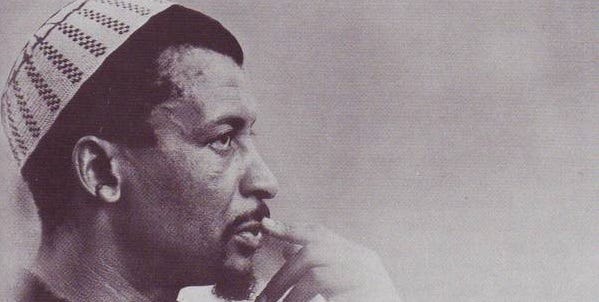
We are scientists of music… but it is ultimately the intuition - the use and development of such - that will guide us to the greatest musical heights and allow us to be true artists/musicians… The intuitive faculty, because it is a part of a higher awareness, inspires our solos, gives us the form for our original compositions, helps us with all other facets of music, and life.
-Henry Butler
In the spring of 2018, which seems like yesterday, I saw the great Abdullah Ibrahim play with his band Ekaya at the Dakota in Minneapolis. The show was a celebration to honor Hugh Masekela, who had passed away in January of that year. I had no idea it would be the last time I’d get the chance to see him perform.
I came to him late in my jazz journey. As is often the case on that Big River called Jazz, many great artists go undiscovered until a song crosses your path. Sometimes via word of mouth, and other times a song just pops out of nowhere and ambushes you. That’s how it was for me with Abdullah Ibrahim.
I had seen a lot of Dollar Brand's albums in record stores over the years, but I never bought one. Then one day, around 2010, I heard the incredibly soulful song Pula from Abdullah Ibrahim's 2010 solo recording, Senzo:
After that, I realized that Ibrahim was, in fact, Dollar Brand, whose albums I’d seen in record stores.
At about the same time, I read about King Kong, the South African jazz-influenced musical, billed as an “all-African jazz opera,” which premiered on February 2, 1959, at the Great Hall of Wits University in Johannesburg, South Africa. By then, South Africa had been under apartheid rule for eleven years.
Although living under oppressive minority rule, on the opening night a black composer, Todd Matshikiza, a white creative team, and a 72-strong black cast, which included Miriam Makeba, offered the audience a vision of another kind of country, in which creativity and collaboration prevailed.
King Kong was a huge triumph, and based on that success, the cast set sail for England and in 1961 premiered at the London West End’s Princes Theatre:

King Kong showed in England for two years. I wrote about all this back in 2021:

In the liner notes of the London cast recording album, released by Decca in 1961, it states:
No theatrical venture in South Africa has had the sensational success of King Kong. This musical, capturing the life, colour, and effervescence -- as well as the poignancy and sadness -- of township life, has come as a revelation to many South Africans that art does not recognize racial barriers. King Kong has played to capacity houses in every major city in the Union [of South Africa], and now, the first export of indigenous South African theatre, it will reveal to the rest of the world the peculiar flavour of township life, as well as the hitherto unrecognized talents of its people. The show, as recorded here, opened at the Princes Theatre, London, on February 23, 1961.
It’s interesting to listen to the original 1959 King Kong cast recording on the Gallotone label and compare it to the “watered-down” 1961 London cast recording on the Decca label. I find Jack Hylton’s London cast recording disappointing. I think the choices that were made to accommodate the white musical sensibilities of 1960s London are astounding – and not in a good way.
Here’s the wonderful opening track from the 1959 Gallotone recording, which features Hugh Masekela on trumpet and Kippie Moeketsi on alto sax:
In 1960, long before both Masekela and Moeketsi went to London with the King Kong production, they played in a band called the Jazz Epistles, led by the pianist Dollar Brand.
The Jazz Epistles recorded their first album in 1960, released by the South African Continental label. And with that began the amazing career of a South African legend, Dollar Brand, or as he became known later in life, Abdullah Ibrahim. In this post, and out of respect for Ibrahim, I’ve tried to use his name as it developed chronologically.
This week on that Big River called Jazz, we’ll dig in our paddles and discover the world of Abdullah Ibrahim.
Adolph Johannes Brand was born in Johannesburg on October 9, 1934. At 3 years old, his parents decided to make their home in Cape Town's notorious District Six. At the age of six, he returned to Johannesburg, where he heard for the first time Duke Ellington’s Take the A Train. That moment changed his life.
He started playing piano at age seven, heavily influenced by Ellington, traditional African music, African-American hymns, and spirituals. He was encouraged musically by his mother, the choir leader, and his grandmother, the church pianist.
As a teenager, he adopted the stage name Dollar Brand, joined a doo-wop group, and worked with both the Tuxedo Slickers and the Willie Max dance band. His first group as a leader was the Dollar Brand Trio. Later in 1954, he played with the Manhattan Brothers, whose leader was Nathan Mdledle, who went on to play the lead in King Kong.
In 1955, Brand added Johannesburg’s leading altoist, Kippie Moeketsi, to his trio. To many jazz experts, they sounded like the Charlie Parker quartet featuring Thelonious Monk. Later on, Brand added Hugh Masekela on trumpet and Jonas Gwangwa on trombone, and the Jazz Epistles were formed.
The Jazz Epistles grew out of a tradition that included bands such as The Jazz Maniacs, which played from 1940 to 1944. The Jazz Maniacs’ pianist was Kippie’s older brother, Jacob Moeketsi. Here they are with Jacob at the piano:
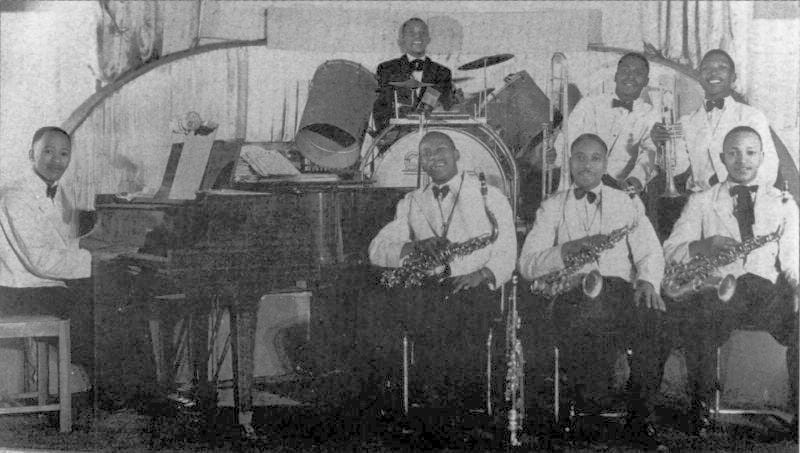
The Jazz Maniacs were significant because they carried the spirit of marabi, a South African style of urban dance music that emerged in the 1920s, to the dance halls and inspired a new breed of emergent Jazz musicians such as Dollar Brand and The Skylarks, the famous all-woman South African vocal group founded in 1956 by legendary singer Miriam Makeba.
Unfortunately, the eventual demise of marabi big bands can be directly attributed to the legislated racism, forced removals, and regulations forbidding blacks to appear at venues where liquor was served. This marked the end of the line for that kind of American Jazz in South Africa. Many of the musicians who played it left the country because of the increasingly repressive political situation.
The 1950s are remembered as the days of passive resistance against the Nationalist government’s institutionalized racism. It is from this period that a new strain of Jazz emerged, with greater American influence and the Bebop revolution in the U.S. It was in this environment that Dollar Brand and Chris McGregor’s Blue Notes came of age.
Dollar Brand’s Jazz Epistles recorded two albums: The Jazz Epistles Vol. 1 and Vol. 2, and played a few gigs around the country before they disbanded when both Masekela and Gwangwa left in 1960 to study in the U.S. In 1962, Brand moved to Europe and played for two years at the Cafe Africana in Zurich.
In February 1963, Brand’s future wife Bea Benjamin persuaded Duke Ellington to hear him play. According to a November 1963 article in Downbeat magazine, the story goes like this:
One evening last spring, when Duke Ellington was playing a concert in Zurich, Switzerland, a slender young woman came up to him backstage during intermission and asked if he would come over to a nearby club after the concert and listen to the trio she was singing with.
Ellington, used to this sort of thing, politely brushed off the young woman and went onstage.
When he returned backstage after the concert, the girl was still there. She implored him to stop by, and Ellington, despairing of shaking her off, promised to drop over to the Cafe Africana to hear the group.
He arrived at closing time, but the trio persuaded the management to stay open another half-hour so they could play for him.
Ellington was so impressed that he arranged to produce a recording session for Brand in Paris.
Duke Ellington only produced three records for jazz musicians, all recorded in Paris in February 1963 and released on the American Reprise record label, founded in 1960 by Frank Sinatra. The first album was Bud Powell in Paris, released in 1964. The next was Alice Babs and Ellington’s Serenade To Sweden, released in 1966. This is an outstanding album. I have to play Stoona from the album. Stunning:
The final album was Duke Ellington Presents The Dollar Brand Trio, which featured Johnny Gertze on bass and Makaya Ntshoko on drums. From the album, here is Dollar’s Dance:
As a result of Ellington’s sponsorship, Brand played at the Antibes, Juan-les-Pins, and Palermo festivals in 1963. At Ellington’s urging, Brand went to the U.S. in 1965 and played in the Newport Jazz Festival. He stayed in New York City for three years and got deeply involved in the Free Jazz scene.
After his return to Africa in 1968, Brand converted to Islam, taking the name Abdullah Ibrahim. After his conversion, he returned to his African roots, and his music flourished. After his time back home in Cape Town, Ibrahim returned to Europe.
I think the best way to learn about Abdullah Ibrahim is to just listen to some of his music. Of the albums I’ve listened to so far, what follows are a few of my personal favorites.
On November 7, 1973, to explore this concept of “space,” Ibrahim assembled an all-star cast to record African Space Program, which was released in 1974 on the German Enja label:
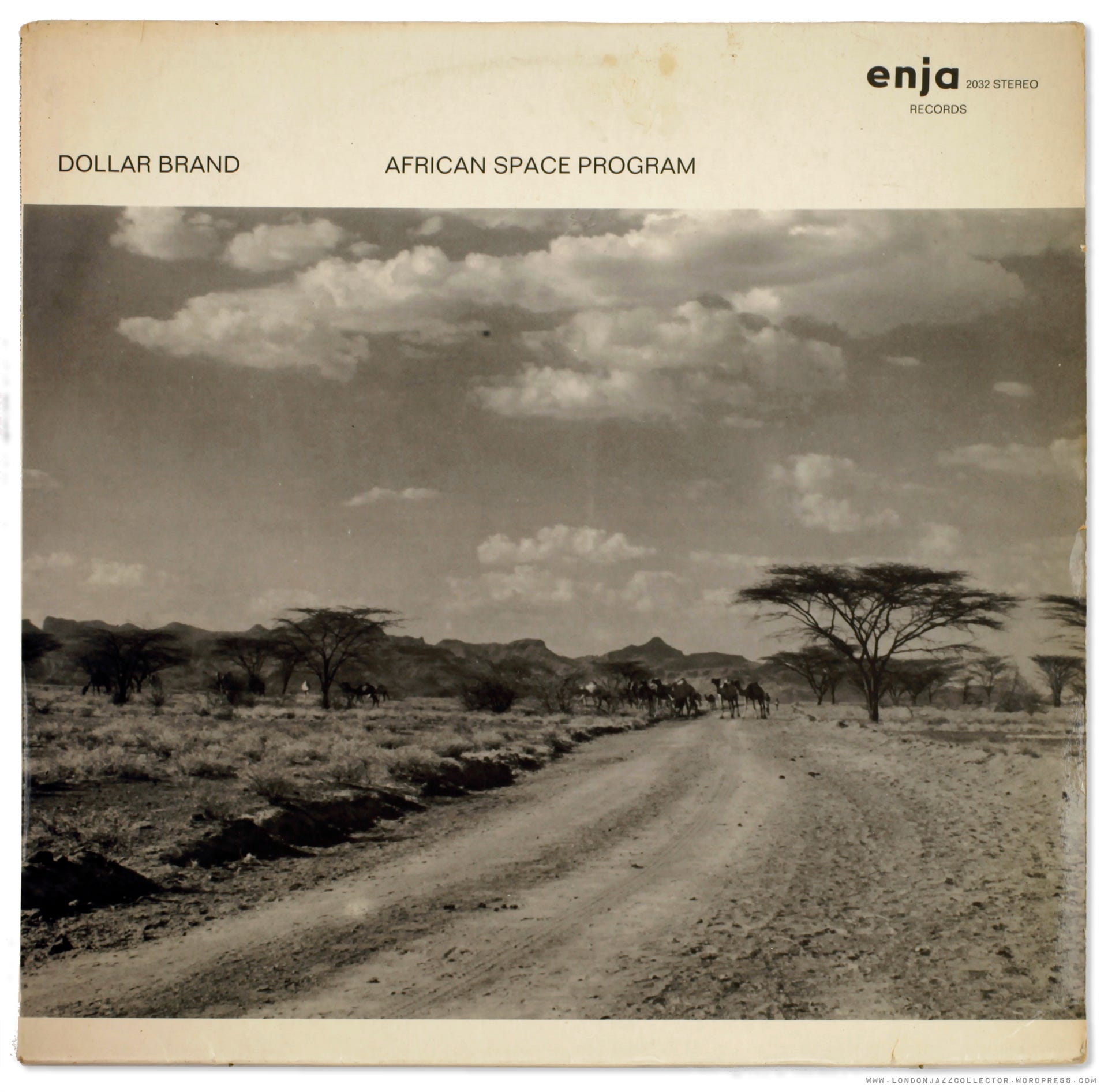
The group included nine horn players: Hamiet Buiett, Carlos Ward, Sonny Fortune, John Stubblefield, Roland Alexander, Kiani Zawadi, Cecil Bridgewater, Charles Sullivan, Enrico Rava, with Cecil McBee on bass and Roy Brooks on percussion. From the album, here’s the epic Jabulani-Easter Joy:
Note that at the minute mark, Roy Brooks is playing the musical saw. Nice.
After the introduction, the beginning of Jabulani-Easter Joy has a similar sound to the ensemble you hear in King Kong. For example, listen to the beginning of King Kong’s Sad Times, Bad Times:
The following month, on December 10, 1973, at ECM’s legendary Tonstudio Bauer studio in Ludwigsburg, Germany, Ibrahim and Johnny Dyani recorded the historic Good News From Africa, released in 1974 by the Enja label. From the album, here are two enormously spiritual masterpieces: The Pilgrim:
…and Ntsikana’s Bell:
This song is a nod to the memory of uNtsikana ka Gaba, a pioneering voice in the formation of the early Africanist Christian movement in the Cape.
In an interview with Danish writer Lars Rasmussen, Ibrahim describes the concept of “space,” introduced in the African Space Program and expanded in Good News From Africa:
It opened up a whole new dynamic. We shifted away from harmonic structures and played modally, the Xhosa modality … so with Johnny I touched on the Xhosa tradition, and it’s massive what you can do with it! We experienced it and expanded on it, and it opened a freedom for us. It allowed us space. You play bebop, you fill out a space. When you play our music, you don’t play notes, you just play space!
In 1974, Ibrahim recorded Underground In Africa, released by Soultown Records, a small label launched by Rashid Vally in 1970 out of his father's grocery and record store on Kort Street, downtown Johannesburg.
In 1976, Ibrahim organized a South African jazz festival which flew in the face of all the rules of apartheid. A few days afterward, he left the country and, in 1977, moved to the U.S. and settled in New York City.
In August 1977 at Downtown Sound in New York City, Ibrahim recorded Buddy Tate Meets Dollar Brand. This is a wonderful quintet session. Interestingly, on the track Goduka Mfundi (Going Home), Ibrahim sits out, and Tate and bassist Cecil McBee play a nice duet:
On September 7, 1979, Ibrahim and Johnny Dyani recorded another outstanding duo album, Echoes From Africa, released that same year on the Enja label. From the album, here is Namhanje:
In 1983, Ibrahim recorded the seminal Zimbabwe, a quartet session that features Ward on flute and alto saxophone, Essiet Okun Essiet on bass, and Don Mumford on drums. Here’s the title track:
I think the beautiful flute is played by Carlos Ward, who passed away last January. He was 85 years old. Ward had an amazing and underrated career, and his artistry should be discussed and admired more.
In 1985, Ibrahim recorded Water From An Ancient Well, released in 1986 by Herb Wong’s Blackhawk label. The album featured his band Ekaya with Ward, Ricky Ford, Charles Davis on baritone sax, Dick Griffin on trombone, David Williams on bass, and Ben Riley on drums. From the album, here is the title track with lovely solos by Davis and Griffin, both Sun Ra alums:
After the fall of Apartheid, Ibrahim returned to South Africa in 1990 at the invitation of Nelson Mandela, and he played at Mandela’s inauguration in 1994. Mandela famously called Ibrahim the “African Mozart.” After that, Ibrahim spent much of his time in South Africa.
Here’s one more for the road. In 1988, Ibrahim wrote and recorded the score for the French film Chocolat. No, not the 2000 one with Juliette Binoche and Judi Dench, the obscure 1988 one directed by Claire Denis, which stars François Cluzet, who appeared two years earlier in Bertrand Tavernier’s Round Midnight.
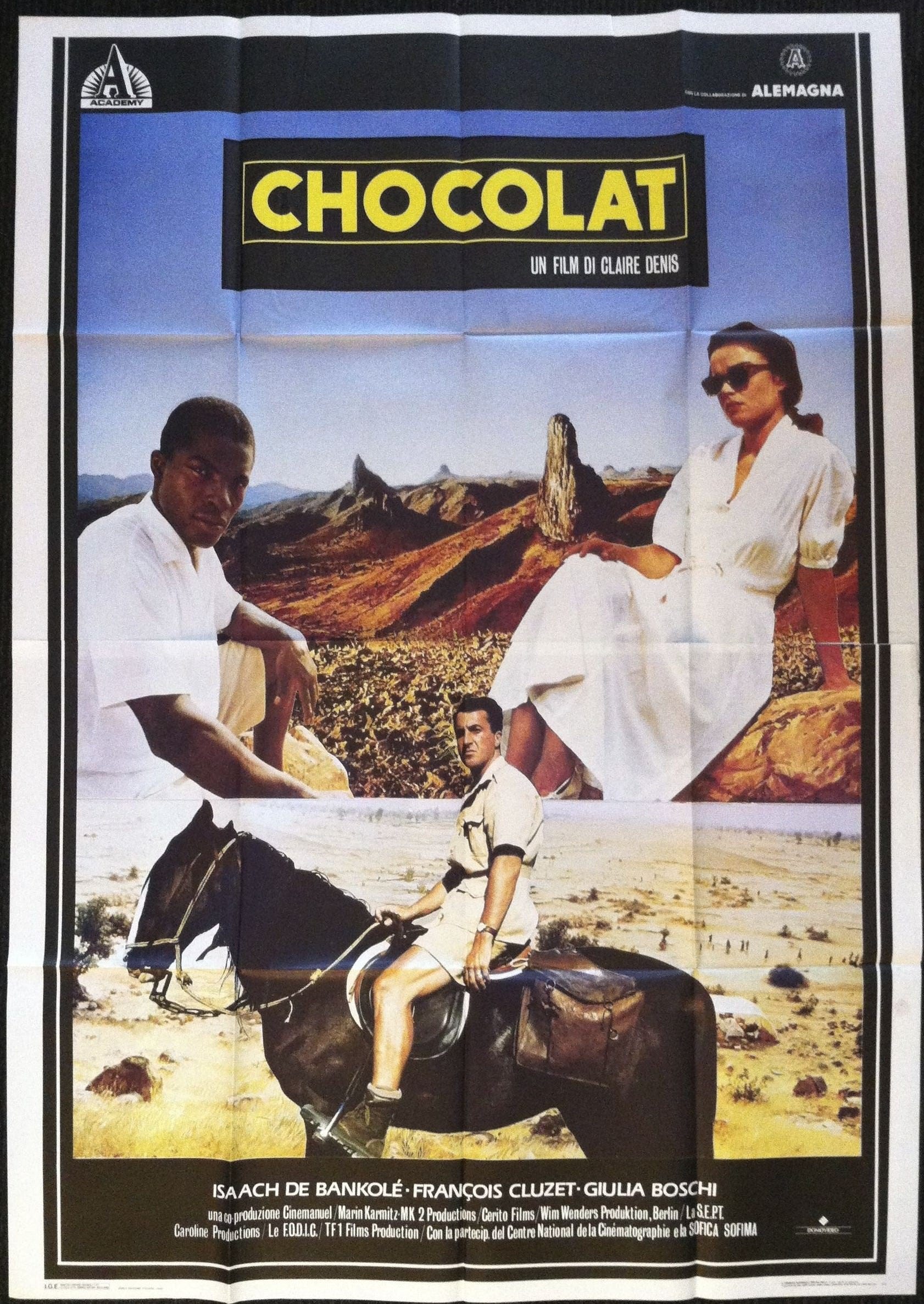
You can watch the film here. One of the film’s highlights is hearing Ibrahim’s song Pule (Rain) play at the 7:03-minute mark while watching the African landscape.
The film was entered into the 1988 Cannes Film Festival and won one major award, the 1989 César Award (the French Academy Award) for Best First Work, as it was Denis’ directorial debut. It’s a fine film, but I thought his music was the best part, which was later released in 1988 by Enja as Mindif. Mindif is a solitary mountain in northern Cameroon, near the ancient city of Maroua, where the movie was filmed.
The album starts with the wonderful Earth Bird, a duo with Ibrahim playing flute and Billy Higgins playing the banjo-like gambray from Morocco:
Higgins’ playing throughout this album is terrific. Here he is again on the gambray on another wonderful tune, Proteé, a trio with bassist David Williams and Ibrahim on vocals:
I especially like Pule (Rain), which I mentioned above, with Ibrahim playing piano and flute and with Ricky Ford playing a nice tenor sax solo:
What a wonderful soundtrack, and it demonstrates for me how Ibrahim’s music is a celebration and prayerful, but also playful. He was a unique artist in the jazz world.
I came to Ibrahim’s music very late in my jazz journey. It was as if, while standing at the water’s edge, a golden canoe passed by, waiting for passengers. I jumped in and swam towards it. When I came to it and placed my hands on the gunwales, I found a dreamscape charmed by powerful songs that carried stories from beginnings we all came from and travel toward…
Next week on that Big River called Jazz, we’ll dig in our paddles and explore the world of the Louisiana Hayride.
Please hit this link to buy me a cup of coffee if you’d like to show your guide some appreciation for this and past journeys. I thank you in advance for your kindness and support.
If you like what you’ve been reading and hearing so far on our journey and would like to share it with someone who might be interested in learning more about our great American art form, Jazz, just hit the “Share” button.
From Astaire to Sun Ra: A Jazz Journey is a reader-supported publication. If you feel so inclined, subscribe to my journey by hitting the “Subscribe now” button.
Feel free to contact me anytime to talk shop. I welcome and encourage that.
Until then, keep on paddling…
Thanks for the deep dive into Abdullah Ibrahim. I'm familiar with only a few of his albums, the ones with Dyani for instance. I was surprised you left out African Piano, recorded live in Copenhagen in 1969 and kicking off with one of his signature tunes, Bra Joe from Kilimanjaro, with its stately ostinato against which he plays all sorts of cross rhythms and what sounds like him stomping a beat on the floor. I thought that did more to make him known to western audiences than anything else he'd done up to then when it was reissued by JAPO in 1973. Dyani later recorded an album called African Bass, accompanied only by Clifford Jarvis on Drums, which I took to be inspired by Ibrahim's album. It even features a long track on which Dyani plays piano.